Should You Visit Philadelphia, the Birthplace of the Declaration of Independence?
Quick Answer
Yes. Especially if you enjoy history, great food, walkable neighborhoods, and destinations that offer strong value.
Philadelphia is one of America’s most underrated city destinations. While nearby cities receive more attention, It offers an outstanding combination of history, food, walkability, and value. It combines some of America’s most important historical landmarks with an excellent dining scene, distinctive neighborhoods, and lower costs than many major East Coast cities.
While it doesn’t have the scale of New York City or the prestige of Washington, DC, Philadelphia delivers a rewarding experience without the same crowds or price tag.
Things First-Time Philadelphia Visitors Often Misunderstand
Many first-time visitors assume Philadelphia is either a smaller version of New York City or a city that can be fully explored on foot.
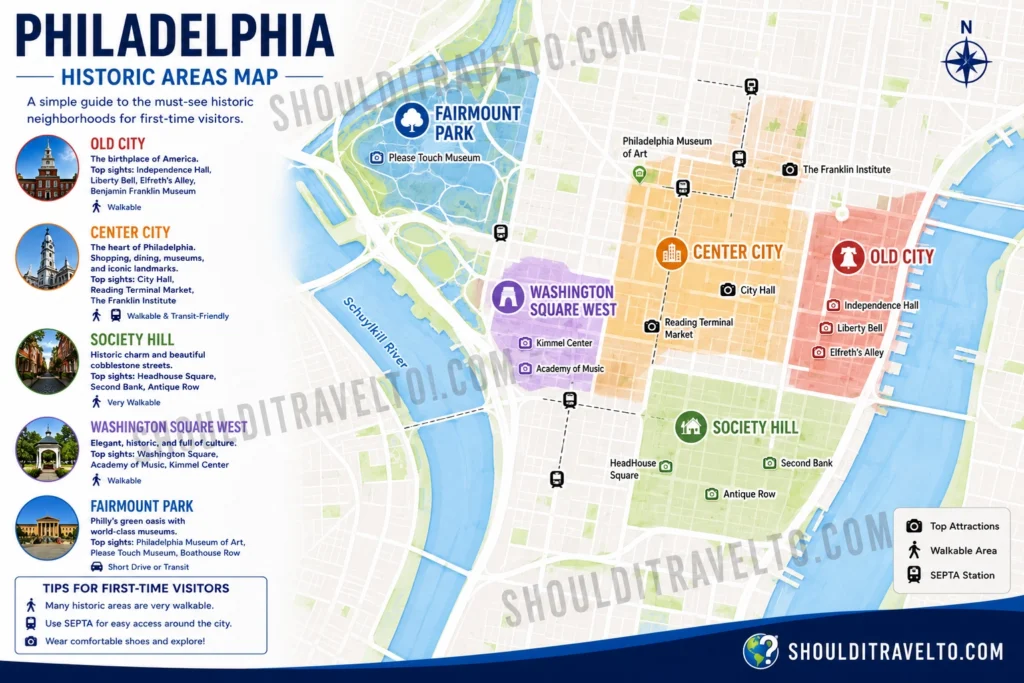
In reality, most visitors spend the majority of their time in a relatively compact area that includes Old City, Independence National Historical Park, Center City, Reading Terminal Market, and nearby neighborhoods.
Philadelphia is a large city with significant neighborhood variation. While the main tourist districts are generally comfortable and easy to navigate, visitors should research neighborhoods before venturing far beyond the areas they plan to visit.
For most travelers, Philadelphia works best when approached as a destination for history, food, and culture rather than as a city where every neighborhood is a tourist attraction.
Historical Significance vs. Modern Prominence
The biggest difference between Philadelphia and many other major East Coast cities is that Philadelphia’s importance comes from its past rather than its present.
New York dominates finance, media, and entertainment. Washington, DC, serves as the nation’s capital. Boston is known for its universities and technology sector.
Philadelphia’s greatest strength is that it preserves the places where the United States began. Visitors come to The City of Brotherly Love not because it is America’s most influential city today, but because few places tell the story of America’s founding better.
Philadelphia Is More Than Rocky
Many visitors associate Philadelphia primarily with Rocky. While the Rocky Steps and statue remain popular photo opportunities, the city’s identity is rooted much more deeply in American history, food, sports culture, and distinctive neighborhoods.
The 3 Biggest Pros of Visiting Philadelphia
As the birthplace of the Declaration of Independence, Philadelphia offers visitors several historic landmarks to experience and explore.
Philadelphia holds important historical significance, boasts an outstanding food scene, and offers great value compared to nearby cities.
1. Incredible Historical Significance
Few cities in America can match Philadelphia’s historical significance. The city served as the meeting place for many of the events that led to the creation of the United States.
Visitors can explore Independence Hall, where the Declaration of Independence and the Constitution were debated and signed. Nearby sits the Liberty Bell, one of the most recognizable symbols of American freedom.
History enthusiasts can also visit Franklin Court, the site of Benjamin Franklin’s home, the Benjamin Franklin Museum, Elfreth’s Alley, Christ Church Burial Ground, the Museum of the American Revolution, and numerous preserved buildings that date back to the colonial era.
Unlike many historic cities, Philadelphia preserved a remarkable number of colonial-era buildings and streets.
What makes Philadelphia unique is that these landmarks are concentrated within a walkable historic district. Visitors are not simply viewing artifacts in a museum. They are walking through the streets where Franklin, Washington, Adams, Jefferson, and other Founders once lived, worked, and debated the nation’s future.
For travelers interested in American history, Philadelphia is one of the most important destinations in the United States.
2. Outstanding Food Scene
Philadelphia is one of America’s best food cities. Beyond the famous cheesesteak, visitors will find exceptional Italian restaurants, food markets, bakeries, and international cuisine throughout the city. For example, locals may argue that Philadelphia’s roast pork sandwich is more representative of the city’s food culture than the cheesesteak.
Moreover, Philadelphia’s food scene feels more local and less tourist-oriented than many major American cities. Family-owned Italian restaurants, neighborhood bakeries, roast pork shops, and Reading Terminal Market give visitors plenty of opportunities to eat like locals.
Visitors can head to the Reading Terminal Market where they can find just about any dish type they desire, including classic Philadelphia cheesesteaks, Amish comfort foods, Asian street food, and Latin American bites.
3. Great Value Compared to Nearby Cities
Philadelphia delivers many of the benefits travelers seek in major East Coast cities without the same price tag.
Hotels are often noticeably less expensive than comparable accommodations in New York City, Boston, or Washington, DC. Restaurant prices are generally lower, and many of the city’s most important attractions, including the Liberty Bell and Independence National Historical Park, are free to visit.
Philadelphia’s compact historic core also helps visitors save time and money. Many major attractions can be explored on foot, reducing transportation costs and allowing you to experience much of the city during a long weekend.
For travelers seeking history, food, culture, and walkability without paying New York or Boston prices, Philadelphia offers some of the strongest value on the East Coast.
The 3 Biggest Cons of Traveling to Philadelphia
Several Philadelphia neighborhoods outside of the historic areas have high rates of poverty, homelessness, and crime. However, visitors can stay safe and comfortable by avoiding them.
Although Philadelphia attracts millions of tourists annually, it is often overshadowed by nearby destinations, possibly due to the perception of limited variety of landmarks and undesirable neighborhoods.
1. Often Overshadowed by Nearby Destinations
Many travelers automatically choose New York, Boston, or Washington, DC, without realizing how much Philadelphia has to offer.
New York receives a lot of attention because it is a financial, fashion, and entertainment hub. Washington, DC, is the capital of the United States, and the lore of the rebellious Bostonians lives on.
Philadelphia falls into an awkward middle ground. It lacks New York’s global reputation, Washington’s political importance, and Boston’s university prestige. As a result, many travelers underestimate how much the city has to offer.
2. Some Areas Feel Less Polished
Philadelphia is a historic city with tremendous character, but visitors may notice more visible urban challenges than they would in destinations such as Boston or Washington, DC.
Aging infrastructure, vacant buildings in some neighborhoods, and pockets of economic hardship are part of the city’s reality.
Most visitors spend their time in areas such as Old City, Center City, Society Hill, and Rittenhouse Square, where the city’s strongest attractions, restaurants, and hotels are concentrated.
Visitors who stay within the primary tourist districts generally find Philadelphia comfortable and rewarding to explore.
3. Fewer Globally Recognized Attractions
While the historical attractions are excellent, Philadelphia doesn’t have the same concentration of bucket-list attractions found in destinations like New York City. Travelers flock to NYC to experience Times Square and to Washington, DC, to visit the US Capitol.
Many visitors arrive knowing about the Liberty Bell and Independence Hall but are less familiar with the city’s other landmarks, such as Betsy Ross’s house and Carpenters Hall, where the first Continental Congress met.
As a result, Philadelphia can feel less exciting on paper than some competing East Coast destinations, even though the actual visitor experience is often better than expected.

The Should I Visit … Philadelphia Scorecard
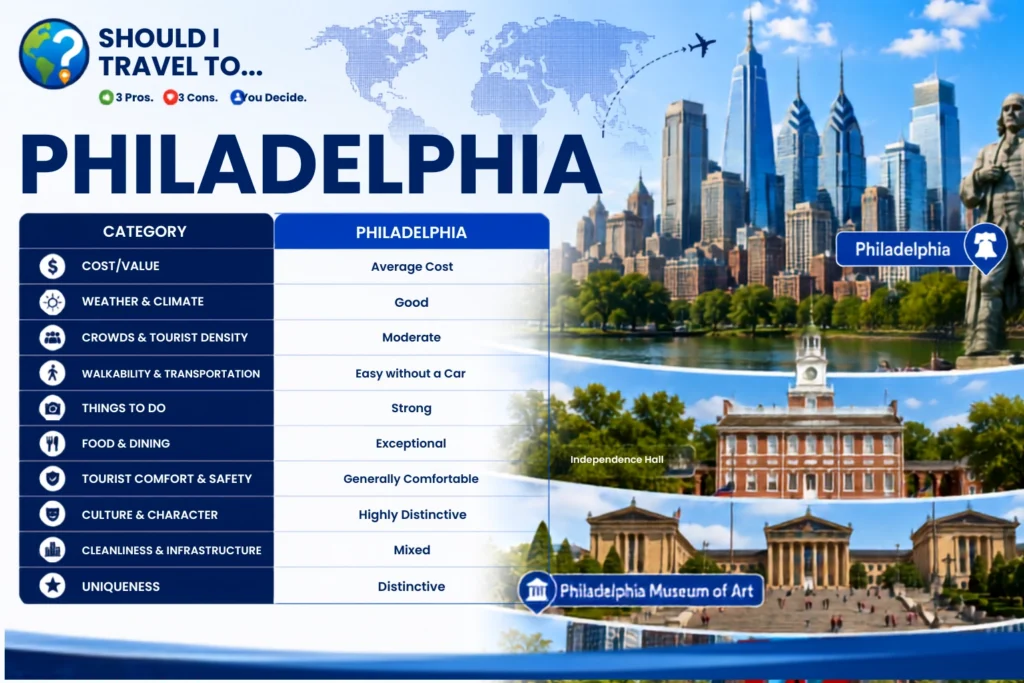
Here’s how Philadelphia fares on the Should I Travel To … Scorecard.
Cost / Value: Average Cost
Philadelphia offers some of the best value among major US cities. Hotels, dining, and attractions are often more affordable than comparable destinations like New York, Boston, or Washington, DC.
Weather: Good
Best Time to Visit: April–May and September–October
Spring and fall provide comfortable temperatures and pleasant conditions for walking the city’s historic districts. Summers can be hot and humid, while winters are generally cold but manageable.
Crowds & Tourist Density: Moderate
Philadelphia receives plenty of visitors but rarely feels overwhelmed by tourism. Most attractions remain accessible without long waits, and the city generally feels less crowded than many larger East Coast destinations.
Walkability & Transportation: Easy Without a Car
Many of Philadelphia’s most popular attractions are located within walking distance of one another. Public transportation is useful for longer distances, and most visitors can comfortably explore without renting a car.
Things to Do: Strong
Visitors can easily spend three to five days exploring historical landmarks, museums, neighborhoods, food markets, sports venues, and cultural attractions. While it may not offer endless entertainment, there is more than enough to fill a long weekend.
They can explore Independence Hall, the Liberty Bell, Reading Terminal Market, the Philadelphia Museum of Art, professional sports venues, historic neighborhoods, and the famous Rocky Steps.
Food & Dining: Exceptional
Philadelphia’s food scene extends far beyond cheesesteaks. The city offers excellent Italian dining, vibrant international cuisine, food markets, and one of the strongest restaurant scenes on the East Coast.
Tourist Comfort & Safety: Generally Comfortable
Philadelphia’s primary tourist districts are heavily visited and easy to navigate. Areas such as Old City, Independence National Historical Park, Society Hill, and Center City attract millions of visitors each year.
Like most major American cities, Philadelphia has neighborhoods that visitors are unlikely to visit. Travelers who research their accommodations, remain aware of their surroundings, and focus on the main tourist areas typically have a comfortable experience.
Most first-time visitors will spend the majority of their trip in the parts of Philadelphia that are best equipped for tourism.
Culture & Character: Highly Distinctive
Philadelphia blends Revolutionary War history, working-class pride, sports culture, historic architecture, and vibrant neighborhoods into an identity that feels uniquely its own.
In addition, Philadelphia’s sports culture is among the most passionate in the United States and becomes especially visible during Eagles, Phillies, Flyers, and 76ers seasons.
Cleanliness & Infrastructure: Mixed
Visitors may encounter aging infrastructure and some cleanliness challenges in certain areas. However, the city’s compact layout and walkable historic districts help offset these drawbacks.
Uniqueness: Distinctive
Philadelphia’s role in American history and its strong local culture make it stand out among major US cities. While there are similarities to Boston and Washington, the city’s personality feels unmistakably different.
Other Factors To Consider:
Trip Length
Since Philadelphia’s must-see attractions are concentrated in a compact area, it makes a great long-weekend destination. Most people can spend 2-4 days in the City of Brotherly Love and feel like it was time well spent sightseeing and eating tasty food.
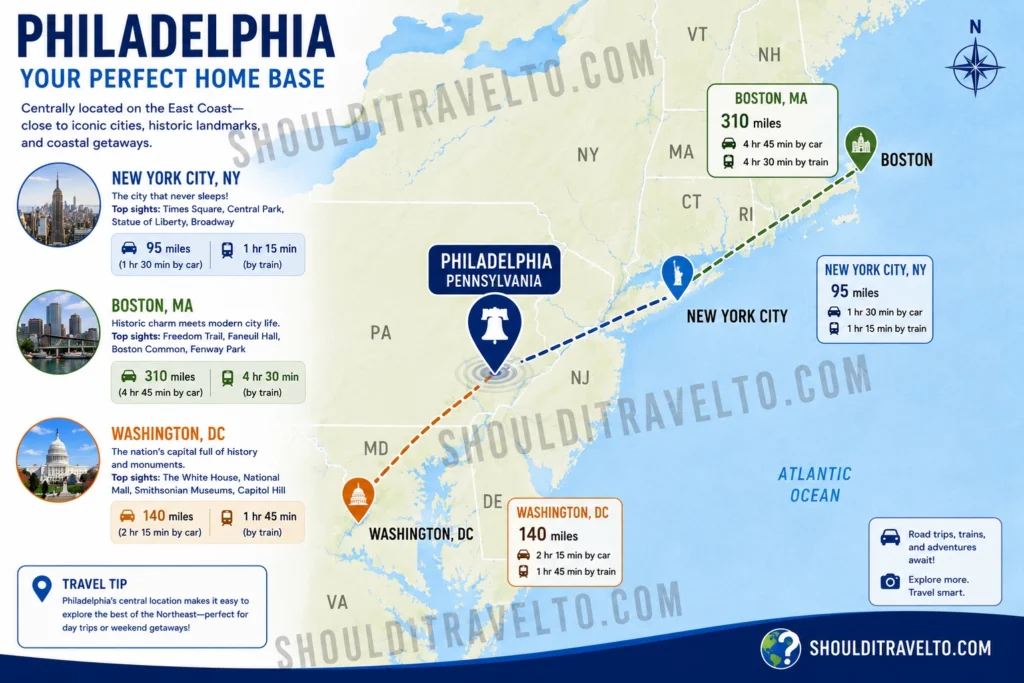
Visitors can easily add it to East Coast trips that include New York City, Washington, DC, and Boston.
Winner: Excellent long-weekend destination.
Atmosphere / Vibe
Philadelphia feels authentic, historic, and lived-in. It combines Revolutionary-era landmarks with working-class neighborhoods, passionate sports fans, and a strong local identity.
Compared to Boston and Washington, DC, Philadelphia feels less polished, but many visitors find that rough-around-the-edges character part of its appeal.
Philadelphia Compared to Nearby Cities
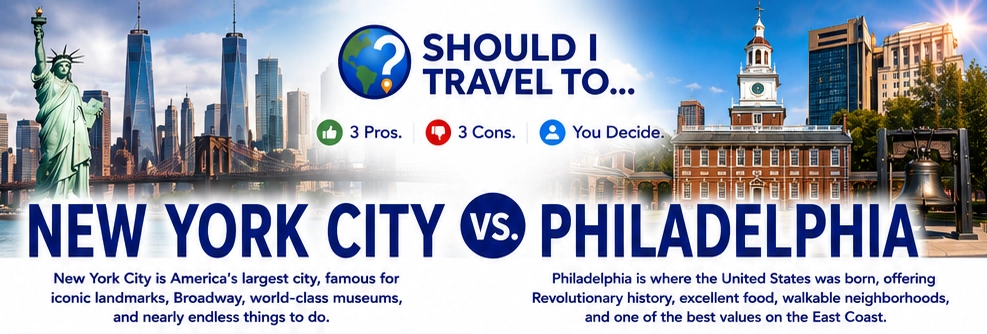
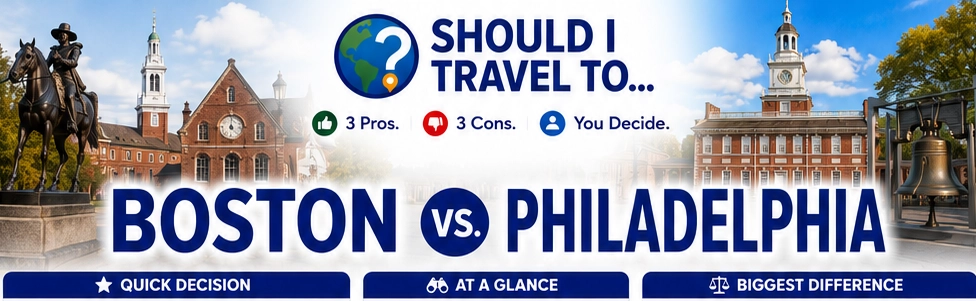
Here’s how Philadelphia compares to its famous neighbors.
Choose Philadelphia over NYC if:
- You want lower costs
- You prefer American history over entertainment and nightlife
- You want fewer crowds
- You only have a long weekend
or Choose Philadelphia over DC if:
- Food matters more
- You prefer a less formal atmosphere
- You want stronger value
or Choose Philadelphia over Boston if:
- You want fewer crowds
- You want lower costs
- You want more Revolutionary-era landmarks concentrated in one area
Philadelphia wins out over its neighbors for its smaller crowds, lower costs, and historic landmarks concentrated in a compact area.
Who Should Travel To Philadelphia?
Philadelphia appeals to a specific type of traveler. Visitors who appreciate history, walkability, local culture, and good value often leave pleasantly surprised by what the city offers.
Philadelphia Might Be Perfect For You If:
- You love American history
- You enjoy exploring cities on foot
- You want a long-weekend destination
- You appreciate great food and local restaurants
- You’re looking for a major East Coast city that offers strong value
- You enjoy authentic neighborhoods with distinct character
- You want to combine a trip to Philadelphia with a larger East Coast trip
- You have a long weekend, such as Thanksgiving
Philadelphia Might Not Be the Best Fit If:
- You’re looking for warm weather year-round
- You prefer beach destinations or outdoor recreation
- You want nonstop entertainment for a week or longer
- You prefer highly polished tourist environments
- You expect every neighborhood to be designed around tourism
- You want the scale and energy of New York City
Ideal Travelers
Philadelphia is particularly well-suited for:
- History enthusiasts
- Food lovers
- Weekend travelers
- Couples
- Solo travelers
- Sports fans
- East Coast road-trippers
- Families with older children interested in American history
Less Ideal For
Philadelphia may be a tougher sell for:
- Luxury-focused travelers
- Resort vacationers
- Beach seekers
- Travelers looking for theme parks or major attractions every day
- Visitors who dislike urban environments
Our Take
Philadelphia may not be America’s flashiest destination, but it is one of its most rewarding. Visitors who arrive expecting a smaller version of New York often leave surprised by how much history, food, character, and value they experienced in just a few days.
It may not have the global reputation of New York City or the monumental scale of Washington, DC, but it offers a combination of history, food, walkability, and value that few American cities can match.
For many visitors, Philadelphia exceeds expectations by delivering exactly what it promises: an authentic city with a remarkable story to tell.
The best destination isn’t the one with the highest score. It’s the one whose strengths match what you’re looking for.
3 Pros. 3 Cons. You Decide.
Philadelphia Frequently Asked Questions
Is Philadelphia worth visiting?
Yes. Philadelphia is one of America’s most underrated city destinations. It offers world-class historical landmarks, excellent food, walkable neighborhoods, and strong value compared to many other major East Coast cities.
How many days do you need in Philadelphia?
Most visitors can experience Philadelphia’s major attractions in 2–4 days. A long weekend is usually enough time to visit Independence Hall, the Liberty Bell, Reading Terminal Market, museums, and several of the city’s most popular neighborhoods.
What is the best time of year to visit Philadelphia?
Spring and fall are generally the best times to visit Philadelphia. April, May, September, and October offer comfortable temperatures and excellent conditions for walking around the city’s historic districts.
Is Philadelphia expensive to visit?
Philadelphia is often more affordable than nearby destinations such as New York City, Boston, and Washington, DC. Hotels, restaurants, and attractions generally provide good value for travelers.
Is Philadelphia walkable for tourists?
Yes. Many of Philadelphia’s most popular attractions are located within or near Center City and Historic Old City. Most visitors can explore the city’s main tourist areas without renting a car.
Is Philadelphia safe for tourists?
The main tourist areas, including Old City, Center City, Society Hill, and Independence National Historical Park, are heavily visited and generally comfortable for tourists. As with any major city, visitors should remain aware of their surroundings and research neighborhoods before exploring beyond the primary tourist districts.
What food is Philadelphia known for?
Philadelphia is best known for cheesesteaks, but the city’s food scene extends far beyond a single sandwich. Visitors will also find outstanding Italian restaurants, food markets, bakeries, roast pork sandwiches, and a wide variety of international cuisine.
Is Philadelphia better than Washington, DC?
That depends on your interests. Washington, DC, offers more museums and national monuments, while Philadelphia provides a more compact historic district, a stronger food scene, and often better overall value.
Is Philadelphia better than Boston?
Philadelphia and Boston are both excellent cities for American history. Boston generally feels more polished and compact, while it offers lower costs, fewer crowds, and a larger collection of Revolutionary-era landmarks.
What are the top attractions in Philadelphia?
Most first-time visitors prioritize:
- Independence Hall
- The Liberty Bell
- Reading Terminal Market
- The Philadelphia Museum of Art
- Elfreth’s Alley
- Franklin Court
- Eastern State Penitentiary
- The Rocky Steps
Can you visit Philadelphia without a car?
Yes. Most visitors do not need a car. Philadelphia’s historic core is highly walkable, and public transportation can help travelers reach destinations farther from downtown.
Is Philadelphia a good weekend trip?
Absolutely. Philadelphia is one of the best long-weekend destinations in the United States because many of its top attractions can be experienced in two to four days.
Are the Rocky Steps worth visiting?
Yes. The steps of the Philadelphia Museum of Art are one of the city’s most famous landmarks and offer great views of the Benjamin Franklin Parkway. Most visitors spend 15–30 minutes there before exploring nearby attractions.