
Should You Visit America’s Colonial Living Capital?
If Philadelphia is where America declared independence and Boston is where the Revolution began, Williamsburg shows visitors what everyday life looked like before either of those events happened.
Unlike most historic destinations, Williamsburg isn’t simply a collection of old buildings. It’s an entire colonial capital brought back to life.
Visitors can walk eighteenth-century streets, watch blacksmiths and carpenters work using colonial tools, tour the Governor’s Palace, and speak with costumed interpreters who portray real people living on the eve of the American Revolution.
For travelers interested in American history, Williamsburg offers one of the country’s most immersive historical experiences.
Why Visit Williamsburg?
Williamsburg isn’t famous because one historic event happened there.
It’s famous because it allows visitors to experience an entire colonial city.
During the eighteenth century, Williamsburg served as the capital of Virginia, the largest, wealthiest, and most influential British colony in North America.
Leaders such as:
- George Washington
- Thomas Jefferson
- Patrick Henry
- George Mason
all spent significant time here.
Many of the political ideas that eventually fueled independence were debated inside Williamsburg long before the Declaration of Independence was signed.
Let’s explore the three biggest reasons to visit Williamsburg.
Three Reasons to Visit Williamsburg
Williamsburg is a one-of-a-kind experience that allows visitors to immerse themselves in life before the American Revolution. It’s also part of the Historic Triangle.
1. Colonial Williamsburg Is Unlike Anywhere Else
Colonial Williamsburg is the world’s largest living history museum.
More than 300 acres of restored buildings, gardens, workshops, and public spaces recreate Virginia’s colonial capital as it appeared on the eve of the American Revolution.
Instead of walking through a traditional museum, visitors explore an entire restored eighteenth-century town.
Highlights include:
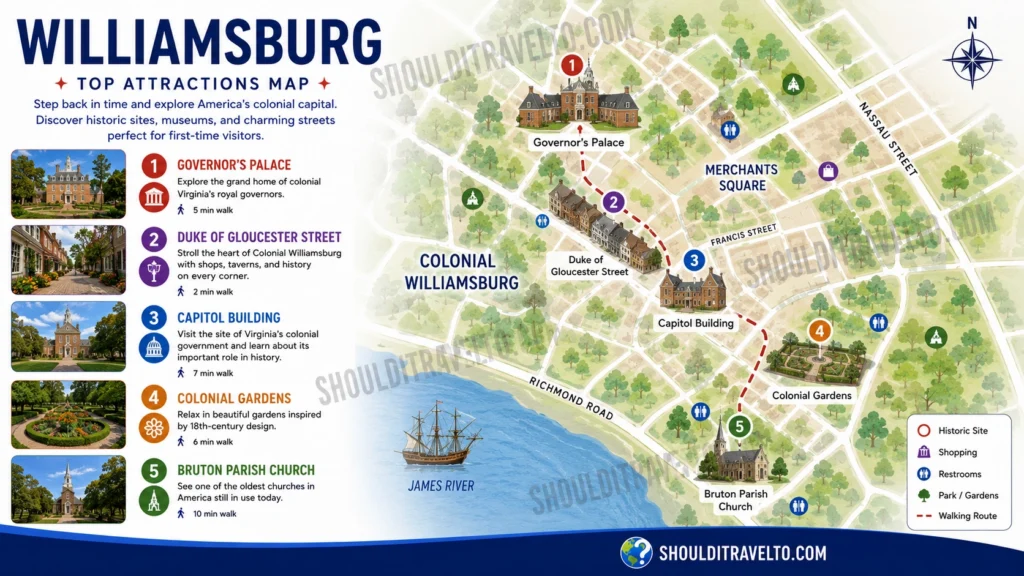
- Governor’s Palace
- Capitol Building
- Duke of Gloucester Street
- Historic Taverns
- Courthouse
- Blacksmith Shop
- Apothecary
- Printing Office
Throughout the day, actors portraying colonial residents demonstrate trades, debate politics, and recreate daily life just before the American Revolution.
Few historic attractions feel this immersive.
2. Experience Life Before the Revolution
Most American history destinations focus on famous moments.
Williamsburg focuses on everyday life.
Visitors see:
- Colonial homes
- Workshops
- Farms
- Churches
- Shops
- Government buildings
Together they create a much deeper understanding of how Americans actually lived during the 1700s.
Rather than simply reading history, visitors experience it.
3. Part of America’s Historic Triangle
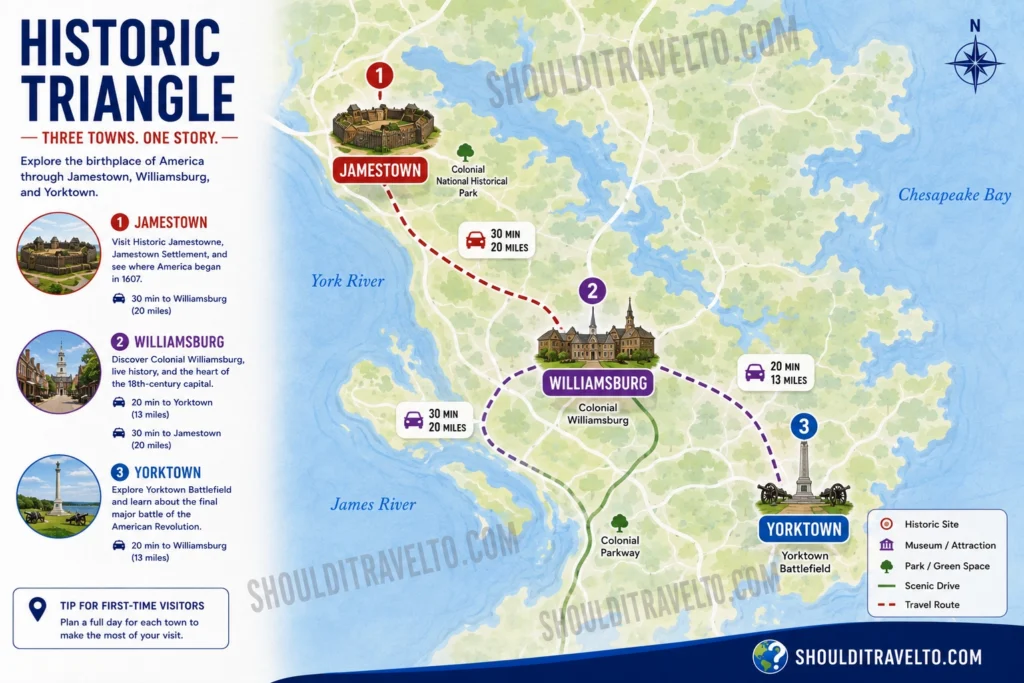
Williamsburg sits at the center of Virginia’s Historic Triangle.
Within a short drive, visitors can also explore:
Together, these three destinations tell nearly two centuries of American history:
Jamestown: America’s first permanent English settlement.
Williamsburg: Colonial government and daily life.
Yorktown: The decisive victory that secured American independence.
Few places in America offer such a complete historical journey.
However, Williamsburg will not meet the expectations of every traveler.
Three Downsides of Visiting Williamsburg
Williamsburg is built around history and immersive experiences, which require both time and curiosity.
1. It’s Built Around History
If museums and historic sites don’t interest you, Williamsburg may feel quiet.
Much of the experience revolves around:
- walking
- guided tours
- demonstrations
- conversations with interpreters
Travelers looking for nightlife or major city attractions may prefer Richmond or Virginia Beach.
2. It Requires Time
Many visitors underestimate how large Colonial Williamsburg actually is.
Most people need one full day for Colonial Williamsburg or two to three days to include Jamestown and Yorktown.
Rushing through the area means missing many of its best experiences.
3. Many Highlights Are Outside the Historic Area
Colonial Williamsburg itself is easy to explore on foot, but several of the area’s biggest attractions are spread across the region.
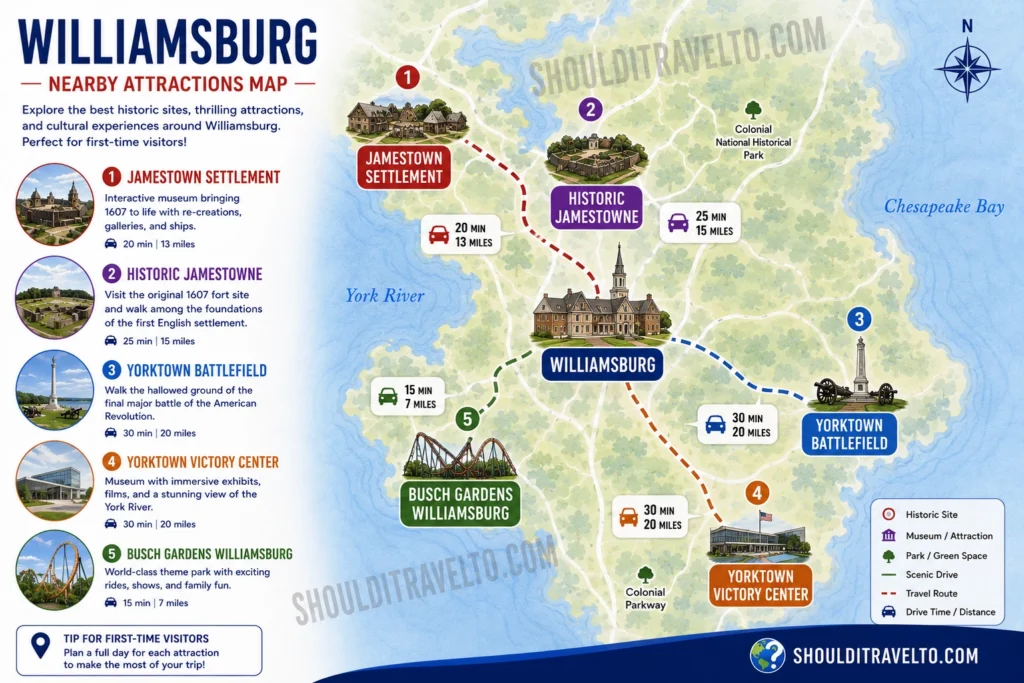
Visitors wanting to see Jamestown, Yorktown, Busch Gardens, wineries, or nearby plantations will find having a car much more convenient. While Amtrak and rideshare services are available, renting a car offers the greatest flexibility for exploring Virginia’s Historic Triangle.
Planning Your Williamsburg Trip
When planning your Williamsburg trip, keep these things in mind.
Best Time to Visit Williamsburg
The best seasons to visit Williamsburg are:
Spring:
- Comfortable temperatures
- Historic gardens in bloom
- Excellent walking weather
★★★★★
Fall:
- Beautiful foliage
- Comfortable weather
- Special historical events
★★★★★
Summer offers the longest operating hours but also higher temperatures and larger crowds.
Winter provides a quieter experience with holiday decorations and seasonal programming.
Ideal Trip Length
1 Day:
Colonial Williamsburg
2 Days:
Williamsburg + Jamestown
3 Days:
Complete Historic Triangle
In Williamsburg, Don’t Miss
The immersion experience in Williamsburg includes visiting several landmarks.
Governor’s Palace: Once the official residence of Virginia’s royal governors, the Governor’s Palace is one of Colonial Williamsburg’s most impressive landmarks. Visitors can tour the beautifully reconstructed mansion and gardens while learning about the colony’s political leadership before the American Revolution.
Duke of Gloucester Street:
The heart of Colonial Williamsburg, lined with restored 18th-century buildings, shops, taverns, and historic homes. Walking its length feels like stepping back into colonial America, with costumed interpreters bringing the streets to life.
Capitol Building:
The reconstructed Capitol Building served as the center of Virginia’s colonial government, where lawmakers debated issues that shaped early America. Guided tours explain how decisions made here influenced both the colony and the future United States.
Historic Trades:
One of Williamsburg’s biggest highlights is watching skilled artisans demonstrate traditional trades such as blacksmithing, printing, carpentry, gunsmithing, and weaving. These interactive workshops offer a fascinating look at the craftsmanship that kept an 18th-century town running.
Bruton Parish Church:
Founded in 1674, it remains an active Episcopal church and one of Williamsburg’s oldest surviving buildings. Visitors can admire its beautiful colonial architecture while learning about its connections to George Washington, Thomas Jefferson, and other prominent Virginians.
Williamsburg Hidden Gems
Additionally, visitors should try to visit some hidden gems.
Bassett Hall:
Bassett Hall was the Williamsburg home of John D. Rockefeller Jr. and Abby Aldrich Rockefeller, whose preservation efforts helped restore Colonial Williamsburg. Touring the home provides a glimpse into both colonial history and the remarkable story behind the restoration of the historic district.
Colonial Gardens:
Scattered throughout the Historic Area, Colonial Williamsburg’s restored gardens showcase the flowers, herbs, vegetables, and landscaping techniques used during the 18th century. They offer peaceful places to wander away from the busiest streets while appreciating the beauty of colonial design.
Merchants Square:
Located just outside the Historic Area, Merchants Square blends modern shopping and dining with colonial architecture. It’s a great place to enjoy a meal, browse local boutiques, or relax after a day exploring Williamsburg’s historic sites.
Wren Building at William & Mary:
Completed in 1700, the Wren Building is the oldest college building still in use in the United States and the centerpiece of the College of William & Mary. Guided tours highlight the building’s remarkable history and its role in educating generations of American leaders.
Historic Taverns:
Williamsburg’s restored taverns, including the King’s Arms Tavern and Chowning’s Tavern, recreate the atmosphere of colonial dining with period-inspired menus and costumed servers. Whether you stop for lunch or dinner, they offer one of the most immersive ways to experience daily life in 18th-century Virginia.
Nearby Destinations
- Jamestown
- Yorktown
- Busch Gardens Williamsburg
- Historic Jamestowne
- Jamestown Settlement
Who Will Enjoy Williamsburg?
Since Williamsburg offers such a unique and immersive experience, it’s a destination that most people should visit at least once.
Williamsburg is ideal for:
- American history enthusiasts
- Families
- Students
- Colonial history lovers
- Revolutionary War travelers
- Educational vacations
You may want to skip Williamsburg if:
- You’re looking for beaches
- You want major-city nightlife
- You dislike museums
- You’re short on time
Williamsburg is a place to slow down, explore, and learn rather than rush from one attraction to the next.
Final Thoughts
Williamsburg doesn’t offer the dramatic battlefields of Gettysburg or the famous landmarks of Washington, DC.
Instead, it offers something much rarer.
It allows visitors to experience the world that existed before the United States became an independent nation.
Walking its streets makes it easier to understand how ordinary colonists lived, worked, debated politics, and gradually moved toward revolution.
For travelers building an American history itinerary, Williamsburg deserves to be paired with Jamestown and Yorktown.
Together, they form Virginia’s Historic Triangle, one of the finest historical journeys in the United States.
Together, they tell one of the most important chapters in the American story.