

Should You Visit Savannah, GA, the Hostess City of the South?
Quick Answer
Yes, you should visit Savannah, GA, especially if you’re looking for historic architecture, Southern food, beautiful parks and squares, walkable streets, and a relaxed atmosphere.
Savannah combines nearly 300 years of history with Spanish moss-draped live oaks, elegant architecture, excellent restaurants, a walkable Historic District, and a reputation for ghost stories and haunted places.
It isn’t as large or energetic as Charleston or New Orleans.
That’s part of the appeal.
Savannah feels slower, more atmospheric, and easier to explore than many historic American cities.
For travelers who want history without a hectic vacation, Savannah is one of the South’s most rewarding destinations.
The Biggest Mistake First-Time Savannah Visitors Make
The biggest difference between Savannah and many other historic American cities is that Savannah itself feels like the attraction.
Visitors don’t need to spend the entire day moving from attraction to attraction. Much of the experience comes from walking through the Historic District, moving between squares, admiring architecture, eating, relaxing in parks, and simply experiencing the city.
Savannah was founded in 1733 and became Georgia’s first city. General James Oglethorpe designed the settlement around a series of wards, streets, and public squares. Savannah’s historic plan is still visible today through its network of public squares and surrounding streets.
That means you don’t necessarily need a packed itinerary to enjoy Savannah.
Some of the best moments may come from simply walking from one square to another.
Another mistake is underestimating the heat and humidity.
Savannah’s coastal Georgia climate can be hot and humid in summer, while spring and fall generally provide more comfortable conditions for walking and sightseeing.
What Makes Savannah Special?
Savannah is special because the city itself is the attraction.
Founded in 1733 as Georgia’s first city, Savannah was deliberately planned around public squares, broad streets, and interconnected neighborhoods. That historic plan still shapes the experience visitors have today.
The result is a city unlike most other American destinations.
Visitors can walk beneath enormous live oaks draped in Spanish moss, move from one historic square to another, explore centuries-old buildings, stop for Southern food, and finish the evening with a ghost tour.
Savannah’s history also spans several distinct eras, including its colonial founding, the Revolutionary War, the antebellum period, the Civil War, and its development as a major Southern port.
And then there’s the city’s darker reputation.
Savannah is widely considered one of America’s most haunted cities, giving its historic streets another layer of atmosphere after dark.
History, architecture, food, nature, and folklore all come together here.
The Biggest Difference
The biggest difference between Savannah and many other historic American cities is how much of the experience happens outdoors.
Visitors spend their days:
- Walking through historic squares
- Exploring historic homes
- Admiring architecture
- Eating Southern and coastal cuisine
- Strolling along the Savannah River
- Visiting museums
- Exploring nearby beaches
- Taking walking or trolley tours
- Discovering ghost stories after dark
Savannah isn’t a destination where you need to rush from one major attraction to another.
The city rewards slowing down.
Let’s look at the biggest reasons travelers visit Savannah.
The 3 Biggest Pros of Visiting Savannah
Visiting Savannah means experiencing one of America’s most atmospheric historic cities, outstanding Southern food, and an unusually walkable downtown.
1. Exceptional Historic Atmosphere
Few American cities have preserved such a distinctive historic environment.
The Historic District combines:
- Historic squares
- Live oak trees
- Spanish moss
- Historic homes
- Churches
- Museums
- Cobblestone streets
- Monuments
- Restaurants
- Shops
Savannah’s original city plan remains one of its most distinctive characteristics, with historic squares integrated into the street grid.
The city feels less like a collection of attractions and more like one enormous historic destination.
2. Excellent Food
Savannah has become one of the South’s strongest food destinations.
Visitors can experience:
- Southern cooking
- Lowcountry cuisine
- Fresh seafood
- Shrimp and grits
- Fried chicken
- Oysters
- Barbecue
- Southern desserts
- Craft cocktails
The city also has a growing contemporary food scene, with restaurants ranging from casual local institutions to upscale dining.
Food is one of the best reasons to visit Savannah even if you’re not particularly interested in history.
3. Easygoing, Walkable Vacation
Savannah’s Historic District is unusually easy to explore on foot.
You can spend hours walking between squares, historic homes, restaurants, museums, parks, and shops without constantly getting into a car.
The Historic Landmark District was designed around Savannah’s historic squares and is one of the city’s most walkable visitor areas.
That makes Savannah particularly appealing to travelers who want a slower-paced city vacation.
You can explore during the day, stop for a drink or meal, and continue wandering without needing to follow a rigid schedule.
Next, let’s take a look at the biggest cons of traveling to Savannah.
The 3 Biggest Cons of Visiting Savannah
Savannah is atmospheric and easygoing, but it isn’t perfect. Summer heat, limited major-city attractions, and the city’s popularity can all affect your experience.
1. Summers Can Be Hot and Humid
Savannah’s coastal location means summer can be uncomfortable for travelers who don’t enjoy heat and humidity.
Visitors should expect:
- High humidity
- Hot temperatures
- Strong sunshine
- Afternoon thunderstorms
- Mosquitoes
This matters because Savannah is a city best experienced outdoors.
Walking through the Historic District is much more enjoyable when temperatures are comfortable.
Spring and fall are generally better choices for travelers who want to spend long days exploring on foot.
2. Fewer Major Attractions
Savannah has plenty to do, but its appeal isn’t based on having dozens of major attractions.
The city’s appeal is based more on:
- History
- Architecture
- Food
- Atmosphere
- Walking
- Neighborhoods
- Parks
- Storytelling
Travelers looking for huge museums, major entertainment venues, nonstop nightlife, or dozens of world-class attractions may eventually run out of things that interest them.
Savannah works best when you appreciate the city’s experience.
3. Popular Areas Can Feel Tourist-Heavy
Savannah has become an extremely popular vacation destination.
The Historic District, River Street, City Market, and other major visitor areas can become crowded, particularly on weekends, holidays, and during major events.
River Street is especially scenic, but it can also feel more tourist-oriented than some of the quieter historic neighborhoods.
The good news is that Savannah has enough squares, neighborhoods, parks, and side streets to make it relatively easy to escape the busiest areas.
The Should I Travel To… Savannah Scorecard
The following is an overview of how Savannah, GA, scores on the Should I Travel To … framework.
Cost / Value: Average Cost
Savannah isn’t a bargain destination, particularly during peak periods, but it offers a wider range of accommodations and dining than its reputation as a luxury Southern destination might suggest.
Weather: Good
Spring and fall can offer excellent conditions for exploring the city.
Summer is hot and humid, while winter is generally mild.
Crowds & Tourist Density: Comfortable
Savannah is an established tourist destination with extensive visitor infrastructure, particularly in the Historic District. Most visitors will find the main tourist areas easy to navigate, although normal urban precautions are appropriate after dark.
Walkability & Transportation: Easy
Savannah’s Historic District is highly walkable.
Visitors staying downtown can explore many major attractions without a car.
A car becomes more useful for beaches, plantations, historic sites, and destinations outside the central district.
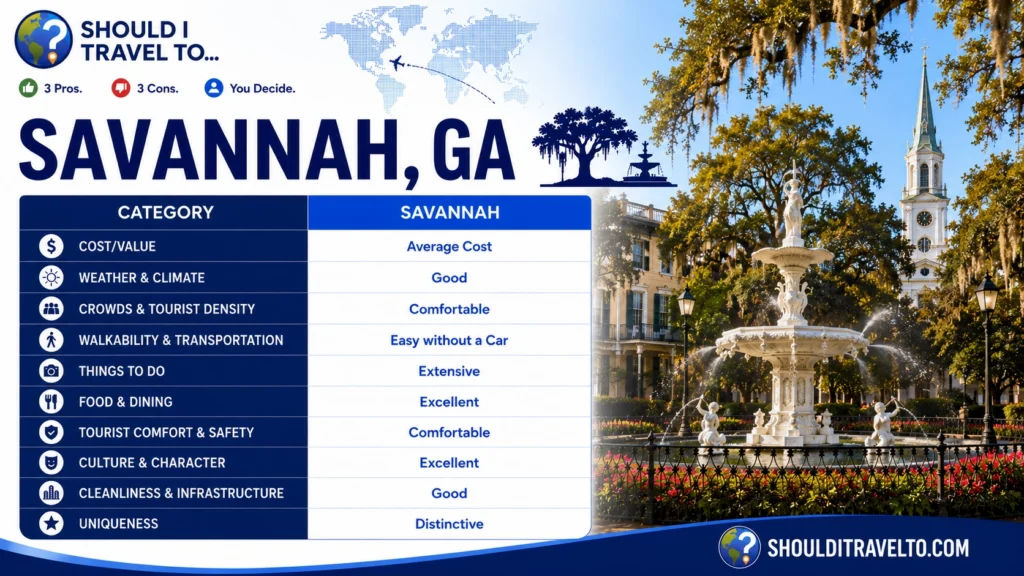
Things To Do: Extensive
Savannah can easily fill three to five days.
A longer trip allows time for beaches, museums, historic sites, and nearby attractions.
Food & Dining: Excellent
Southern cooking, Lowcountry cuisine, seafood, cocktails, and an increasingly diverse restaurant scene make food one of Savannah’s strengths.
Tourist Comfort & Safety: Comfortable
Savannah is an established tourist destination with extensive visitor infrastructure.
As with any city, travelers should use normal urban precautions, particularly at night and in less familiar areas.
Culture & Character: Excellent
Few American cities have such a distinctive combination of Southern, coastal, historic, and architectural character.
Cleanliness & Infrastructure: Good
Major visitor areas are generally well maintained, although historic streets, cobblestones, and older infrastructure can occasionally make walking less convenient.
Uniqueness: Distinctive
Savannah’s combination of historic squares, Spanish moss, architecture, Southern food, walkability, and haunted history is difficult to replicate.
Planning Your Savannah Vacation
The following are additional factors to consider when planning a trip to Savannah.
Atmosphere
Savannah feels:
- Historic
- Romantic
- Southern
- Atmospheric
- Relaxed
- Walkable
- Mysterious
The city is especially beautiful in the early morning and evening, when the light, live oaks, historic buildings, and squares create some of Savannah’s most memorable scenes.
Best Time to Visit
Spring ★★★★★
- Comfortable temperatures
- Flowers and greenery
- Excellent walking conditions
One of the best times to visit
Summer ★★★☆☆
- Hot and humid
- Long days
- More family vacations
- Afternoon thunderstorms
Fall ★★★★★
- Comfortable weather
- Lower humidity
- Excellent walking conditions
- Great for food and outdoor activities
Winter ★★★★☆
- Mild temperatures
- Fewer crowds
- Comfortable sightseeing
- Good escape from colder climates
Ideal Trip Length
Savannah’s ideal trip length is generally 3–5 days.
3 Days
Historic District highlights
Forsyth Park
River Street
Southern food
4 Days: Best balance
More historic sites
Museums
Food and nightlife
5 Days
Explore beyond downtown
Nearby attractions
Beach or nature excursion
Don’t Miss
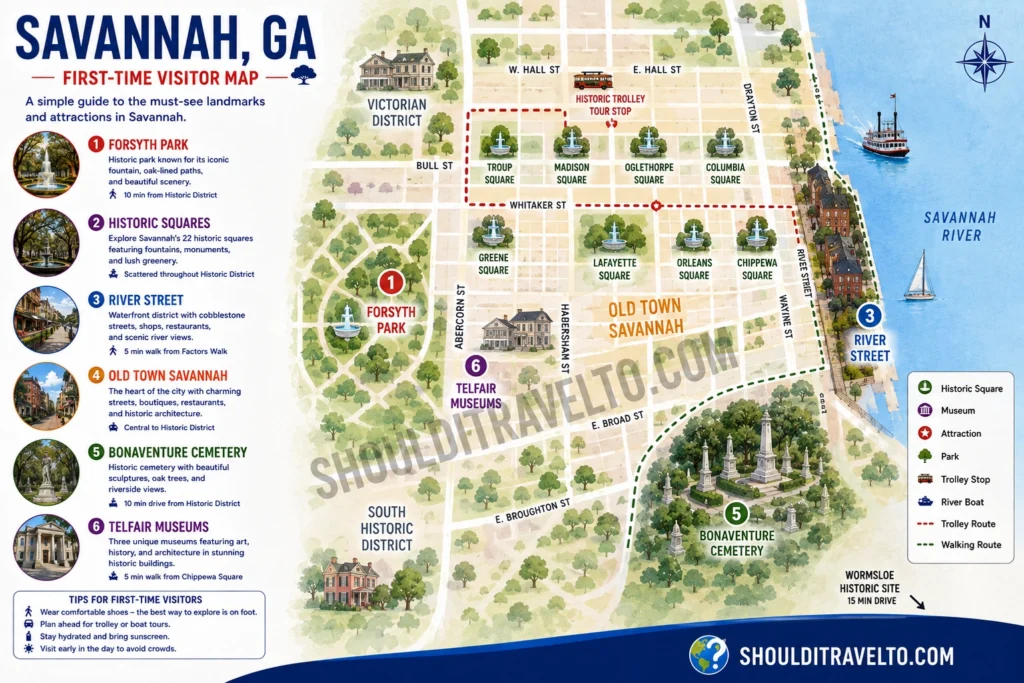
Forsyth Park
Savannah’s signature park is one of the best places to experience the city’s combination of live oaks, Spanish moss, open green space, and historic architecture. Its iconic fountain is one of the city’s most recognizable landmarks.
Savannah’s Historic Squares
The squares are the heart of the Savannah experience.
Walk between them rather than simply checking them off a list.
Each offers a different view of the city’s architecture, monuments, gardens, and live oaks.
River Street
Savannah’s historic riverfront combines cobblestone streets, former warehouse buildings, restaurants, shops, bars, and views of the Savannah River.
It’s touristy, but it’s still worth experiencing at least once.
Bonaventure Cemetery
Bonaventure Cemetery combines history, architecture, sculpture, Spanish moss, and a Southern Gothic atmosphere.
It’s also one of Savannah’s most recognizable locations for visitors interested in the city’s literary and haunted reputation.
Old Town Savannah
Old Town and the Historic District provide some of the best opportunities to understand Savannah’s colonial and early American history.
Telfair Museums
The Telfair Museums provide an excellent cultural complement to Savannah’s historic architecture, with art and historic-house experiences spread across multiple downtown sites.
What Makes Savannah’s History Different?
Savannah isn’t simply an old Southern city.
It was established in 1733 as Georgia’s first city and became one of America’s earliest planned urban settlements. Oglethorpe’s original layout used a repeating system of wards and public squares that continues to shape Savannah today.
The city also played an important role during the American Revolution and later became deeply connected to the plantation economy, cotton, rice, slavery, and the growth of the American South.
That complicated history is important to understanding Savannah.
The city’s beauty comes from preserved historic buildings and landscapes, but those places also reflect the people and systems that shaped the region.
For travelers interested in American history, Savannah offers much more than picturesque streets.
Savannah’s Haunted Side
Savannah’s history has also created one of its most popular modern identities: its reputation as a haunted city.
Ghost tours, historic cemeteries, old buildings, and centuries of stories have made supernatural tourism an important part of the visitor experience.
You don’t have to believe in ghosts to enjoy it.
The stories provide another way to explore Savannah’s history, particularly after dark.
For travelers specifically interested in haunted destinations or Halloween, Savannah deserves special consideration.
Nearby Attractions
Savannah also serves as a great base for exploring the surrounding region.
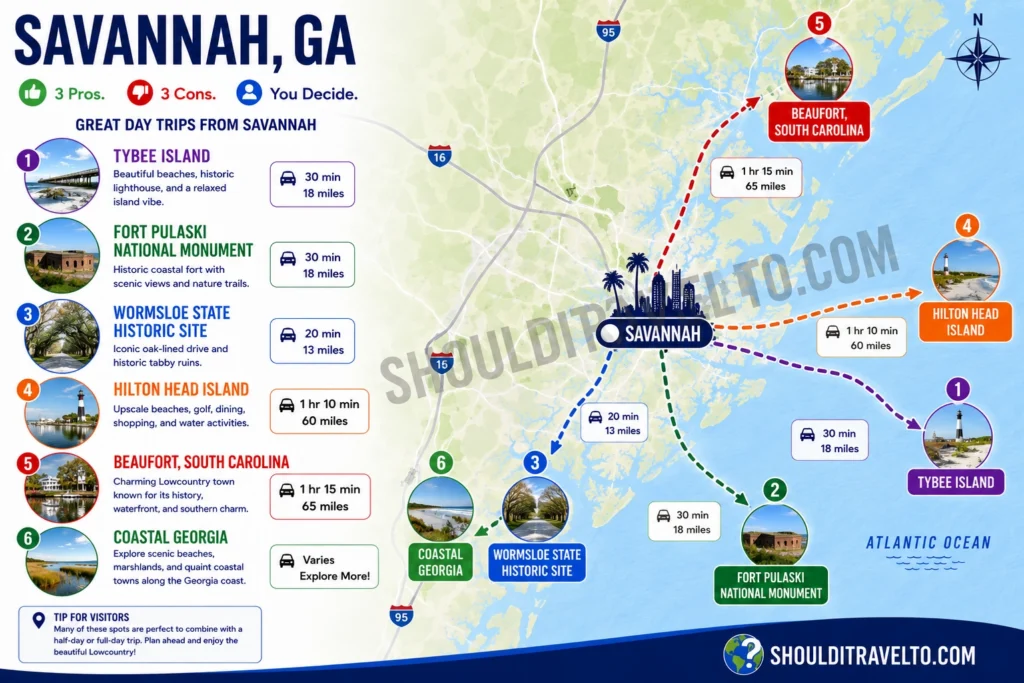
Nearby options include:
- Tybee Island
- Fort Pulaski National Monument
- Wormsloe State Historic Site
- Hilton Head Island
- Beaufort, South Carolina
- Coastal Georgia
Tybee Island
Savannah’s closest major beach destination is Tybee Island, making it possible to combine a historic city vacation with time at the coast.
Fort Pulaski National Monument
Fort Pulaski offers a combination of military history, nature, trails, and coastal scenery near Savannah.
Wormsloe State Historic Site
Wormsloe is particularly memorable for its dramatic avenue of live oaks and Spanish moss and its connection to Georgia’s colonial history.
Who Should Travel to Savannah?
Savannah Is Best For:
- History travelers
- Couples
- Food travelers
- Architecture lovers
- Walkers
- Weekend travelers
- Southern road trips
- Travelers who enjoy atmosphere
- Travelers interested in haunted history
Savannah Isn’t Ideal For:
- Travelers seeking major-city attractions
- Travelers who dislike heat and humidity
- Visitors looking for nonstop nightlife
- Travelers who want a traditional beach vacation
- Travelers who dislike tourist-oriented destinations
Charleston vs. Savannah
If you’re planning a Southern city vacation, Savannah is often compared with Charleston.
The two destinations share historic architecture, Southern food, coastal settings, and centuries of history.
But they feel different.
Choose Charleston if you want:
- A larger culinary scene
- More upscale dining
- Nearby beaches
- More extensive shopping
- A more energetic historic-city experience
- Greater access to Lowcountry attractions
Choose Savannah if you want:
- A more relaxed atmosphere
- Historic squares
- Exceptional walkability
- Spanish moss and live oaks
- A more atmospheric experience
- Haunted history
- A slower-paced vacation
Savannah feels like a historic city wrapped in a park.
Charleston feels more like a historic Southern city with a coastal setting.
The better choice depends on what you want your vacation to feel like.
For the full comparison, see: Charleston vs. Savannah: Which Southern City Should You Visit?
Final Verdict
Savannah isn’t simply a beautiful historic city.
It’s an experience built around atmosphere.
Spanish moss hangs from enormous live oaks.
Historic squares create quiet pockets of green throughout the city.
Historic homes, churches, museums, restaurants, and cobblestone streets create an environment that rewards walking rather than rushing.
And after dark, Savannah’s ghost stories give the city an entirely different personality.
Savannah may not have the sheer number of attractions found in America’s biggest cities.
It doesn’t need them.
Its greatest attraction is Savannah itself.
Choose Savannah if you want a relaxed historic city vacation filled with architecture, Southern food, beautiful public spaces, and atmosphere.
And if you want to experience the city’s darker side, Savannah may be one of the most interesting places in America to visit after dark.
3 Pros. 3 Cons. You Decide.
Savannah Frequently Asked Questions
Is Savannah worth visiting?
Yes. Savannah is particularly worthwhile for travelers interested in history, architecture, Southern food, walkable neighborhoods, and a relaxed atmosphere.
How many days should you spend in Savannah?
Most travelers should plan three to five days. Three days is enough for the major highlights, while five days allows time for museums, nearby attractions, beaches, and slower exploration.
What is Savannah best known for?
Savannah is best known for its historic squares, Spanish moss-draped live oaks, historic architecture, Southern food, walkable Historic District, and reputation for haunted history.
Is Savannah walkable?
Yes, particularly in the Historic District. Many of Savannah’s squares, historic homes, museums, restaurants, and major attractions can be explored on foot. A car becomes more useful for beaches and attractions outside downtown.
Do you need a car in Savannah?
Not necessarily if you’re staying in the Historic District. A car is useful, however, if you want to visit Tybee Island, Fort Pulaski, Wormsloe, Bonaventure Cemetery, or other destinations outside the central district.
What is the best time to visit Savannah?
Spring and fall generally offer the best combination of comfortable weather and outdoor sightseeing. Summer can be hot and humid, while winter is generally mild.
Is Savannah good for couples?
Yes. Savannah’s historic architecture, restaurants, walkable streets, parks, and romantic atmosphere make it one of the strongest Southern destinations for couples.
Is Savannah good for families?
Yes. Families can enjoy the city’s parks, museums, historic attractions, riverfront, and nearby beaches. However, Savannah is less entertainment-focused than Orlando or other major family destinations.
Is Savannah haunted?
Savannah has a strong reputation for being one of America’s most haunted cities. Ghost tours, historic cemeteries, old buildings, and centuries of local stories have made haunted history an important part of the city’s tourism experience.
Is Savannah better than Charleston?
Neither city is objectively better.
Savannah is generally better for travelers who prioritize relaxed atmosphere, historic squares, walkability, Southern charm, and haunted history.
Charleston may be better for travelers who prioritize food, shopping, nearby beaches, and a somewhat more energetic historic-city experience.
Can you visit Savannah and Charleston on the same trip?
Yes. The two cities are close enough to combine into a longer Southern vacation, particularly for travelers interested in Lowcountry history, food, architecture, and coastal scenery.
Is Savannah expensive?
Savannah can be expensive, particularly for hotels and restaurants in the Historic District. Travelers can reduce costs by staying outside the most popular areas, traveling during less-busy periods, and choosing a mix of casual and upscale dining options.
What is Savannah’s biggest attraction?
Savannah itself is arguably the biggest attraction. The Historic District’s squares, architecture, live oaks, museums, restaurants, and streets create an experience that is difficult to reduce to a single landmark.