

Should You Visit New Orleans, The Big Easy?
Quick Answer
Yes, you should visit New Orleans, especially if you enjoy food, music, history, architecture, and destinations with a strong sense of identity.
New Orleans offers one of the most distinctive travel experiences in the United States. The city blends French, Spanish, African, Caribbean, and American influences into a culture found nowhere else in the United States.
For many travelers, New Orleans feels less like visiting another American city and more like visiting another country.
The biggest drawbacks are the heat, crowds during major events, and some of the infrastructure challenges that come with an older city.
Even so, New Orleans remains one of the destinations that most travelers should experience at least once.
The Biggest Mistake First-Time New Orleans Visitors Make
The biggest mistake first-time visitors make is spending their entire trip on Bourbon Street.
Bourbon Street is famous for a reason, but it represents only a small part of what makes New Orleans special.
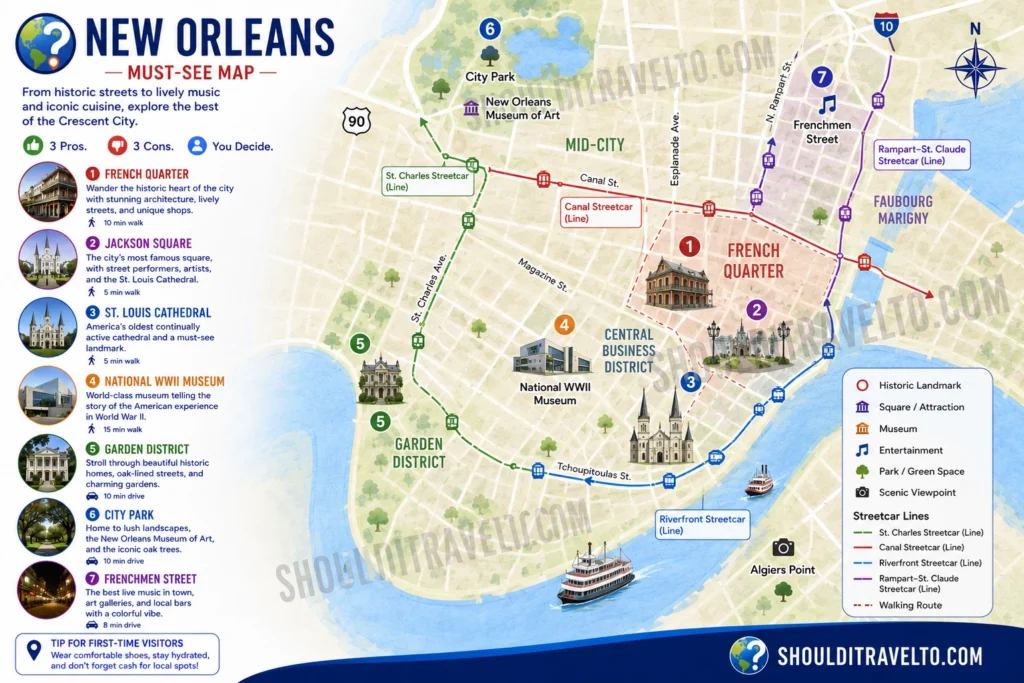
Many of the city’s best experiences happen elsewhere, including:
- The French Quarter beyond Bourbon Street
- The Garden District
- Frenchmen Street
- City Park
- Magazine Street
- Historic cemeteries
- Neighborhood restaurants
Visitors who explore beyond the party atmosphere often leave with a completely different impression of the city.
Another common mistake is underestimating the weather.
Heat and humidity can be intense for much of the year, especially during summer afternoons.
The Biggest Difference
The biggest difference between New Orleans and most American cities is the culture.
Most cities have attractions.
New Orleans has an atmosphere.
The music spills onto the streets, local traditions shape daily life, and the city’s history is visible in its architecture, cuisine, and neighborhoods.
Many visitors arrive expecting a party destination and leave remembering the food, jazz, architecture, and culture.
Few American cities possess such a strong sense of place.
Let’s explore the biggest reasons travelers visit New Orleans.
Visiting New Orleans During Mardi Gras
No event defines New Orleans more than Mardi Gras.
Every year, millions of visitors travel to the city to experience colorful parades, elaborate floats, live music, and one of the world’s most famous celebrations.
For many travelers, Mardi Gras is the trip of a lifetime.
For others, it’s actually one of the busiest, and most expensive, times to visit.
During Mardi Gras, expect:
- Large crowds
- Higher hotel prices
- Heavy traffic
- Restaurant reservations that book early
- Streets that stay busy late into the night
If you’re visiting primarily for the culture, food, architecture, and music, consider coming a few weeks before or after Mardi Gras. You’ll enjoy many of the same experiences with fewer crowds and lower prices.
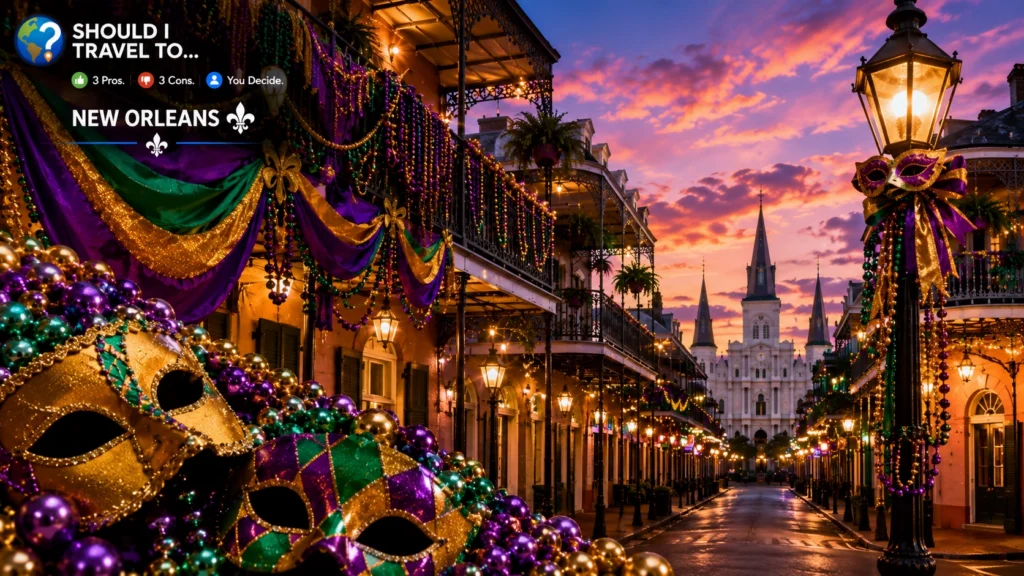
Mardi Gras: It’s More Than Just One Day
Many first-time visitors think Mardi Gras is a single day of parades and parties.
In reality, Carnival season begins every year on Twelfth Night (January 6) and continues for weeks before ending on Fat Tuesday, the day before Ash Wednesday. Throughout the season, New Orleans hosts parades, masked balls, king cake celebrations, neighborhood festivals, and countless cultural traditions, with the largest celebrations taking place during the final two weeks.
Whether you visit for the family-friendly daytime parades, the elaborate floats and marching bands, or the electric atmosphere of Mardi Gras Day itself, Carnival is unlike any celebration in the United States.
If you’re planning a trip during Carnival season, be sure to reserve hotels well in advance, as accommodations often sell out months before the biggest parade weekends.
Moreover, some travelers enjoy traveling to New Orleans for Halloween. Find out why.
Let’s explore the pros and cons of visiting New Orleans.
The 3 Biggest Pros of Visiting New Orleans
New Orleans offers exceptional culture, world-famous food, and one of the most unique atmospheres in America.
1. America’s Most Distinctive Culture
Within the Should I Travel To framework, New Orleans serves as the benchmark for Culture & Character.
Few cities anywhere in North America possess such a recognizable identity.
Visitors can experience:
- Jazz music
- Historic architecture
- Mardi Gras traditions
- Creole culture
- Unique local festivals
- Historic neighborhoods
There is simply nowhere else quite like it.
2. One of America’s Great Food Cities
New Orleans is one of the best food destinations in the United States.
Signature dishes include:
- Gumbo
- Jambalaya
- Beignets
- Po’boys
- Crawfish dishes
- Étouffée
The city’s combination of French, African, Spanish, and Caribbean influences helped create one of America’s most distinctive culinary traditions.
3. Incredible History and Architecture
New Orleans offers one of the richest historical experiences in America.
Visitors can explore:
- The French Quarter
- The Garden District
- Historic streetcars
- Jackson Square
- Historic mansions
- Historic cemeteries
The city feels dramatically different from Boston, Charleston, or Savannah despite sharing a similar historic appeal.
Now let’s look at the tradeoffs.
The 3 Biggest Cons of Traveling to New Orleans
New Orleans’ uniqueness comes with weather challenges, crowds, and aging infrastructure.
1. Heat and Humidity Can Be Intense
New Orleans summers can be difficult for visitors unfamiliar with Gulf Coast weather.
Expect:
- High humidity
- Afternoon thunderstorms
- Heat indexes above the actual temperature
- Hurricane season concerns
For many travelers, fall, winter, and spring provide a much more comfortable experience.
2. Major Events Bring Major Crowds
Events such as Mardi Gras and Jazz Fest attract enormous numbers of visitors.
Hotels become expensive, restaurants become crowded, and transportation becomes more difficult.
Some travelers love the energy.
Others prefer visiting during quieter periods.
3. Infrastructure and Cleanliness Can Be Mixed
New Orleans is an old city with old-city problems.
Visitors may encounter:
- Rough roads
- Aging buildings
- Occasional flooding issues
- Visible wear in some neighborhoods
For many travelers, these imperfections feel like part of the city’s authenticity rather than a reason to avoid visiting.

The Should I Travel To … New Orleans Scorecard
Within the Should I Travel To framework, New Orleans serves as the benchmark for Culture & Character among American cities.
Cost / Value: Average Cost
New Orleans is generally more affordable than New York, Honolulu, or San Francisco, although major festivals can significantly increase prices.
Weather: Fair
Best Time to Visit: October–April
The weather is pleasant during much of the winter and spring but becomes challenging during summer.
Crowds & Tourist Density: Crowded
Major festivals and weekends can make parts of the city feel extremely busy.
Walkability & Transportation: Easy Without a Car
Most visitors can comfortably explore the major tourist areas without renting a vehicle.
Things To Do: Strong
Most travelers can comfortably fill three to five days exploring neighborhoods, museums, food, music, and local culture.
Food & Dining: World-Class
New Orleans belongs in the top tier of American food destinations.
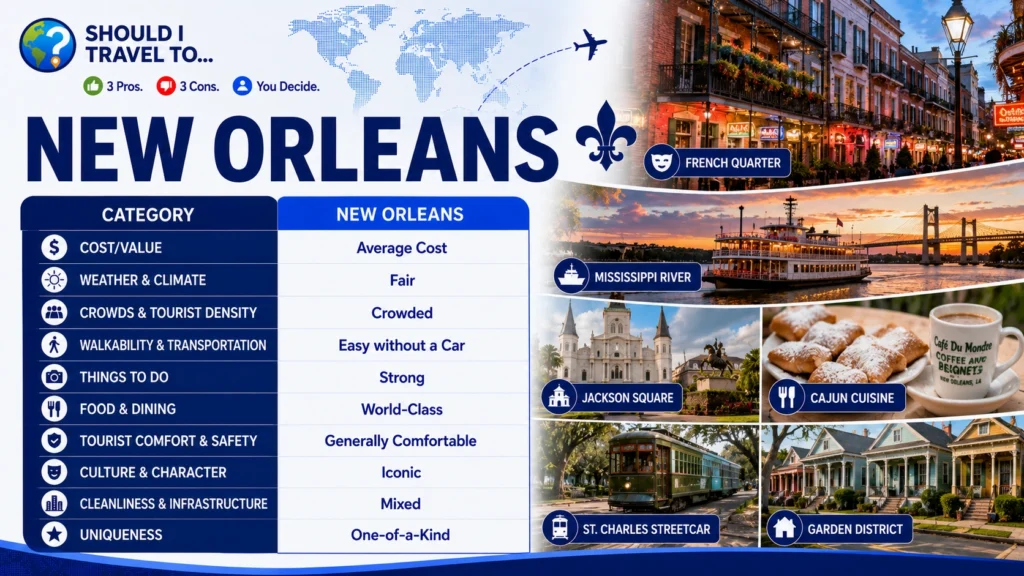
Tourist Comfort & Safety: Generally Comfortable
Most tourist areas are comfortable and easy to navigate, although visitors should use normal urban awareness.
Culture & Character: Iconic
No American city scores higher in this category.
Cleanliness & Infrastructure: Mixed
The city shows its age in places, but tourism infrastructure remains strong.
Uniqueness: One-of-a-Kind
There is no substitute for New Orleans.
If you skip New Orleans, there is nowhere else in America that offers the same experience.
Atmosphere
New Orleans feels unlike any other city in the United States.
It feels:
- Historic
- Musical
- Lively
- Colorful
- Creative
- Unpredictable
- Slightly worn
- Authentic
One moment you’re listening to a jazz band in Jackson Square. The next you’re wandering quiet residential streets beneath centuries-old oak trees before ending the evening in a neighborhood restaurant serving recipes that have existed for generations.
Unlike cities that feel polished or carefully planned, New Orleans embraces its imperfections. That’s part of its charm.
Ideal Trip Length
3 Days:
✓ French Quarter
✓ Garden District
✓ Frenchmen Street
✓ Signature restaurants
4 Days:
✓ Best balance
✓ Museums
✓ City Park
✓ Historic cemeteries
✓ Riverfront
5 Days:
✓ Neighborhood exploration
✓ Food tour
✓ Swamp tour or plantation visit
✓ Slower pace
Who Should Travel To New Orleans?
Given the strengths and weaknesses of New Orleans, some travelers will enjoy the city more than others.
New Orleans Is Best For:
- Food lovers
- Music fans
- History enthusiasts
- Couples
- Cultural travelers
- Festival travelers
New Orleans Is Not Ideal For:
- Travelers seeking beaches
- Visitors who strongly dislike humidity
- Travelers looking for outdoor adventure vacations
- Visitors who prefer modern cities
Final Verdict
New Orleans may be the most distinctive city in America.
The food is exceptional, the music is unforgettable, and the culture permeates nearly every part of the city.
The weather can be challenging and the infrastructure imperfect, but those tradeoffs are rarely enough to outweigh what makes New Orleans special.
Within the Should I Travel To framework, New Orleans serves as the benchmark for culture and character among American destinations.
The best destination isn’t the one with the highest score.
It’s the one whose strengths match what you’re looking for.
3 Pros. 3 Cons. You Decide.
New Orleans Frequently Asked Questions
Is New Orleans worth visiting?
Yes. New Orleans offers one of the most unique travel experiences in North America.
How many days should you spend in New Orleans?
Most visitors should plan for three to five days exploring New Orleans.
Is New Orleans expensive?
New Orleans generally falls into the Average Cost category, although festivals can significantly increase costs.
What is the best time to visit New Orleans?
The best time to visit New Orleans is October through April, which offers the best combination of weather and events.
Do you need a car in New Orleans?
No, you do not need a car in New Orleans.
Most visitors can comfortably explore the city without renting a vehicle.
Is New Orleans safe for tourists?
Most visitors spend their time in popular tourist areas that are generally comfortable and easy to navigate.
As with any major city, visitors should remain aware of their surroundings and follow standard travel precautions.
What is New Orleans known for?
New Orleans is best known for:
- Jazz music
- Mardi Gras
- Creole cuisine
- The French Quarter
- Historic architecture
- Festivals
- Unique local culture
Is New Orleans good for first-time visitors to the United States?
Yes, New Orleans is a good city for first-time visitors to the United States.
For travelers seeking an experience that cannot be replicated elsewhere in America, New Orleans is one of the country’s essential destinations.