
Should You Visit Steamboat Springs, Colorado, for Winter?
Quick Answer
Yes, you should travel to Steamboat Springs for winter if you want excellent skiing and snowboarding, a historic Western mountain town, natural hot springs, winter festivals, and a Colorado vacation that feels different from a typical luxury ski resort.
Steamboat Springs combines a major ski destination with a community rooted in ranching, agriculture, and natural mineral springs.
The town’s identity developed long before modern ski tourism. Early settlers established ranches and farms in the Yampa Valley, while visitors came to experience the area’s mineral springs. Skiing became part of the community’s identity in the early 1900s, eventually transforming Steamboat into one of Colorado’s best-known winter destinations.
Steamboat offers two complementary experiences.
At Steamboat Resort, you can ski and snowboard on Mount Werner, known for abundant snowfall and famous Champagne Powder®.
In town, you can explore Western-style restaurants and shops, visit historic landmarks, soak in natural hot springs, and experience the community’s winter traditions.
Steamboat is especially appealing if you want a winter vacation built around skiing but don’t want it to feel exclusively like a ski resort.
However, there are trade-offs.
What Makes Steamboat Springs Special in Winter?
Steamboat Springs sits in the Yampa Valley in northwestern Colorado, surrounded by the Rocky Mountains.
Unlike destinations that developed primarily around resort tourism, Steamboat’s history was shaped by ranching, agriculture, natural mineral springs, and the practical challenges of living in a snowy mountain region.
In the late 1800s, settlers established a permanent community in the valley. Ranching became a major part of the local economy, and the railroad’s arrival in 1909 expanded commercial activity and tourism.
Skiing developed later.
Norwegian ski pioneer Carl Howelsen arrived in the area in the early 1900s and helped introduce ski jumping and organized winter sports. The first Winter Carnival was held in 1914, helping establish a tradition that continues to shape Steamboat’s winter identity.
The modern ski resort developed decades later, transforming the town into an internationally recognized destination.
That history matters because Steamboat is more than a mountain with ski lifts.
It’s a working mountain community with a Western heritage, a history of winter recreation, and a longstanding connection to its natural springs.
What Is Steamboat Springs Known For in Winter?
Steamboat’s winter identity revolves around five experiences.
Skiing and Snowboarding
Steamboat Resort on Mount Werner is the main attraction, drawing visitors with its extensive terrain and celebrated Champagne Powder® snow.
Western Mountain-Town Character
Ranching traditions, historic buildings, local businesses, and Western-themed events distinguish Steamboat from destinations focused primarily on luxury resort amenities.
Natural Hot Springs
The area has several opportunities to soak in mineral-rich hot springs, including Old Town Hot Springs in town and Strawberry Park Hot Springs outside the main commercial area.
Winter Festivals
Steamboat’s Winter Carnival combines winter sports, community traditions, and unusual events that reflect the town’s longstanding relationship with snow.
Outdoor Winter Recreation
Snowshoeing, cross-country skiing, snowmobiling, and other cold-weather activities give visitors alternatives to spending every day on the downhill slopes.
These experiences make Steamboat particularly appealing to travelers who want skiing to be the foundation of their vacation rather than its only activity.
The 3 Biggest Reasons to Choose Steamboat Springs for Winter
Steamboat Springs is a historic Western mountain town with renowned powder skiing, distinctive local character, and natural hot springs. These three advantages make it especially appealing to travelers who want a winter getaway with more personality than a typical resort stay.
1. Excellent Skiing and Famous Champagne Powder® Snow
Steamboat’s biggest attraction is its skiing.
Steamboat Resort offers a substantial mountain experience for skiers and snowboarders, with terrain for all ability levels, mountain views, and the dry, light snow behind its Champagne Powder® reputation.
For experienced skiers, the resort offers varied terrain and several days on the mountain without repeating the same limited selection of runs.
Beginners can take lessons and build their skills, though learning to ski at a major mountain resort can get expensive when you factor in lift tickets, rentals, and instruction.
The mountain also draws families and groups with different ability levels.
Because skiing is so central to Steamboat’s identity, the town has the infrastructure and services to support a winter sports vacation.
If skiing or snowboarding is your primary reason for traveling to Colorado, Steamboat deserves serious consideration.
Best reason to choose Steamboat: You want a substantial ski vacation with a distinctive Western mountain-town setting.
2. A Western Mountain Town With History Beyond Skiing
Steamboat’s history gives it character beyond the ski resort.
The Yampa Valley developed around ranching and agriculture, and that heritage remains part of the community’s identity.
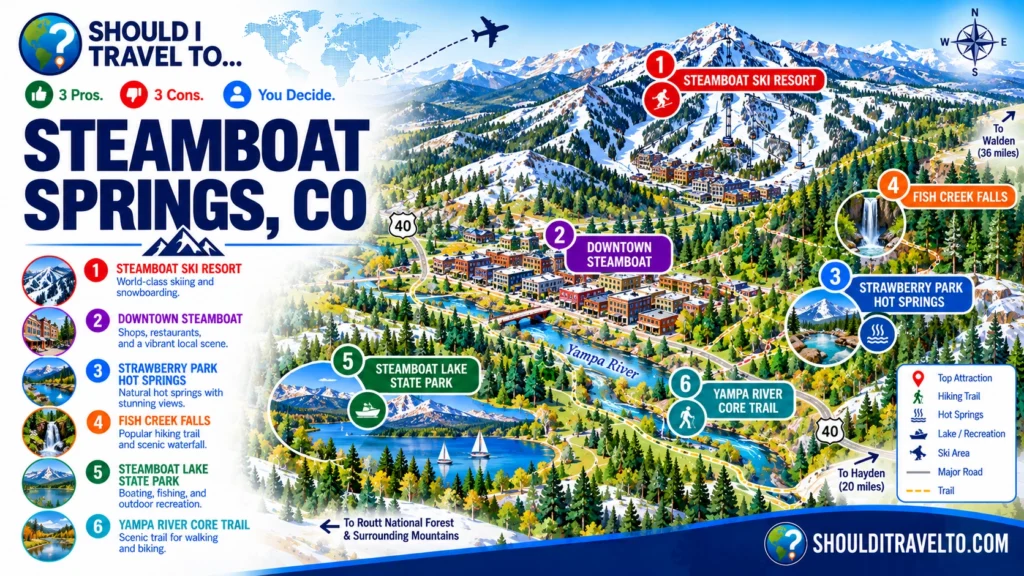
Explore a different side of Steamboat by visiting the historic downtown area, shopping at local shops, dining at independent restaurants, and learning about the region’s past at the Tread of Pioneers Museum.
The town also has a longstanding winter sports tradition that predates the modern resort.
Howelsen Hill, associated with Carl Howelsen and the early development of skiing in Steamboat, connects to the community’s winter recreation history.
That combination of ranching heritage, historic buildings, and ski culture gives Steamboat a different atmosphere from a destination where the resort dominates nearly every aspect of the visitor experience.
It’s especially appealing if you enjoy learning about the places you visit rather than simply checking off activities.
Best reason to choose Steamboat: You want a ski destination with a recognizable local identity and a history worth exploring.
3. Hot Springs and Winter Experiences Beyond the Slopes
Not everyone wants to ski from morning until afternoon. Steamboat offers alternatives that make it easier to build a varied winter vacation.
The area’s natural mineral springs are among its most distinctive attractions.
Old Town Hot Springs is located in town and offers a convenient option for visitors who want to relax in warm water after a cold day outdoors.
Strawberry Park Hot Springs offers a more secluded natural setting outside town. Getting there in winter requires additional planning, and road conditions and vehicle requirements can be important considerations.
Beyond soaking, you can explore the town’s winter festivals, try snowshoeing or cross-country skiing, enjoy local restaurants, or simply spend time in a mountain community surrounded by snow-covered scenery.
These experiences can also help balance a vacation when some members of your group ski more than others.
Steamboat isn’t just a destination for people who want to maximize their time on the mountain.
It’s a destination for travelers who want to combine winter sports with relaxation, local culture, and outdoor experiences.
Best reason to choose Steamboat: You want a winter vacation with skiing, hot springs, and activities that don’t require a lift ticket.
The 3 Biggest Downsides of Choosing Steamboat Springs for Winter
Steamboat Springs delivers a memorable winter experience, but it may not be the right fit for every traveler. Premium ski experiences can come with premium prices, getting between attractions takes planning, and winter weather can complicate travel.
1. Ski Vacations Can Be Expensive
Steamboat Springs offers a premium mountain vacation, particularly during popular winter periods. Skiing, upscale lodging, dining, and resort amenities can make it a substantial investment, especially for families.
A trip can cost money for lodging, lift tickets, equipment rentals, ski lessons, meals, transportation, and other activities.
If you visit during Christmas, New Year’s Eve, or another busy winter period, lodging and other expenses can add up quickly.
Families face an additional challenge because several people may need lift tickets, equipment, lessons, and winter clothing.
Even travelers who don’t ski should expect to budget for accommodation and dining in a popular Colorado mountain destination.
You can manage costs by traveling outside peak periods, booking lodging early, comparing accommodations with kitchen facilities, and limiting the number of days you spend on the slopes.
But if affordability is your primary concern, Steamboat may not be the best choice.
2. Getting Around Requires Planning
Steamboat’s attractions are spread between the ski resort, downtown, lodging areas, and hot springs outside the main commercial district.
The ski resort and downtown are separate areas, so don’t assume you can walk everywhere just because you booked a hotel in town.
Some lodging offers convenient access to resort transportation, while other accommodations may require additional travel.
Public transit and resort-area transportation can help, but your best option depends on where you stay and what you plan to do.
Hot springs outside town add another consideration. Winter road conditions can make the trip to Strawberry Park Hot Springs more demanding, and you may need appropriate transportation.
Consider transportation before booking your accommodation, especially if you want to ski, explore downtown, and visit multiple hot springs without renting a car.
Steamboat is manageable with planning, but not every attraction is within easy walking distance.
3. Winter Weather Can Complicate Travel
Steamboat’s winter weather is a major reason to visit, but it can also create challenges.
Snow and cold temperatures are essential to the destination’s winter appeal. They can also affect road conditions, driving times, and transportation schedules.
Car travelers may encounter snowy roads and mountain driving conditions.
Those flying into the region should also allow flexibility for ground transportation and possible weather-related delays.
Even once you arrive, cold temperatures and changing conditions can affect how long you want to spend outdoors.
Pack appropriate winter clothing, check forecasts before traveling, and avoid planning an itinerary that depends on every transfer happening exactly on schedule.
Winter weather is part of the Steamboat experience. The key is being prepared.
Planning Your Steamboat Springs Trip
The right timing, lodging location, and transportation plan can make a big difference in your Steamboat Springs experience. Before booking, consider what you want to prioritize and how much time and budget you’ll need.
When Is the Best Time to Visit Steamboat Springs for Winter?
Steamboat’s winter season generally runs from late fall into spring, though snow conditions, operating dates, and the experience vary throughout.
The best time to visit depends on whether you prioritize holiday atmosphere, skiing conditions, lower crowds, or value.
December: Holiday Atmosphere
December offers the appeal of a Colorado winter vacation, with snow-covered scenery, holiday travel, and the chance for excellent skiing as the season develops.
Christmas and New Year’s are especially popular periods.
The trade-off is that holiday travel can mean higher lodging costs, busier slopes, and less flexibility when booking.
If you want a festive winter getaway and can afford it, December can be appealing. Check resort operating dates and snow conditions before committing to early-season travel.
January: A Winter Sports Focus
January is a strong option for travelers whose main priority is skiing and snowboarding.
The holiday rush has passed after New Year’s, although holiday weekends and other popular periods can still be busy.
Cold weather is part of the experience, so bring appropriate clothing and plan for changing mountain conditions.
January can work particularly well for visitors who care more about time on the slopes than holiday celebrations.
February: Skiing and Winter Traditions
February offers a combination of winter sports and seasonal community events.
Steamboat’s Winter Carnival is a distinctive part of the town’s winter identity, with traditions associated with skiing, winter recreation, and local heritage.
The carnival’s exact dates and event schedule vary, so check the official calendar when planning.
February can also be busy, especially around school breaks and holiday weekends.
If you want to ski alongside a memorable local winter event, consider February.
March: Longer Days and Spring Skiing
March can appeal to travelers who want to ski while enjoying longer daylight hours.
Conditions vary year to year, and fresh snowfall isn’t guaranteed on any given date.
Spring break can also bring crowds and higher lodging costs.
March is a good option if you want to combine skiing with a more relaxed late-season atmosphere, but check snow conditions and resort operations before booking.
So, When Should You Go?
Choose December for holiday atmosphere, January for a winter sports-focused trip, February for skiing and winter traditions, or March for longer days and spring skiing.
If you have flexibility, compare prices and conditions instead of assuming one month is always best.
For a ski destination, your vacation timing can affect both the quality of your experience and the cost.
What to Do in Steamboat Springs Besides Skiing
Steamboat’s ski resort is the main attraction, but you don’t have to spend every day on the slopes.
Visit the Hot Springs
Old Town Hot Springs is a convenient option for visitors staying downtown or in other central areas.
Strawberry Park Hot Springs offers a more secluded natural setting, but you’ll need to plan transportation and confirm winter access requirements.
Hot springs can be particularly appealing after skiing, snowshoeing, or spending several hours in cold weather.
Check reservation requirements, operating policies, and road conditions before visiting.
Explore Historic Downtown
Steamboat’s downtown offers restaurants, shops, and a glimpse of its Western heritage.
Make time for the historic core instead of treating the town as just a place to sleep between ski sessions.
The Tread of Pioneers Museum offers a chance to learn more about the community’s history, including its ranching roots and the development of winter sports.
Experience the Winter Carnival
Steamboat’s Winter Carnival reflects the town’s longstanding connection to winter recreation.
Depending on the year’s program, the event includes ski-related traditions, community activities, and distinctive winter-skills demonstrations.
It’s one of the best ways to experience the local culture beyond the resort.
Because the schedule changes, check the official event calendar before planning a trip around the carnival.
Try Other Winter Activities
Depending on conditions and availability, visitors can snowshoe, cross-country ski, snowmobile, and enjoy other outdoor winter activities.
These options can be useful for non-skiers or groups that want a day away from downhill skiing.
Choose activities based on your experience level, available time, and willingness to spend extended periods outdoors.
How Long Should You Stay in Steamboat Springs?
Your ideal trip length depends on whether skiing is your main goal or only one part of the vacation.
Two to three days: A short getaway works if you want to ski a day or two, explore downtown, and visit a hot spring.
Four to five days: This is a strong choice for many visitors. It gives you time for multiple days on the mountain, an afternoon or evening at the hot springs, and time to explore the town.
Six to seven days: A week works well for serious skiers, families, and travelers who want to combine skiing with other winter activities. It also gives you more flexibility if weather affects your plans.
For a first visit, four or five days is a reasonable starting point.
That gives you enough time to experience the resort and town without making every day revolve around a single activity.
What Is Steamboat Springs Like Outside Winter?
Steamboat Springs is a year-round destination, although winter is one of its defining seasons.
Spring: A Transition Season
Spring brings changing snow conditions and a transition between winter sports and warmer-weather recreation. Depending on the timing, some winter activities may continue while others wind down.
This can be a quieter period, but travelers should check resort operations and seasonal opening dates rather than assuming all winter attractions remain available.
Summer: Hiking, Biking, and Outdoor Recreation
Summer brings hiking, mountain biking, fishing, and other outdoor activities to the Yampa Valley.
The town’s ranching heritage and mountain setting remain part of the experience, but the focus shifts from snow sports to warmer-weather adventures.
Fall: A Quieter Mountain Getaway
Fall offers cooler weather, changing foliage, and opportunities to explore the town and surrounding scenery.
It’s an appealing alternative for travelers who enjoy mountain towns but don’t need a ski vacation.
If downhill skiing is your primary reason for visiting, winter is the obvious choice.
If you want outdoor recreation without the expense and logistics of a major ski trip, summer and fall are also worth considering.
Who Should Visit Steamboat Springs for Winter?
Steamboat Springs is particularly well suited to travelers who:
- Want a substantial ski or snowboard vacation
- Appreciate a mountain town with Western character
- Want to combine skiing with natural hot springs
- Enjoy winter festivals and outdoor recreation
- Want more to do than ski from morning until afternoon
- Are comfortable budgeting for a popular Colorado winter destination
- Don’t mind planning around snow, cold temperatures, and transportation
It’s especially appealing for couples, families, and groups who want a mix of winter sports and other mountain-town experiences.
Steamboat may not be the right fit if you:
- Want a low-cost winter vacation
- Have little interest in skiing or snowboarding
- Prefer warm-weather destinations
- Want to avoid winter driving and transportation logistics
- Expect every attraction to be within easy walking distance
- Prefer a major city with museums, nightlife, and extensive indoor attractions
Steamboat appeals for its mountain setting, winter sports, hot springs, and local character.
If those experiences don’t interest you, the cost and logistics may be difficult to justify.
Final Verdict
Yes, if you want a ski-centered vacation that combines excellent mountain recreation with a historic Western town, natural hot springs, and winter traditions, you should travel to Steamboat Springs for Winter.
Moreover, Steamboat Springs stands out because its identity extends beyond skiing.
But that doesn’t mean Steamboat is the right winter destination for everyone.
It’s a premium destination during popular periods. Winter weather requires preparation, and getting between the resort, town, and outlying attractions takes planning.
If you’re looking for a budget-friendly escape or a destination with extensive indoor attractions, another choice may make more sense.
If you want snow-covered mountains, skiing, hot springs, and a town with a genuine Western identity, Steamboat Springs is worth considering.
The decision: Choose Steamboat Springs for winter if you want skiing + Western heritage + hot springs. Skip it if the expense and winter logistics outweigh the appeal of a mountain vacation.
3 Pros. 3 Cons. You Decide.
Steamboat Springs for Winter Frequently Asked Questions
Is Steamboat Springs worth visiting in winter?
Yes, especially if you want a winter vacation built around skiing, Western mountain-town character, and natural hot springs. Steamboat is known for its Champagne Powder® snow, historic downtown, and long-standing ski culture. However, lodging, lift tickets, and transportation can make a winter trip costly. It’s a better fit for travelers who plan to spend several days enjoying the mountain and surrounding area than for those seeking a quick, inexpensive getaway.
Is Steamboat Springs expensive in winter?
Steamboat Springs is a premium winter ski destination, particularly around holidays and peak travel dates. Lift tickets, lodging near the resort, equipment rentals, dining, and transportation can add up quickly. Travelers seeking a premium ski vacation may find the resort experience worth the investment, while budget-conscious visitors can choose less expensive accommodations, travel outside peak periods, and do activities that don’t require a lift ticket.
Is Steamboat Springs good for non-skiers in winter?
Yes. Non-skiers can visit Old Town Steamboat Springs, explore local museums and shops, enjoy winter scenery, or relax in the area’s hot springs. Snowshoeing, tubing, and other seasonal activities may also be available, depending on conditions and operating schedules. However, skiing is a major part of the destination’s winter identity, so travelers not interested in snow sports should plan activities in advance to ensure the trip offers enough variety.
What is the best month to visit Steamboat Springs in winter?
December through March can all be good times to visit, depending on your priorities. December brings a holiday atmosphere and the chance of early-season skiing, while January and February are popular for travelers focused on winter sports and snow conditions. March can offer a combination of skiing and longer daylight hours. Snowfall, temperatures, and mountain conditions vary each year, so check current conditions before booking.
Do you need a car in Steamboat Springs during winter?
Not necessarily, but your transportation plans matter. Visitors staying near the ski resort or downtown may be able to use local transit and resort-area transportation for many activities. A car can provide more flexibility for exploring outlying attractions, but winter driving may involve snow, ice, and changing road conditions. Before renting a car, check where you’re staying, which activities you plan to do, and whether transportation is available for each.
Is Steamboat Springs better than Aspen for a winter vacation?
It depends on the experience you’re looking for. Steamboat appeals to travelers who want a Western mountain-town atmosphere, a strong ski culture, and access to hot springs. Aspen is known for its upscale resort scene, distinctive shopping and dining, and access to multiple ski mountains. Both offer premium winter experiences, but both can be expensive. Compare skiing priorities, lodging costs, après-ski preferences, and the overall atmosphere before choosing.
How many days should you spend in Steamboat Springs in winter?
Three to five days is a useful starting point for a winter trip. Three days can work for a focused ski getaway, while four or five days allow more time for skiing, hot springs, downtown exploration, and other winter activities without feeling rushed. Travelers planning multiple days on the mountain or visiting during a busy holiday period may prefer a longer stay. Build flexibility into your itinerary, as winter weather can affect travel and outdoor plans.