

Should You Visit Las Vegas, Nevada, Sin City?
Quick Answer
Yes, you should consider visiting Las Vegas, Nevada, if you enjoy major entertainment, elaborate resorts, exceptional restaurants, nightlife, shopping, professional sports, and distinctive vacation experiences.
Las Vegas is unlike most American cities. Rather than organizing a trip around historic neighborhoods, museums, or traditional sightseeing, many visitors build their vacation around the resorts and attractions along the Las Vegas Strip.
You can spend the afternoon exploring themed resorts, enjoy dinner at an acclaimed restaurant, attend a major performance, and finish the evening overlooking the illuminated skyline.
But Las Vegas isn’t exclusively about casinos and nightlife.
Visitors can enjoy premium resort accommodations, poolside relaxation, shopping, sporting events, museums, and excursions into the surrounding Mojave Desert.
The destination also changes during major holidays. New Year’s Eve brings enormous celebrations, while Christmas decorations and seasonal entertainment offer a different winter experience.
However, Las Vegas isn’t for everyone.
Crowds, noise, summer heat, and the costs of dining, entertainment, and resort amenities can make the experience less appealing to some travelers.
The biggest question is whether you enjoy a vacation where entertainment, resorts, and spectacle are the main attractions.
For travelers who appreciate that environment, Las Vegas offers a distinctive American vacation.
Las Vegas at a Glance
| Category | Las Vegas |
| Location | Southern Nevada, Mojave Desert |
| Best known for | Five-star Las Vegas Strip luxury resorts, world-class casinos, Cirque du Soleil and residency shows, VIP nightclub packages, and celebrity-chef dining |
| Best time to visit | March–April and October–November |
| Best trip length | 3–4 days |
| Cost | Moderate / Standard Cost to Premium / Luxury Pricing (1,200–2,500+ typical trip expenses; higher for five-star Strip suites) |
| Weather | Desert climate; extremely hot summers, mild winters |
| Crowds | High, particularly during conventions, holidays, and major events |
| Walkability | Walkable resort districts, but substantial distances |
| Public transportation | Direct Harry Reid International Airport transfers, Las Vegas Monorail, rideshares, and private luxury limousine services |
| Rental car | Unnecessary for Strip stays due to steep resort valet parking fees, unless booking a convertible rental for Red Rock Canyon or Grand Canyon day tours |
| Food | World-renowned culinary destination featuring Michelin-starred tasting menus, celebrity-chef steakhouses, and upscale buffet dining |
| Atmosphere | Energetic, theatrical, entertainment-focused |
| Best for | Couples, friends, entertainment fans, food lovers, premium travelers |
| Biggest drawback | Extreme summer desert heat, convention crowds, and cumulative resort fees, VIP show tickets, and luxury dining costs |
Quick Verdict: Las Vegas is one of America’s most distinctive entertainment destinations. Its greatest advantage is the concentration of five-star Strip hotels, Michelin-starred restaurants, headline residency shows, and VIP nightlife. Its biggest drawback is that daily resort fees, premium show tickets, and luxury suites can quickly escalate costs without booking flight-and-hotel vacation packages or careful planning.
The Biggest Mistake First-Time Las Vegas Visitors Make
The biggest mistake first-time visitors make is assuming the Las Vegas Strip is smaller and easier to explore than it actually is.
On a map, major resorts appear close together. In practice, walking between them can take considerably longer than expected.
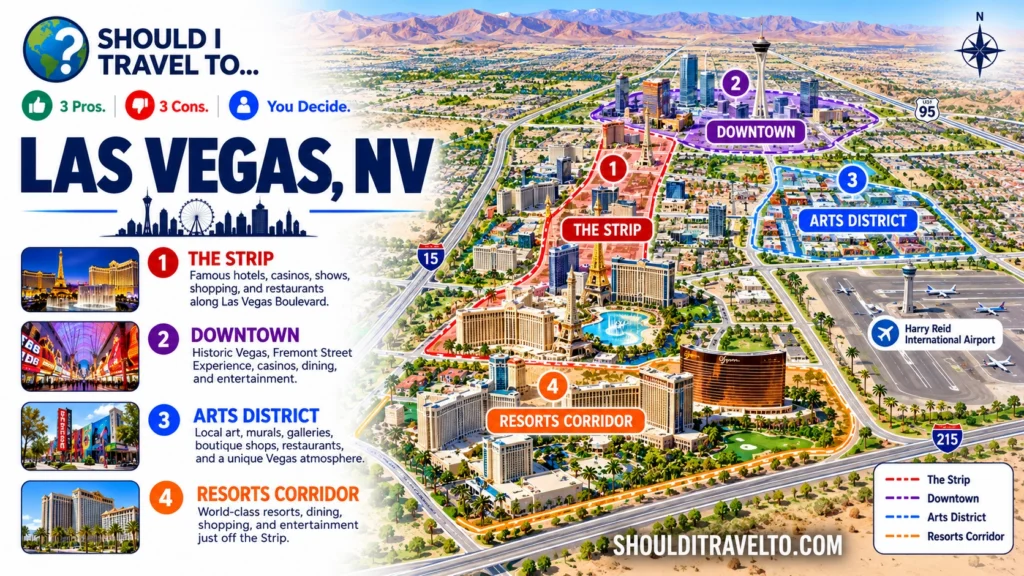
Resort properties are enormous. Entrances may be set back from the street, pedestrian bridges determine where visitors can cross, and moving through a casino or shopping complex can add substantial distance.
Summer heat makes those walks even more demanding.
Another mistake is trying to experience every major resort in one trip.
Las Vegas has enough hotels, restaurants, shows, attractions, and entertainment venues to fill multiple vacations. A better approach is to organize your itinerary geographically.
Explore the central Strip one day, visit another section another day, and reserve time for Downtown Las Vegas or an excursion beyond the resort corridor.
Most importantly, choose the experiences that actually interest you. You don’t need to visit every casino, see multiple shows, or stay out late every night to enjoy Las Vegas.
A successful trip is about finding your version of the destination.
What Makes Las Vegas Special?
Las Vegas is distinctive because entertainment is built into nearly every part of the visitor experience. In most cities, hotels provide accommodations while visitors travel elsewhere for attractions.
In Las Vegas, the hotels themselves are often attractions.
Large resorts contain restaurants, theaters, shopping centers, pools, spas, casinos, and elaborate architectural features.
Some recreate recognizable international settings. Others emphasize contemporary design, luxury hospitality, or large-scale entertainment.
The Strip brings these experiences together within a concentrated resort corridor.
Las Vegas also offers an unusual range of vacation styles.
A couple might choose a premium hotel, spa treatments, fine dining, and a performance. Friends might focus on nightlife, concerts, and sporting events. A family might prefer pools, interactive attractions, and age-appropriate entertainment.
And outdoor enthusiasts can use Las Vegas as a base for exploring Red Rock Canyon, Valley of Fire, Hoover Dam, and other desert attractions.
What makes Las Vegas different is how entertainment shapes the destination itself.
The 3 Biggest Reasons to Visit Las Vegas
1. An Extraordinary Concentration of Entertainment
Las Vegas offers one of America’s most concentrated collections of entertainment experiences.
Visitors can choose from concerts, comedy, magic, theatrical productions, resident performers, major sporting events, and other live shows.
The Strip also provides attractions that don’t require attending a scheduled performance.
The Bellagio Fountains, themed resort interiors, illuminated architecture, observation experiences, and shopping complexes make exploring the area an activity in itself.
Professional sports add another dimension.
Las Vegas offers VIP ticket packages for the NHL’s Vegas Golden Knights, NFL’s Las Vegas Raiders, Formula 1 motorsports, and headline Sphere or residency concerts, while major boxing, mixed martial arts, motorsports, and other events also attract visitors.
The advantage is variety.
You can build an entire vacation around entertainment without repeating the same activity.
However, popular performances and major events may require reservations, and ticket prices can vary substantially.
For travelers who prioritize shows, concerts, sports, and nightlife, Las Vegas is particularly appealing.
2. Exceptional Resorts, Dining, and Premium Experiences
Las Vegas offers accommodations and hospitality across a broad range of budgets, but its premium experiences are especially notable.
Five-star Strip resorts offer penthouse suites, private poolside cabanas, luxury wellness spas, Michelin-starred celebrity-chef tasting menus, and extensive amenities. Some travelers visit primarily to enjoy the hotel rather than spend every day sightseeing.
The dining scene is another major attraction.
Visitors can choose from casual restaurants, food halls, buffets, steakhouses, international cuisine, and chef-driven establishments.
Premium dining is a significant part of Las Vegas’s identity, but an enjoyable trip doesn’t require every meal to be elaborate.
One of the destination’s advantages is the ability to combine different experiences.
You might enjoy a casual lunch, spend the afternoon at a resort pool, and reserve a special restaurant for dinner.
For travelers who appreciate upscale hospitality, Las Vegas can provide a complete resort vacation without leaving the city.
Premium experiences can be worthwhile, but travelers should understand the full price of accommodations, dining, entertainment, and amenities before booking.
3. Las Vegas Offers More Than the Strip
Although the Strip dominates the city’s tourism identity, Las Vegas offers worthwhile experiences beyond its main resort corridor.
Downtown Las Vegas provides a different atmosphere. The Fremont Street Experience combines historic casinos, neon signs, restaurants, bars, and a large overhead video canopy.
The nearby Neon Museum explores the city’s history through preserved signs and displays.
Beyond the urban area, the surrounding desert provides a dramatic contrast.
Red Rock Canyon, Valley of Fire, and Hoover Dam, plus Grand Canyon helicopter tours, require booking a luxury rental car or guided VIP sightseeing excursion.
Red Rock Canyon National Conservation Area offers sandstone formations, scenic drives, and hiking.
Valley of Fire State Park is known for colorful rock formations and desert landscapes.
Hoover Dam provides an engineering and historical attraction, while Lake Mead offers additional outdoor recreation.
Mount Charleston provides mountain scenery and cooler temperatures than the valley during parts of the year.
These excursions make Las Vegas more versatile than its reputation might suggest.
However, many require a rental car, organized tour, or separate transportation arrangements.
For travelers staying four or five days, adding one outdoor excursion can make the trip feel more varied.
The 3 Biggest Downsides of Visiting Las Vegas
1. The Total Cost Can Be Higher Than Expected
Las Vegas sometimes advertises surprisingly affordable hotel rooms. But the nightly rate doesn’t necessarily represent the full cost of a vacation.
Mandatory daily resort fees, valet parking rates, VIP show tickets, and luxury dining add up fast, making bundled flight-and-hotel vacation packages and travel rewards credit cards essential for maximizing value.
A traveler who books a moderately priced room but attends several major shows and chooses premium restaurants may spend more than expected.
This isn’t inherently a disadvantage for travelers seeking a premium vacation. The issue is understanding what the experience will cost.
Compare the complete hotel price, review resort amenities, and prioritize the activities you value most.
Las Vegas offers different spending levels, but it rewards careful budgeting.
2. The Strip Can Be Overwhelming
The same concentration of attractions that makes Las Vegas appealing can also make it exhausting. Large crowds, bright lights, loud environments, substantial walking distances, and busy resort interiors are common parts of the experience.
The Strip can feel particularly demanding during major conventions, holiday celebrations, and popular weekends.
Travelers who enjoy active entertainment districts may appreciate this atmosphere.
Travelers seeking tranquil boutique hotels, historic East Coast charm, or relaxing wine-country resorts like Napa Valley may find the Strip’s energy overwhelming.
Choosing a hotel with the right atmosphere and planning breaks can make a significant difference.
3. Summer Heat Can Limit Outdoor Activities
Las Vegas is located in the Mojave Desert, where summer temperatures frequently exceed 100 degrees Fahrenheit.
Extreme heat affects walking, sightseeing, hiking, and other outdoor activities.
Although resorts provide extensive air-conditioned environments, visitors still need to move between buildings and transportation stops.
Booking luxury resort pool daybeds, world-class indoor spa treatments, and climate-controlled casino lounges keeps summer stays comfortable during peak afternoon heat.
Spring and fall generally provide more comfortable conditions for exploring the Strip and surrounding desert.
Travelers planning summer visits should prioritize indoor activities during the hottest hours and take heat safety seriously.
The Should I Travel To … Las Vegas Scorecard
Las Vegas performs particularly well in entertainment, dining, hospitality, and uniqueness.
Its main limitations are summer weather, crowds, transportation between attractions, and the potential for substantial travel expenses.
| Category | Rating |
| Cost / Value | Moderate / Standard Cost ($1,200-2,500) to Premium / Luxury Pricing ($2,500+) |
| Weather & Climate | Good |
| Crowds & Tourist Density | Very Crowded |
| Walkability & Transportation | Car Helpful |
| Things To Do | Endless |
| Food & Dining | Exceptional |
| Tourist Comfort & Safety | Comfortable |
| Culture & Character | One-of-a-Kind |
| Cleanliness & Infrastructure | Excellent |
| Uniqueness | One-of-a-Kind |
Cost / Value: Moderate / Standard Cost to Premium
Las Vegas accommodates different budgets, but the overall trip cost depends heavily on hotel selection, entertainment, and dining.
Under our typical-trip framework, Moderate / Standard Cost represents approximately $1,200-$2,500, while Premium begins at $2,500.
A moderately priced trip is possible, particularly with flexible dates and selective spending.
Travelers booking five-star Strip suites, Michelin-starred dining, VIP residency tickets, and private bottle service should expect a premium vacation budget.
Weather & Climate: Good
Best Time to Visit: March–April and October–November
Spring and fall generally offer the most comfortable conditions for outdoor sightseeing. Summer is extremely hot, while winter is usually milder but can bring chilly evenings.
Las Vegas is a year-round destination because so many attractions are indoors.
Crowds & Tourist Density: Very Crowded
The Strip attracts substantial visitor traffic year-round. Conventions, major sporting events, holidays, and popular weekends can increase congestion.
Travelers seeking a quieter experience should consider weekday stays and less event-heavy dates.
Walkability & Transportation: Car Helpful
The central Strip is pedestrian-oriented, but distances are greater than they appear.
Direct Harry Reid International Airport shuttle transfers, private black-car limousines, rideshares, and the Las Vegas Monorail simplify Strip transit, while booking a convertible car rental unlocks Red Rock Canyon and Grand Canyon day trips.
A rental car is generally unnecessary for a resort-focused trip but helpful for desert excursions.
Things to Do: Endless
Shows, casinos, resorts, restaurants, nightlife, shopping, sports, attractions, and nearby outdoor destinations provide a wide variety.
A short visit can cover the highlights, while longer trips allow more specialized experiences.
Food & Dining: Exceptional
Las Vegas boasts world-renowned celebrity-chef steakhouses, Michelin-starred tasting menus, luxury champagne brunches, and upscale resort buffets.
Dining can be a central reason to visit rather than simply a supporting activity.
Tourist Comfort & Safety: Comfortable
Major resort areas are designed for large numbers of visitors and provide extensive tourist infrastructure.
However, crowds, nightlife, traffic, and differences between neighborhoods require normal urban precautions.
Visitors should remain aware of their surroundings and use established transportation options.
Culture & Character: One-of-a-Kind
Las Vegas has a distinctive identity shaped by entertainment, hospitality, casino history, architecture, and constant reinvention.
Its character differs considerably from cities defined primarily by historic neighborhoods or traditional cultural institutions.
Cleanliness & Infrastructure: Excellent
Major resorts generally maintain extensive visitor facilities, while the airport and transportation services support substantial tourism.
However, construction, congestion, and differences between resort districts and surrounding neighborhoods can affect the experience.
Uniqueness: One-of-a-Kind
Few American destinations combine enormous themed resorts, major entertainment, casinos, premium dining, professional sports, and desert scenery in the same way.
Las Vegas provides a vacation experience that is difficult to replicate elsewhere.
Planning Your Trip to Las Vegas
Las Vegas is relatively straightforward to visit, but choosing the right hotel, travel dates, and activities can substantially improve the experience.
What Is the Atmosphere Like in Las Vegas?
Las Vegas feels energetic, theatrical, and entertainment-focused.
Enormous resorts, illuminated buildings, casino floors, restaurants, shopping, and nightlife define the Strip.
Downtown Las Vegas has a different atmosphere, with historic casino properties, neon signs, and a more concentrated entertainment district.
Off-strip resorts can offer a quieter experience, while the surrounding desert provides an entirely different environment.
Las Vegas can be lively and crowded, but visitors can also create a more relaxed vacation around pools, spas, restaurants, and resort amenities.
When Is the Best Time to Visit Las Vegas?
Las Vegas is a year-round destination, but the weather changes substantially by season.
Spring: March–May
Spring is one of the strongest times to visit. Temperatures are generally comfortable for walking the Strip and exploring nearby desert attractions.
Outdoor dining, resort pools, and sightseeing become increasingly appealing. Late spring can become hot, particularly in May.
Summer: June–August
Summer brings extreme desert heat. Indoor entertainment, restaurants, shows, and resort pools remain popular, but outdoor sightseeing can be uncomfortable.
Visitors should plan around high temperatures and avoid strenuous outdoor activities during dangerous heat.
Fall: September–November
Fall is another excellent period. Temperatures generally become more comfortable, making it easier to combine resort experiences with outdoor excursions.
October and November are particularly appealing for travelers who want to explore beyond the Strip.
Winter: December–February
Winter offers milder daytime temperatures, although evenings can be chilly. Christmas decorations, New Year’s Eve celebrations, concerts, and indoor entertainment provide reasons to visit.
Winter is also a practical season for some desert sightseeing, depending on conditions.
How Many Days Should You Spend in Las Vegas?
Three to four days is a good starting point for most first-time visitors.
2 Days, Short Getaway: Explore the Strip, enjoy a memorable meal, and attend a show.
3–4 Days, Best Balance: Add Downtown Las Vegas, more resort experiences, and time to relax.
5 Days, Extended Vacation: Include an outdoor excursion, additional entertainment, and a more relaxed schedule.
A week may appeal to travelers attending a convention, combining several events, or using Las Vegas as a base for exploring southern Nevada.
For most visitors, however, three or four days provides enough time to enjoy the destination without feeling obligated to do it all.
Where Should You Stay in Las Vegas?
Hotel location is one of the most important decisions when planning a Las Vegas vacation.
Central Strip: Best for First-Time Visitors
The Central Strip provides direct access to five-star casino resorts, luxury flagship retail shopping, Bellagio fountain-view suites, and headline residency theaters. It is a practical starting point for travelers who want to explore several properties without relying entirely on transportation.
However, this area can be crowded and lively.
South Strip: Best for Major Resorts and Entertainment
The southern Strip offers large resort properties, entertainment venues, and access to recognizable landmarks. It can appeal to visitors who prefer a particular resort or event venue.
Consider the walking distance to your planned activities before booking.
North Strip: Best for Selected Resort Experiences
The North Strip features ultra-luxury five-star mega-resorts, upscale pool clubs, and high-end convention hotels with convenient access to exclusive nightlife. It may appeal to travelers who prioritize a particular hotel, but reaching central and southern attractions can require more transportation.
Downtown Las Vegas: Best for Fremont Street and Historic Vegas
Downtown Las Vegas offers boutique casino hotels, vibrant Fremont Street entertainment packages, and better-value room rates without peak Strip resort fees.
It may suit travelers who prefer the Downtown atmosphere or want to focus on its entertainment district.
Off-Strip Resorts: Best for a Quieter Stay
Off-Strip luxury golf and wellness resorts emphasize championship desert golf courses, full-service destination spas, and private poolside cabanas. These can appeal to travelers who don’t want to spend their entire vacation in the busiest tourist areas.
However, transportation to major Strip attractions may require additional planning.
For most first-time visitors, the central Strip is the easiest base. For a resort-focused vacation, the quality and amenities of the property may matter more than its exact location.
Getting Around Las Vegas
Most visitors arrive through Harry Reid International Airport. Taxis and rideshares are common ways to reach Strip hotels.
The Strip itself is walkable in sections, but visitors should not underestimate the distances between resorts. The Las Vegas Monorail connects selected properties along the east side of the resort corridor.
RTC buses provide additional transportation options, including service along Las Vegas Boulevard.
Taxis and rideshares can be useful for longer trips, although congestion may affect travel times.
A rental car is usually unnecessary if your vacation is concentrated on the Strip.
However, visitors planning to explore Red Rock Canyon, Valley of Fire, Hoover Dam, or other regional attractions may benefit from having one.
Best Things to Do in Las Vegas
Explore the Las Vegas Strip
The Strip is the centerpiece of most first-time visits. Explore selected resorts, admire the architecture, visit shopping complexes, and enjoy the atmosphere after dark.
Rather than trying to see everything, choose a few properties that interest you, such as the Bellagio Fountains.
The Bellagio Fountains are among the Strip’s most recognizable attractions. The choreographed water displays provide a memorable nighttime experience without requiring a major time commitment.
Visit Fremont Street
The Fremont Street Experience offers a different perspective on Las Vegas.
Historic casinos, neon signs, entertainment, and the overhead Viva Vision canopy distinguish Downtown from the modern Strip.
Attend a Show
Live entertainment is one of Las Vegas’s greatest strengths. Choose from concerts, comedy, magic, theatrical productions, and other performances.
Check schedules and book ahead when a particular show is important to your trip.
Enjoy a Memorable Restaurant
Las Vegas offers enough dining variety to make food a central part of the vacation. Consider reserving at least one restaurant that reflects your interests, whether that’s a steakhouse, tasting menu, international restaurant, or distinctive casual establishment.
Experience the City from Above
Observation experiences such as the High Roller and the STRAT Tower provide elevated views of Las Vegas. These can be particularly appealing after dark when the Strip is illuminated.
Visit the Neon Museum
The Neon Museum offers insight into Las Vegas history through preserved signs and exhibits. It provides a different perspective on the destination beyond modern resorts.
Explore the Surrounding Desert
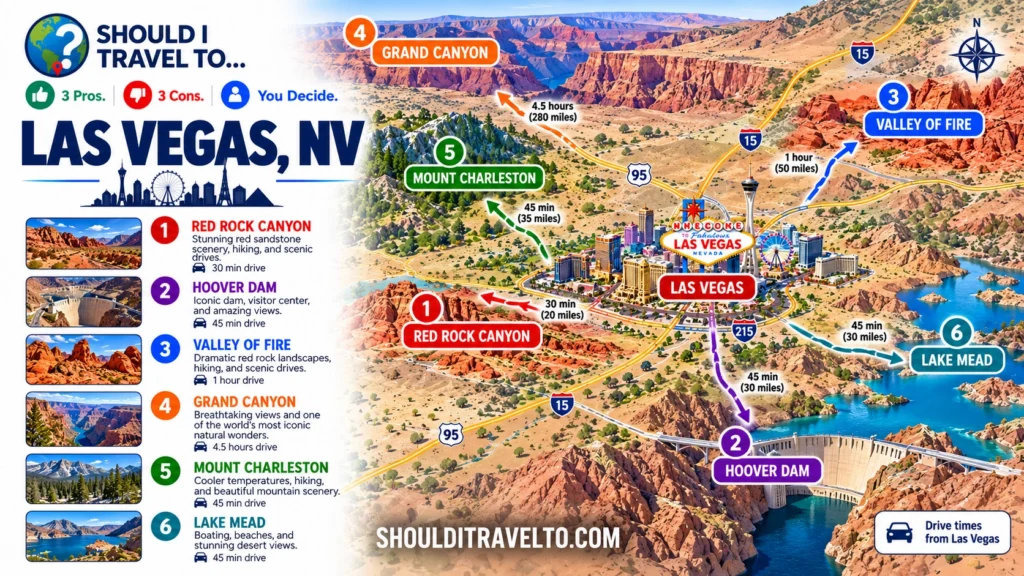
Red Rock Canyon, Valley of Fire, Hoover Dam, and Lake Mead offer opportunities to experience southern Nevada beyond the resort corridor.
These attractions are especially appealing for travelers staying several days.
Las Vegas for Holidays, Events & Seasonal Travel
Sin City is a year-round entertainment destination, but major holidays and events can substantially change the visitor experience.
Las Vegas for Premium Travel
Best for: Five-star resorts, luxury suites, fine dining, spas, shopping, and major entertainment.
Las Vegas offers one of America’s most concentrated collections of premium resort experiences. Travelers can book five-star Strip suites, Michelin-starred chef tasting menus, private VIP pool cabanas, luxury wellness spas, headline residency tickets, and flagship designer shopping.
Unlike premium destinations centered on natural scenery or historic surroundings, Las Vegas places hospitality and entertainment at the center of the vacation.
However, travelers should compare complete resort costs and understand that premium experiences can require substantial planning.
For visitors who appreciate luxury accommodations combined with restaurants, shows, and entertainment, Las Vegas offers a distinctive resort-centered vacation.
Why Visit: Luxury Resorts • Fine Dining • Premium Suites • Resort Spas • Major Shows • Upscale Shopping
Explore More: Best Premium Destinations in America
Las Vegas for New Year’s Eve
Best for: Strip fireworks, major celebrations, nightlife, concerts, and an energetic New Year’s countdown.
Las Vegas is one of America’s most recognizable New Year’s Eve destinations. The Strip becomes the setting for a major celebration, traditionally featuring coordinated fireworks from resort rooftops.
Visitors can secure VIP nightclub table packages, headline New Year’s Eve concert tickets, black-tie gala dinners, and fireworks-view Strip suites, though peak holiday hotel rates require booking months in advance.
Downtown Las Vegas offers another option through the Fremont Street entertainment district.
But New Year’s Eve magnifies many of the destination’s usual challenges. Large crowds, road closures, high hotel demand, and special-event pricing require careful planning.
Visitors should confirm the year’s official fireworks program, transportation restrictions, and event details before traveling.
For travelers seeking a large-scale New Year’s celebration with multiple entertainment options, Las Vegas is a distinctive choice.
Why Visit: Strip Fireworks • New Year’s Countdown • Nightlife • Concerts • Fremont Street • Resort Celebrations
Explore More: Las Vegas for New Year’s Eve
Las Vegas for Christmas + New Year’s Eve
Best for: Travelers who want to combine holiday decorations, resort entertainment, and New Year’s celebrations in one vacation.
Las Vegas offers an opportunity to experience Christmas and New Year’s Eve without changing destinations. During the winter holidays, five-star Strip resorts showcase world-famous botanical displays, festive holiday theater shows, and luxury seasonal spa packages.
Visitors can enjoy the festive atmosphere while exploring restaurants, shopping, shows, and attractions throughout the Strip. As December 31 approaches, the emphasis shifts toward New Year’s Eve celebrations.
Unlike destinations built primarily around traditional Christmas markets or historic holiday neighborhoods, Las Vegas emphasizes resort experiences and entertainment.
The main considerations are holiday hotel demand, crowded attractions, event reservations, and transportation restrictions around New Year’s Eve.
For travelers who want an entertainment-focused winter vacation combining two holidays, Las Vegas offers a distinctive option.
Why Visit: Holiday Resort Decorations • Christmas Entertainment • Fine Dining • New Year’s Fireworks • Nightlife • Extended Winter Vacation
Explore More: Best Destinations for Christmas + New Year’s Eve
Who Should Visit Las Vegas?
Las Vegas appeals to several types of travelers, but it is particularly rewarding for those who enjoy entertainment, hospitality, and energetic resort environments.
Las Vegas Is Best For
Couples: Booking romantic five-star Strip suites, Michelin-starred dining, and luxury spa retreats provide options for romantic getaways.
Groups of friends: Securing VIP sportsbook lounges, NFL Raiders or F1 ticket packages, and private pool cabanas make Las Vegas a popular destination for groups
Entertainment enthusiasts: Major shows, live performances, sporting events, and nightlife are central attractions.
Food lovers: Casual restaurants, international cuisine, steakhouses, and fine dining provide a wide variety.
Premium travelers: Luxury resorts, suites, spas, shopping, and upscale hospitality support a high-end vacation.
Short-getaway travelers: A three- or four-day trip can provide a substantial entertainment experience.
Desert explorers: Las Vegas can serve as a base for scenic excursions into southern Nevada.
Las Vegas May Not Be Ideal For
Travelers seeking quiet vacations: The Strip’s crowds, noise, and nightlife may feel overwhelming.
Visitors who dislike extreme heat: Summer temperatures can make outdoor sightseeing difficult.
Travelers seeking historic East Coast boutique hotels like Charleston or Boston: Las Vegas emphasizes resorts and entertainment more than historic neighborhoods and conventional urban sightseeing.
Visitors uncomfortable around casinos: Gambling is prominent throughout many major resorts, even though participation isn’t necessary.
Budget-conscious travelers looking for affordable all-inclusive vacation deals or value road trips:: Costs can rise quickly when combining accommodations, restaurants, entertainment, and transportation.
Las Vegas Compared to Other Destinations
Las Vegas offers a different vacation experience from most major American cities.
The most useful comparison depends on whether you prioritize entertainment, beaches, urban sightseeing, or resort relaxation.
Las Vegas vs. Los Angeles
Los Angeles offers beaches, entertainment-industry attractions, cultural neighborhoods, shopping, and a broader metropolitan experience.
Las Vegas concentrates much of its visitor activity into resorts, shows, restaurants, and nightlife.
Choose Las Vegas for a shorter entertainment-focused getaway with extensive resort amenities.
Choose Los Angeles for luxury Beverly Hills hotels, Santa Monica oceanfront resorts, convertible car rentals, and Southern California vacation packages.
Las Vegas vs. New York City
Both cities offer major entertainment, acclaimed restaurants, shopping, and nightlife.
But New York City emphasizes museums, historic neighborhoods, Broadway, iconic landmarks, and extensive public transportation.
Las Vegas emphasizes resorts, casinos, concerts, shows, and entertainment complexes.
Choose Las Vegas for a resort-centered entertainment vacation.
Choose New York City for a major urban experience with extensive sightseeing, museums, and neighborhood exploration.
Las Vegas vs. Miami
Las Vegas and Miami both appeal to travelers interested in nightlife, premium hotels, restaurants, and entertainment.
However, Miami combines those experiences with Atlantic beaches, international culture, and a coastal environment.
Las Vegas offers desert scenery, elaborate resorts, casinos, and a more concentrated entertainment district.
Choose Las Vegas for shows, casinos, and resort entertainment.
Choose Miami for five-star South Beach oceanfront resorts, private yacht charters, luxury boutique hotels, and Caribbean cruise departures.
Final Assessment
Las Vegas is one of America’s most distinctive vacation destinations. Its greatest strength is the concentration of entertainment, hospitality, restaurants, resorts, and nightlife.
Visitors can plan a short getaway around shows and dining, enjoy a premium resort vacation, attend a major sporting event, or explore the surrounding desert.
However, the destination has meaningful drawbacks.
Summer heat can be extreme. Crowds and noise can become exhausting. And the full cost of a vacation may be considerably higher than the advertised hotel rate suggests.
Las Vegas also isn’t a conventional sightseeing destination.
Travelers who prefer historic neighborhoods, extensive museums, quiet streets, or natural scenery may find other cities more appealing.
Visit Las Vegas if you want an entertainment-focused vacation with extensive dining, resort, and nightlife options. Consider another destination if you prioritize quiet surroundings, mild summer weather, or traditional cultural sightseeing.
The right choice depends on what you want from your vacation.
3 Pros. 3 Cons. You Decide.
Las Vegas, Nevada, Frequently Asked Questions
Is Las Vegas, Nevada, worth visiting if you don’t gamble?
Yes. Las Vegas, Nevada, offers shows, restaurants, shopping, spas, resort pools, sporting events, museums, and nearby desert attractions. Gambling is prominent, but visitors can enjoy the destination without participating.
How many days do you need in Las Vegas, Nevada?
Three to four days is a good starting point for a trip to Las Vegas, Nevada. Two days works for a short getaway, while five days allows more time for entertainment, relaxation, and an excursion beyond the Strip.
What is the best month to visit Las Vegas, Nevada?
March, April, October, and November generally provide comfortable weather for sightseeing in Las Vegas, Nevada. The best dates also depend on major events, hotel demand, and the activities you want to experience.
Is Las Vegas, Nevada, expensive to visit?
It can be. Las Vegas, Nevada, is a Premium Destination in many ways. Accommodations range from moderate to premium, but resort fees, restaurants, entertainment, transportation, and attractions can add up. Comparing complete trip costs is more useful than judging affordability by hotel rates alone.
Do you need a rental car in Las Vegas, Nevada?
Not usually for a Strip-focused vacation. Walking, buses, taxis, rideshares, and the monorail provide transportation options. A rental car becomes more useful for exploring surrounding desert attractions.
Where should first-time visitors stay in Las Vegas, Nevada?
The central Strip is generally the most convenient location for first-time visitors who want access to major resorts, restaurants, and entertainment. Downtown Las Vegas, Nevada, or off-Strip properties may be better for travelers with different priorities.
Is Las Vegas, Nevada, worth visiting for New Year’s Eve?
Yes, visit Las Vegas, Nevada, if you enjoy major celebrations, fireworks, nightlife, and energetic crowds. However, New Year’s Eve brings high hotel demand, transportation restrictions, and special-event costs, so planning is especially important.