
Should You Visit Mammoth Lakes for Winter?
Quick Answer
Yes, you should travel to Mammoth Lakes for winter if you want excellent skiing and snowboarding, dramatic Sierra Nevada mountain scenery, abundant snowfall, and a California winter vacation built around outdoor adventure.
Located in California’s Eastern Sierra, Mammoth Lakes is one of the state’s premier mountain destinations. Its biggest attraction is Mammoth Mountain, a major ski resort known for its high elevation, extensive terrain, substantial snowfall, and unusually long ski season.
Mammoth Lakes also offers more than skiing, and the region’s scenery is one of its defining attractions.
For travelers who associate California primarily with beaches and sunshine, Mammoth Lakes offers an entirely different vacation experience.
However, there are important trade-offs.
The bottom line: Mammoth Lakes is an excellent choice for skiers, snowboarders, outdoor enthusiasts, and families seeking a true California mountain winter. But travelers who dislike cold weather, want an inexpensive vacation, or prefer a walkable destination with extensive indoor attractions may find another winter getaway more appealing.
Mammoth Lakes for Winter at a Glance
| Category | Mammoth Lakes, California, for Winter |
| Location | Eastern Sierra Nevada Mountains, California (accessible via direct regional flights into Mammoth Yosemite Airport or Bishop Airport and scenic Highway 395 road trips) |
| Best Known For | Mammoth Mountain ski-in/ski-out luxury resorts, multi-resort Ikon Pass skiing, powder snowboarding, and private backcountry snowcat tours |
| Best Time to Visit | January–March for peak winter powder packages and holiday ski retreats; April–May for spring skiing deals and sunny alpine condo rentals |
| Ideal Trip Length | 3–5 days for extended weekend ski getaways, multi-day lift ticket bundles, and luxury alpine spa retreats |
| Cost | Premium / Luxury Pricing: $2,500+ typical holiday itinerary driven by ski-in/ski-out resort lodging, multi-day lift tickets, and winter equipment rentals |
| Weather | Crisp, heavy-snowfall alpine climate featuring 300+ days of California sunshine, requiring high-performance winter ski apparel and travel weather protection |
| Crowds | Moderate to heavy; peaks during Christmas/New Year ski weeks, Presidents’ Day holiday weekends, and major powder alerts |
| Transportation | All-wheel-drive (AWD) SUV rental with snow chains recommended for Highway 395; complimentary town trolleys and village gondolas connect major ski lodges |
| Food Scene | Upscale; slope-side après-ski cocktail lounges, mountain steakhouse fine dining, craft breweries, and cozy alpine fondue restaurants |
| Atmosphere | Scenic, high-altitude adventurous, family-friendly, and full-service alpine ski resort-focused |
| Best For | Downhill skiers, powder snowboarders, luxury alpine couples, multi-generational ski families, and snowshoe tour seekers |
| Biggest Advantage | 3,500+ acres of premier ski terrain, California’s longest ski season, and five-star Eastern Sierra mountain resort amenities |
| Biggest Drawback | Premium / Luxury Pricing ($2,500+), lift and lodging rates, weather-related Highway 395 road closures, and mandatory AWD/snow-chain winter driving |
What Makes Mammoth Lakes, California, Special in Winter?
Mammoth Lakes sits in the Eastern Sierra Nevada, surrounded by mountains, forests, volcanic landscapes, and alpine lakes. The town sits at about 7,900 feet above sea level, while Mammoth Mountain’s summit reaches more than 11,000 feet.
That elevation plays an important role in the destination’s winter identity.
While much of California experiences relatively mild winter weather, Mammoth Lakes can receive substantial snowfall and maintain winter sports conditions well into spring. Mammoth Mountain is particularly well known for its long ski season. Depending on snowfall and weather, skiing can begin in late fall and continue through spring or even into early summer.
This makes Mammoth Lakes especially appealing to travelers who want a winter sports vacation outside the traditional December-through-March window.
The surrounding landscape is equally important.
Mammoth Lakes is part of a region shaped by volcanic activity, glaciation, and the geological history of the Sierra Nevada. The result is a dramatic mountain environment with steep peaks, forests, lakes, and expansive views.
During winter, snow transforms these landscapes into a setting for skiing, snowshoeing, Nordic skiing, photography, and other outdoor recreation. Unlike a destination where the main attraction is a historic downtown or cultural district, Mammoth Lakes is defined primarily by its natural environment.
The town provides accommodations, restaurants, shops, equipment rentals, and visitor services.
Mammoth Lakes is a major outdoor recreation destination where the landscape, snow conditions, and mountain environment shape the entire vacation.
What Is Mammoth Lakes, California, Known For in Winter?
Mammoth Lakes’ winter identity revolves around five experiences.
Skiing and Snowboarding at Mammoth Mountain
Mammoth Mountain is the region’s primary winter attraction. The resort offers more than 3,500 acres of skiable terrain, a wide range of trails, terrain parks, and skiing for different ability levels.
Its high elevation and substantial snowfall contribute to its reputation as one of California’s leading ski destinations.
A Long Ski Season
Mammoth Mountain is especially well known for its extended season. While many ski destinations close in spring, Mammoth can stay open much longer when conditions permit.
This gives travelers additional flexibility when planning a ski vacation. However, early- and late-season conditions vary, and the season length is never guaranteed.
Dramatic Sierra Nevada Scenery
Mammoth Lakes offers expansive views of snow-covered mountains, forests, and alpine landscapes.
The Mammoth Lakes Basin, Sherwin Range, Mammoth Crest, and surrounding mountain terrain provide a setting that appeals to photographers, nature enthusiasts, and travelers seeking a scenic winter getaway.
Winter Recreation Beyond Downhill Skiing
Cross-country skiing, snowshoeing, tubing, snowmobiling, ice skating, and guided winter experiences provide alternatives to downhill skiing.
These activities make Mammoth Lakes more appealing to families and groups with different interests or skiing abilities.
A California Mountain-Town Atmosphere
Mammoth Lakes combines a practical mountain community with a major resort destination.
The Village at Mammoth provides restaurants, shops, accommodations, and access to mountain transportation.
The overall experience is casual, outdoors-oriented, and closely connected to winter recreation.
The 3 Biggest Reasons to Choose Mammoth Lakes for Winter
Mammoth Lakes delivers world-class Ikon Pass skiing, ski-in/ski-out alpine resort lodging, and guided Eastern Sierra winter excursions beyond the downhill slopes.
1. Excellent Skiing, Snowboarding, and a Long Winter Season
Mammoth Mountain ranks among California’s premier ski destinations, featuring private ski school packages for beginners alongside steep expert bowls for seasoned riders. Its 3,500+ acres of skiable terrain rewards travelers who book multi-day lift ticket bundles and extended slope-side condo stays.
Mammoth is also known for its terrain parks, making it particularly appealing to snowboarders and freestyle skiers. Its 11,053-foot summit elevation allows Mammoth Mountain to offer late-season spring skiing packages long after lower-elevation resorts close.
For travelers who cannot take a traditional midwinter ski vacation, that extended season can be a significant benefit.
However, snowfall and operating conditions vary from year to year.
2. Spectacular Sierra Nevada Winter Scenery
Mammoth Lakes is surrounded by some of California’s most dramatic mountain landscapes. Snow-covered peaks, pine forests, alpine lakes, and volcanic terrain create a setting that feels far removed from the state’s coastal cities and desert destinations.
The Mammoth Lakes Basin is particularly scenic. During warmer months, visitors explore the area’s lakes, hiking trails, and mountain roads. In winter, much of the basin becomes a snow-covered landscape accessible through designated winter routes and activities rather than ordinary summer driving.
Travelers can experience this alpine scenery by booking guided snowcat tours, private snowshoe excursions, and Nordic ski passes.
For photographers and nature enthusiasts, Mammoth Lakes offers opportunities that extend well beyond skiing. A winter vacation can include quiet forest scenery, mountain viewpoints, and landscapes that are difficult to experience in many other parts of California.
3. Winter Activities Beyond the Ski Slopes
Although skiing and snowboarding dominate Mammoth Lakes’ identity, visitors don’t have to spend every day on the downhill slopes. Booking trail passes and equipment rentals for groomed cross-country skiing is one of the top-rated non-skiing alternatives.
The Tamarack Cross-Country Ski Center provides access to groomed Nordic skiing trails through the Mammoth Lakes Basin. For travelers who prefer a quieter, more scenic activity, cross-country skiing can be an excellent way to experience the winter landscape.
Designated winter trails provide opportunities to explore forests and mountain scenery at a slower pace. Guided backcountry snowmobile tours and private alpine trail excursions provide high-adrenaline winter adventure for non-skiers.
Families may also enjoy tubing, sledding in appropriate areas, and ice skating. Many of the region’s most appealing winter experiences still involve cold weather, snow, and outdoor activity.
The 3 Biggest Downsides of Choosing Mammoth Lakes for Winter
Mammoth Lakes delivers an iconic alpine getaway, but its Premium/Luxury Pricing ($2,500+ typical holiday itinerary), high-altitude logistics, and winter-storm driving create major trade-offs.
1. A Premium Skiing and Winter Vacation
Mammoth Lakes can be a premium winter destination, particularly during popular skiing periods.
Total winter trip expenses quickly climb beyond nightly hotel rates once travelers factor in dynamic lift tickets, ski equipment rentals, private lessons, slope-side dining, and valet parking. Travelers may need to budget for lift tickets, equipment rentals, ski lessons, meals, transportation, parking, and additional winter activities.
Ski-in/ski-out resort rates surge into top Premium / Luxury Pricing tiers during Christmas holiday weeks, New Year’s Eve, Presidents’ Day weekend, and spring break windows.
Costs vary considerably depending on group size, trip length, travel dates, and whether skiing is included. Travelers seeking a Value / Budget-Friendly ($700-$1,200) or Moderate / Standard Cost ($1,200-$2,500) winter escape will find better value in drive-to Big Bear cabin rentals or warm-weather Florida beachfront resorts.
2. Heavy Snowfall and Mountain Weather Can Disrupt Travel
Mammoth Lakes’ snowfall is one of its biggest attractions. It is also one of its biggest drawbacks. The town’s high elevation and Eastern Sierra location mean winter storms can bring substantial snow, strong winds, low visibility, and difficult driving conditions.
Highway 395 is the principal regional route, while State Route 203 provides access to Mammoth Lakes. During major Sierra blizzards, Highway 395 closures and flight delays can disrupt itineraries, making comprehensive winter travel protection essential.
Caltrans chain-control checkpoints require drivers to carry tire chains, making specialized AWD/4×4 winter SUV rentals a mandatory expense. Winter weather also affects travelers who don’t ski.
Snowshoeing, scenic gondola rides, snowmobiling, and other outdoor activities may be limited during storms. The best approach is to build flexibility into the vacation.
Winter weather is central to Mammoth Lakes’ appeal, but travelers need to respect the challenges it brings.
3. Getting Around and Adjusting to the Elevation Require Planning
Mammoth Lakes isn’t one compact, walkable resort. Accommodations, restaurants, ski lodges, and recreation areas are spread across town and the surrounding mountains.
Booking luxury condos at The Village at Mammoth provides direct gondola access, though exploring outer lakes and restaurants still requires rideshares or a rental car. The resort operates several mountain access areas, and the best transportation arrangement depends on where you plan to ski.
Local transit and resort transportation can reduce the need to drive, but check schedules and routes before booking. Mammoth Lakes sits at approximately 7,900 feet, and Mammoth Mountain’s upper terrain exceeds 11,000 feet. Visitors arriving from sea level may notice the elevation.
For families with young children or travelers sensitive to high-altitude sickness, lower-elevation Lake Tahoe ski resorts or walkable Colorado ski villages like Breckenridge offer an easier transition.
Planning Your Mammoth Lakes Winter Trip
The right timing, accommodation location, transportation plan, and activity mix can make a significant difference in your Mammoth Lakes experience.
Before booking, decide whether skiing is the primary purpose of the trip or whether you want a broader winter getaway.
When Is the Best Time to Visit Mammoth Lakes for Winter?
Mammoth Mountain’s ski season can extend from late fall into spring and sometimes beyond. However, snow conditions, available terrain, weather, and operating dates vary.
For a traditional winter vacation, December through March offers several different experiences.
December: Holiday Atmosphere and Early-Season Skiing
December brings holiday travel, winter scenery, and the beginning of the main winter vacation season.
Snowfall can create beautiful mountain landscapes, and the town develops a festive atmosphere around Christmas and New Year’s.
For families, December offers the appeal of combining skiing with a holiday getaway.
December is best for travelers who want holiday atmosphere and are willing to accept variable early-season conditions.
January: A Strong Choice for Winter Sports
January is a good option for travelers whose main priority is skiing and snowboarding. The holiday rush generally decreases after New Year’s, although Martin Luther King Jr. weekend and other popular periods can still attract crowds.
Cold temperatures and winter storms are part of the experience.
For skiers seeking substantial winter conditions, January can be appealing.
January is best for travelers who prioritize skiing over holiday events or sightseeing.
February: Deep Winter and Mountain Recreation
February is another strong choice for a winter sports vacation. Mammoth Lakes typically remains firmly within its winter season, with skiing, snowboarding, and other snow activities forming the foundation of the visitor experience.
Couples may enjoy a Valentine’s Day mountain getaway. Families may plan vacations around Presidents’ Day or school breaks.
February is best for visitors who want a traditional snowy mountain vacation and don’t mind winter weather.
March: Longer Days and Spring Skiing
March is particularly appealing because Mammoth Mountain often retains substantial snow while daylight hours increase. Visitors may experience a combination of winter conditions and milder spring afternoons.
For skiers and snowboarders, this can create an enjoyable balance. Spring Break can increase crowds and demand for accommodations.
March is best for travelers who want skiing with longer days and a more relaxed late-winter atmosphere.
What About April and May?
Mammoth Lakes deserves special consideration for spring skiing. Unlike many winter destinations, Mammoth Mountain can remain open well beyond March.
In favorable snow years, skiing may continue into May, June, or later. However, the amount of open terrain, lift operations, and snow quality can change as the season progresses.
Late-season travelers should confirm current mountain operations before booking.
For visitors who want a traditional snowy winter-town atmosphere, January through March is generally the safer planning window.
For those who primarily want skiing and are comfortable with spring conditions, April and May may offer worthwhile opportunities.
So, When Should You Go?
Choose December for holiday atmosphere, January for a skiing-focused winter vacation, February for deep-winter recreation, or March for longer days and spring skiing.
What to Do in Mammoth Lakes Besides Skiing
Mammoth Mountain is the main attraction, but a winter vacation doesn’t have to revolve exclusively around downhill skiing.
Cross-Country Skiing at Tamarack
Tamarack Cross-Country Ski Center offers groomed Nordic skiing trails through the Mammoth Lakes Basin. The experience is very different from downhill skiing.
Instead of riding lifts and descending mountain runs, visitors travel through snow-covered forests and scenic terrain at a slower pace.
Cross-country skiing can be particularly appealing for couples, outdoor enthusiasts, and travelers seeking a quieter winter activity. Lessons and equipment rentals may be available, depending on operations.
Snowshoeing in the Mammoth Lakes Basin
Snowshoeing is one of the best ways to experience Mammoth Lakes’ winter scenery without skiing. Designated winter routes provide access to forests, mountain views, and portions of the Lakes Basin.
The Lake Mary Road winter access corridor is one option for reaching snowy landscapes. However, winter access differs from summer access.
Road closures, trail conditions, snow depth, and avalanche hazards must be considered.
Visitors should choose appropriate routes and avoid unfamiliar backcountry terrain without the necessary knowledge and equipment.
Explore Shady Rest Park
Shady Rest Park and the surrounding winter trail system provide opportunities for snowshoeing, Nordic skiing, and other appropriate winter activities. The area is particularly useful for visitors who want to enjoy snowy forest scenery without traveling far from town.
Trail access and conditions vary, so check local information before visiting.
Take a Scenic Gondola Ride
A scenic gondola ride on Mammoth Mountain can provide expansive views of the surrounding Sierra Nevada. For travelers who don’t ski, this can be an appealing way to experience the mountain’s elevation and scenery.
However, gondola operations depend on weather, wind, and resort schedules.
Confirm availability before making it a central part of the itinerary.
Try Snowmobiling
Snowmobiling provides a more adventurous way to explore Mammoth Lakes’ winter landscapes. Guided experiences may be available through local operators and designated recreation areas.
This can appeal to travelers who want an activity beyond skiing or snowshoeing. However, snowmobiling requires suitable conditions and adherence to local regulations.
Enjoy Tubing and Snow Play
Families with children may enjoy tubing, sledding, and other snow activities. Woolly’s Adventure Summit is one of the resort’s family-oriented recreation areas.
These experiences can be particularly appealing to younger visitors who aren’t ready for a full day of skiing.
However, activities, age requirements, operating dates, and prices vary.
Visitors should use designated snow-play areas rather than sledding near roads, parking lots, or unsafe slopes.
Go Ice Skating
Ice skating offers another winter activity that doesn’t require a ski lift. Mammoth Lakes has recreational skating facilities, including LA Kings Ice at the Community Recreation Center.
This can provide a useful alternative during a family vacation or on a day when skiing isn’t the priority. Check public skating schedules before visiting.
Explore the Village at Mammoth
The Village at Mammoth is one of the town’s main visitor areas. Restaurants, shops, accommodations, and mountain transportation services make it a convenient place to spend time after skiing.
The atmosphere is particularly appealing during winter evenings. However, Mammoth Lakes is not primarily a nightlife destination.
Travelers expecting the extensive entertainment districts of major cities may find the options limited.
Enjoy Winter Photography
Mammoth Lakes is particularly rewarding for photographers. Snow-covered forests, the Sherwin Range, Mammoth Crest, and mountain scenery provide a variety of subjects.
Clear winter mornings can offer dramatic views. Fresh snowfall can transform familiar landscapes.
However, visitors should avoid stopping in unsafe roadside locations or entering closed areas for photos.
Consider June Mountain
June Mountain, near June Lake, offers an alternative skiing experience within the broader Eastern Sierra region. It is particularly appealing to families and travelers seeking a different mountain atmosphere.
However, it is a separate ski area, and visitors should confirm operating dates, ticket arrangements, and road conditions.
For a longer winter vacation, June Mountain can provide additional variety.
How Many Days Should You Spend in Mammoth Lakes for Winter?
For most visitors, three to five days is a useful starting point. The ideal length depends on whether skiing is your primary activity.
Two Days: A Short Winter Getaway
Two days can work for travelers arriving from nearby parts of California. You might spend one day skiing and another exploring the town or enjoying a winter activity.
However, the journey to Mammoth Lakes can be lengthy, and winter weather may affect travel.
For visitors driving from Southern California, a two-day trip can feel rushed.
Three Days: A Focused Ski Vacation
Three days allow for two days of skiing or snowboarding with some time for dining and relaxation. This is a good choice for travelers who want to prioritize the mountain.
However, a storm can have a substantial effect on a short trip.
Four to Five Days: Best Overall Balance
Four or five days provide enough time for skiing, snowshoeing, scenic activities, and a more relaxed pace.
Families can alternate demanding ski days with easier activities. Couples can combine outdoor recreation with restaurants and mountain accommodations.
The extra time also provides flexibility if weather affects a planned day of activities.
Six to Seven Days: An Extended Mountain Vacation
A week allows experienced skiers and snowboarders to explore more of Mammoth Mountain. It also provides time for cross-country skiing, snowshoeing, a possible June Mountain visit, and other winter activities.
However, a longer trip increases accommodation, dining, and activity costs.
For most first-time visitors, four or five days offers the strongest balance.
Where Should You Stay in Mammoth Lakes?
Selecting the right ski-in/ski-out resort neighborhood or luxury condo district directly impacts your daily lift access and total lodging budget. Mammoth Lakes includes several distinct lodging areas, and not every property offers convenient access to the same ski facilities.
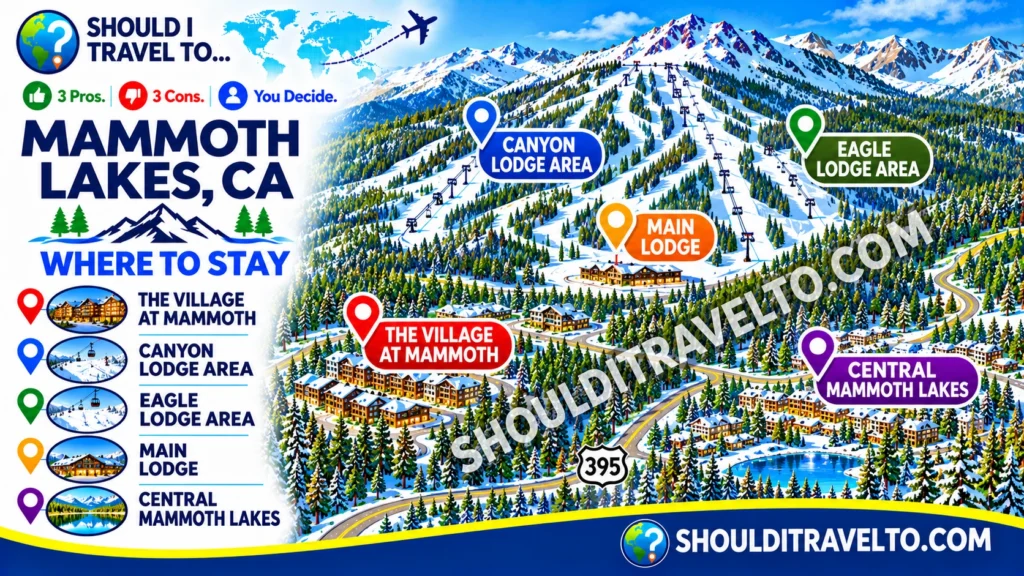
The Village at Mammoth: Best for Luxury Resort Suites, Après-Ski Dining, and Gondola Convenience
The Village is Mammoth’s premier pedestrian hub for travelers booking full-service luxury resort suites, upscale après-ski dining, boutique ski shops, and complimentary shuttle transfers. Depending on mountain operations, the Village Gondola provides access to Canyon Lodge.
This central hub is particularly appealing for first-time ski visitors, romantic couples, and travelers booking all-in-one winter resort packages. However, properties in The Village fall squarely into the Premium / Luxury Pricing ($2,500+ typical holiday itinerary) tier during peak winter ski weeks and holiday weekends.
And staying in the Village doesn’t necessarily mean direct ski-in/ski-out access.
Canyon Lodge Area: Best for Ski-In/Ski-Out Condos and Direct Lift Access
Slopeside condominiums and luxury townhomes near Canyon Lodge cater to dedicated skiers prioritizing first-chair lift access and ski valet amenities. Some properties offer convenient access to the mountain, reducing the need for lengthy morning transfers.
However, access varies by property, and not every accommodation is directly on the slopes.
Canyon Lodge operations are also seasonal and weather-dependent.
Eagle Lodge Area: Best for Multi-Bedroom Family Condos and Quieter Slopeside Stays
The Eagle Lodge area can provide a more residential atmosphere while maintaining access to skiing. It is a top choice for multi-generational families and groups booking multi-bedroom luxury ski condos with full kitchens and private hot tubs.
However, visitors should confirm lift operations and transportation arrangements.
Main Lodge Area: Best for High-Elevation Ski-In/Ski-Out Lodging and Early-Season Powder
The Main Lodge area offers direct slopeside hotel rooms at Mammoth Mountain’s highest-elevation base lodge, ski school, and rental shop. It is particularly appealing for visitors focused on skiing and mountain recreation.
However, accommodation choices and nearby dining options are more limited than in the main town.
Central Mammoth Lakes: Best for Moderate / Standard Cost ($1,200-$2,500) Hotels and Family Vacation Rentals
Downtown Mammoth Lakes along Old Mammoth Road and Main Street offers boutique hotels, spacious vacation rentals, casual restaurants, and full-service supermarkets. Staying here can be practical for families and travelers who want more accommodation choices.
These town-center properties provide Moderate / Standard Cost ($1,200-$2,500) lodging options compared to Premium / Luxury Pricing ($2,500+) slopeside resorts. However, transportation to the ski mountain requires planning.
For first-time visitors and luxury travelers, booking a full-service suite at The Village or a shuttle-connected resort provides the most seamless winter ski experience.
For families seeking multi-bedroom suites, full kitchens, and Moderate / Standard Cost ($1,200-$2,500) rates, or travelers considering drive-to Lake Tahoe cabin rentals, central Mammoth Lakes offer maximum flexibility.
Getting to Mammoth Lakes in Winter
Mammoth Lakes is located along California’s Eastern Sierra corridor. For most West Coast travelers, renting an all-wheel-drive (AWD) SUV or booking regional charter flights into Mammoth Yosemite Airport provides the most direct winter access.
Driving From Southern California
Travelers departing Los Angeles, Orange County, and San Diego typically rent four-wheel-drive SUVs and head north along the scenic US Route 395 corridor. The drive from Los Angeles generally takes approximately five to six hours in favorable conditions, depending on the starting point, traffic, and stops.
Major Eastern Sierra winter blizzards can trigger Caltrans chain-control delays and highway closures, making comprehensive trip protection and flexible hotel cancellation policies essential.
Driving From Northern California
Travelers arriving from Northern California must pay particular attention to winter road access. Some Sierra Nevada mountain passes that are convenient in summer are closed during winter.
Tioga Pass through Yosemite National Park, for example, is generally closed to through traffic during the snowy season.
Routes from the San Francisco Bay Area require lengthy seven-to-eight-hour winter detours around the Sierra Nevada, prompting many Northern California skiers to book closer Lake Tahoe luxury ski resorts instead.
Flying to the Region
Seasonal commercial flights and semi-private JSX air charters fly directly into Mammoth Yosemite Airport (MMH) and Eastern Sierra Regional Airport in Bishop (BIH) from Los Angeles, Burbank, and Carlsbad. Out-of-state travelers frequently fly into Reno-Tahoe International Airport (RNO) and book four-wheel-drive rental SUVs or private airport shuttle transfers for the scenic three-hour drive south.
However, regional mountain flights face high winter weather cancellation rates and limited rental car inventory, requiring Premium / Luxury Pricing ($2,500+ typical holiday itinerary) budgets and travel delay insurance.
Compare total travel time and transportation costs before deciding whether flying is more convenient than driving.
Getting Around Mammoth Lakes
Mammoth Lakes operates complimentary Eastern Sierra Transit trolleys and the Village Gondola, connecting luxury ski lodges directly to Canyon Lodge and Main Lodge base areas. For travelers staying near convenient routes, these services can reduce the need to drive every day.
However, transportation arrangements depend on the season, weather, and accommodation location. Visitors should confirm which routes serve their lodging and preferred ski access points.
A car provides additional flexibility for grocery shopping, exploring the town, and visiting nearby destinations.
But winter driving requires preparation. Equipping your vehicle with snow-rated tires, California-approved tire chains, and reserved resort valet parking is essential for navigating icy town roads.
For travelers booking Premium / Luxury Pricing ($2,500+) ski vacations, reserving a ski-in/ski-out condo at The Village eliminates daily parking fees and icy morning commutes.
Mammoth Lakes Outside Winter
Mammoth Lakes is best known for skiing and snowboarding, but it is also a year-round outdoor destination. The scenery and available activities change considerably with the seasons.
Spring: Extended Skiing and Changing Mountain Conditions
Spring is unusual in Mammoth Lakes because winter sports may continue well beyond the traditional ski season. Depending on snowfall, skiing can remain available while lower elevations begin transitioning toward warmer weather.
However, mountain roads and hiking trails may remain snow-covered.
Spring is best for travelers interested in late-season skiing rather than assuming all summer recreation areas will be accessible.
Explore More: Best Spring Break Destinations
Summer: Alpine Lakes, Hiking, and Mountain Recreation
Summer transforms Mammoth Lakes into a destination for hiking, mountain biking, fishing, and alpine recreation. The Mammoth Lakes Basin becomes a major attraction, with lakes, trails, forests, and mountain scenery.
Visitors can explore outdoor areas that may be inaccessible by ordinary vehicle during winter.
Summer is particularly appealing to families, hikers, cyclists, and travelers seeking a cooler mountain alternative to California’s warmer regions.
Explore More: Best Summer Vacation Destinations
Fall: Golden Aspen Trees and Quieter Scenery
Fall offers a different side of Mammoth Lakes. Aspen groves in the Eastern Sierra turn yellow and gold, creating striking contrasts with evergreen forests and mountain peaks.
The broader region around Mammoth Lakes and June Lake is particularly appealing for autumn photography. However, fall foliage timing varies, and early snow can affect higher elevations.
Fall is best for scenic drives, photography, and travelers who prefer a quieter mountain atmosphere.
Explore More: Fall Foliage Destinations
Winter: Skiing, Snowboarding, and Snow-Covered Landscapes
Winter remains Mammoth Lakes’ defining season.
Mammoth Mountain attracts skiers and snowboarders, while the surrounding forests and mountains provide opportunities for snowshoeing, Nordic skiing, and other cold-weather activities.
For travelers seeking a traditional snowy mountain vacation in California, winter is the strongest reason to visit.
Explore More: Best Winter Destinations
Who Should Visit Mammoth Lakes for Winter?
Mammoth Lakes for winter suits specific travelers, such as:
- Skiers and Snowboarders
- Experienced skiers and snowboarders may particularly appreciate the mountain’s variety.
- Families Who Enjoy Winter Recreation
- Outdoor Enthusiasts
- Couples Seeking an Active Mountain Getaway
- Photographers and Nature Lovers
- Southern California Travelers Seeking Snow
- Travelers Interested in Spring Skiing
Skip Mammoth Lakes if:
- Travelers Seeking a Budget-Friendly Vacation
- Visitors Who Dislike Snow and Cold Weather
- Travelers Uncomfortable With Winter Driving
- Visitors Who Prefer Extensive Indoor Attractions
- Travelers Sensitive to High Elevation
- Visitors Seeking a Compact, Walkable Vacation
Mammoth Lakes Compared to Other Winter Destinations
Mammoth Lakes vs. Lake Tahoe
Two of California’s best-known winter mountain destinations, Mammoth Lakes and Lake Tahoe offer skiing, snowboarding, mountain scenery, and winter recreation.
However, Lake Tahoe surrounds a large alpine lake and includes multiple communities and ski resorts across California and Nevada. Mammoth Lakes is more closely centered on one major ski mountain and the surrounding Eastern Sierra landscape.
Choose Mammoth Lakes if your priority is extensive skiing, high-elevation terrain, and a mountain-focused vacation.
Choose Lake Tahoe if you want a broader lake-and-mountain experience with multiple resort areas, lakeside scenery, and additional entertainment options.
Explore More: Lake Tahoe
Mammoth Lakes vs. Steamboat Springs
Mammoth Lakes and Steamboat Springs both offer major ski experiences. However, their identities are different.
Mammoth Lakes emphasizes high-elevation Sierra Nevada terrain, substantial snowfall, and an unusually long ski season. Steamboat Springs combines skiing with a historic Western town, ranching heritage, and natural hot springs.
Choose Mammoth Lakes for a California ski vacation centered on mountain terrain and alpine scenery.
Choose Steamboat Springs if you want skiing alongside Western heritage, historic-town character, and hot springs.
Explore More: Steamboat Springs for Winter
Mammoth Lakes vs. Aspen
Both Mammoth Lakes and Aspen are major winter sports destinations, but they offer different atmospheres. Mammoth Lakes is primarily outdoors-oriented, with an emphasis on skiing, snowboarding, and Sierra Nevada recreation.
Aspen combines skiing with a particularly strong premium hospitality identity, acclaimed restaurants, shopping, and cultural attractions.
Choose Mammoth Lakes for a mountain-focused California winter vacation.
Choose Aspen if you want a premium ski getaway with extensive dining, shopping, and resort-town amenities.
Explore More: Aspen, Colorado
Mammoth Lakes vs. Park City
Both Mammoth Lakes and Park City appeal to skiers and snowboarders seeking substantial mountain terrain. Mammoth Lakes offers a distinctive high-elevation Eastern Sierra setting and the possibility of a particularly long season.
Park City offers extensive skiing alongside a historic downtown, restaurants, shops, and convenient access from the Salt Lake City metropolitan area.
Choose Mammoth Lakes for Sierra Nevada scenery and a ski-centered mountain vacation.
Choose Park City for a combination of skiing, historic-town atmosphere, and relatively convenient airport access.
Explore More: Park CIty, Utah
Mammoth Lakes for Holidays, Seasonal Travel, and Premium Experiences
Mammoth Lakes ranks among California’s premier ski destinations for booking five-star alpine resort packages, white Christmas cabin rentals, and luxury New Year’s Eve ski getaways.
A family Christmas vacation, a New Year’s Eve ski getaway, and a premium mountain resort retreat can offer distinctly different experiences.
Mammoth Lakes for Premium Travel
Best for: Premium / Luxury Pricing ($2,500+ typical holiday itinerary), ski-in/ski-out resorts, private snowcat tours, VIP ski instructors, and five-star alpine spa retreats
Mammoth Lakes offers a different type of premium California vacation.
Rather than Beverly Hills luxury shopping, Napa Valley wine country estates, or five-star oceanfront resorts, its luxury travel packages center on private ski-in/ski-out chalets, helicopter sightseeing, and five-star alpine spas. Guests can book ski-in/ski-out luxury penthouses, private half-day ski academy instructors, multi-bedroom slopeside villas, couples’ resort spa treatments, and chef-driven après-ski fine dining.
For couples and families, Mammoth Lakes also offers the chance to rent a luxury mountain retreat and enjoy the Eastern Sierra at a more relaxed pace.
However, nightly luxury suite rates, dynamic lift tickets, high-performance ski rentals, private instructors, and fine dining place a multi-day holiday trip squarely in the Premium / Luxury Pricing ($2,500+) tier.
Why Visit: Premium Mountain Lodging • Extensive Ski Terrain • Private Ski Lessons • Luxury Mountain Retreats • Après-Ski Dining
Explore More: Best Premium Destinations
Mammoth Lakes for California Travel
Best for: Moderate / Standard Cost ($1,200-$2,500) California winter road trips, AWD SUV ski getaways, snow-covered national forest excursions, and mountain condo stays
California is widely marketed for Pacific Coast Highway road trips, Napa Valley wine tasting, Palm Springs desert golf resorts, and Los Angeles luxury hotels. Mammoth Lakes showcases a dramatically different side of the Golden State.
Located in the Eastern Sierra Nevada, Mammoth Lakes offers alpine scenery, abundant winter snowfall, extensive ski terrain, and a mountain-town atmosphere that contrasts with California’s warmer coastal and desert destinations.
For Southern California travelers, it offers a convenient drive-to alternative to Big Bear cabin rentals, trading coastal palm trees for world-class alpine skiing without booking cross-country flights. Visitors from outside California can also experience the remarkable geographic and climatic diversity that makes California such a distinctive travel destination.
However, Caltrans chain-control checkpoints, Tioga Pass winter closures, and five-to-six-hour drives on Highway 395 require AWD SUV rentals and comprehensive winter auto insurance.
Why Visit: Eastern Sierra Nevada • Mammoth Mountain • Snow-Covered Alpine Landscapes • California Winter Road Trips • Outdoor Recreation
Explore More: Best California Destinations
Mammoth Lakes for Christmas
Best for: White Christmas family ski packages, luxury fireplace cabin rentals, festive holiday resort dinners, and winter wonderland getaways
Mammoth Lakes delivers an authentic snowy mountain alternative to New York City holiday theater packages or warm-weather Caribbean Christmas beach resorts. Snow-draped pine forests, festively lit luxury lodges, roaring stone fireplaces, and holiday sleigh rides create a storybook alpine Christmas vacation.
Families can book multi-day ski school passes, snow tubing tickets, and guided snowcat tours before returning to multi-bedroom vacation condos for private holiday dinners. Visitors who don’t ski can enjoy scenic gondola rides, snowshoeing, ice skating, and mountain-town dining, depending on weather and operating conditions.
Unlike destinations where a white Christmas is relatively unlikely, Mammoth Lakes offers a stronger chance of snowy holiday scenery, though snowfall is never guaranteed.
Christmas week represents peak Premium / Luxury Pricing ($2,500+ typical holiday itinerary), bringing surging slopeside hotel rates, crowded lift lines, and high-demand AWD rental car pricing.
Why Visit: Snow-Covered Mountains • Christmas Resort Atmosphere • Family Ski Vacations • Cozy Mountain Lodges • Winter Recreation
Explore More: Best Christmas Destinations
Mammoth Lakes for New Year’s Eve
Best for: New Year’s Eve ski-in/ski-out resort gala packages, VIP après-ski cocktail lounges, Torchlight Parade festivities, and romantic mountain retreats
Mammoth Lakes offers a distinctive way to welcome the new year. Rather than booking overpriced Las Vegas Strip VIP nightclub tables or Times Square hotel packages, travelers can spend December 31st carving fresh powder and booking scenic gondola rides.
Evenings feature prix-fixe New Year’s Eve gala dinners, live music at The Village at Mammoth, fireworks over the slopes, and VIP lounge bottle service. Couples may prefer a quiet dinner followed by a relaxing evening by the fire, while families and groups of friends can combine winter recreation with holiday festivities.
Mammoth Lakes is particularly appealing for travelers who want an active vacation rather than making the midnight celebration the sole purpose of their trip.
However, New Year’s Eve commands Premium / Luxury Pricing ($2,500+ typical holiday itinerary), requiring advance luxury hotel bookings, early dinner reservations, and non-refundable holiday travel insurance.
Why Visit: New Year’s Ski Vacation • Mountain Resort Celebrations • Après-Ski Entertainment • Festive Dining • Snowy Alpine Scenery
Explore More: Best New Year’s Eve Destinations
Mammoth Lakes for Christmas + New Year’s Eve
Best for: Extended seven-to-ten-day luxury winter vacations, multi-generational family chalet rentals, Ikon Pass ski weeks, and all-inclusive-style holiday retreats
For travelers who want to combine Christmas and New Year’s Eve into one extended vacation, Mammoth Lakes offers enough winter activities to justify a longer stay. Visitors can alternate between skiing, snowboarding, snowshoeing, tubing, scenic sightseeing, and relaxing at their accommodations.
An extended vacation also allows families and groups of friends to enjoy both holidays without feeling pressured to schedule outdoor adventures every day. Multi-bedroom luxury mountain homes, slopeside townhomes, and full-service resort suites provide ideal gathering spaces for multi-generational holiday reunions.
Unlike destinations where Christmas and New Year’s Eve revolve primarily around separate events, Mammoth Lakes offers a consistent winter vacation experience throughout the holiday period.
However, the ten-day stretch between Christmas and New Year’s Eve triggers the year’s highest Premium / Luxury Pricing ($2,500+ typical holiday itinerary) across flights, SUV rentals, and slopeside lodging. Heavy Sierra snowstorms during late December can disrupt regional flights and Highway 395 driving, making comprehensive winter travel protection insurance essential.
Why Visit: Extended Ski Vacations • White Christmas Atmosphere • New Year’s Resort Celebrations • Family Mountain Retreats • Premium Winter Experiences
Explore More: Best Christmas + New Year’s Eve Destinations
Final Verdict
Mammoth Lakes for winter is one of California’s strongest destinations for travelers who enjoy skiing, snowboarding, mountain scenery, and outdoor recreation.
Mammoth Mountain and the resort’s extensive terrain, high elevation, substantial snowfall, and potential for a long ski season make it especially appealing to skiers and snowboarders.
Visitors can also enjoy snowshoeing, cross-country skiing, snowmobiling, tubing, ice skating, scenic gondola rides, and winter photography, which provide alternatives for families, couples, and outdoor enthusiasts.
Snow-covered peaks, forests, and alpine scenery create a winter experience that feels very different from much of California.
However, Mammoth Lakes isn’t the right destination for everyone.
Choose Mammoth Lakes if: You want excellent skiing, dramatic Sierra Nevada scenery, and an active winter vacation with multiple snow-based activities.
Consider another destination if: You want a low-cost getaway, dislike winter driving, or prefer a vacation centered on indoor attractions and mild weather.
3 Pros. 3 Cons. You Decide.
Mammoth Lakes for Winter Frequently Asked Questions
Is Mammoth Lakes, California, Worth Visiting in Winter?
Yes. Mammoth Lakes is one of California’s leading winter sports destinations, offering extensive skiing, snowboarding, dramatic mountain scenery, and activities such as snowshoeing, Nordic skiing, and snowmobiling. It is particularly appealing to travelers who enjoy outdoor winter recreation.
What Is the Best Month to Visit Mammoth Lakes for Skiing?
January through March is a strong planning window for a traditional ski vacation. January and February offer deep-winter conditions, while March can combine substantial snow with longer daylight hours. Snowfall and mountain operations vary, so no month guarantees ideal conditions.
Can You Visit Mammoth Lakes in Winter Without Skiing?
Yes. Visitors can enjoy snowshoeing, cross-country skiing, tubing, ice skating, scenic gondola rides, snowmobiling, photography, restaurants, and mountain accommodations. However, many of the destination’s strongest attractions still involve snow and outdoor recreation.
How Many Days Should You Spend in Mammoth Lakes?
Three to five days is a useful starting point. Three days works for a focused ski vacation, while four or five days allows time for additional winter activities and flexibility if weather affects plans.
Do You Need a Car in Mammoth Lakes During Winter?
Not necessarily. Local transit and resort transportation can help visitors reach ski areas and town attractions, especially when staying near convenient routes. However, a car provides more flexibility, and winter driving conditions require preparation.
Does Mammoth Lakes Get a Lot of Snow?
Yes. Mammoth Mountain is known for substantial snowfall and a long ski season. However, snowfall varies considerably from year to year, and major storms can affect travel, lift operations, and outdoor activities.
Is Mammoth Lakes Better Than Lake Tahoe for Winter?
Neither is universally better. Mammoth Lakes is particularly appealing for travelers focused on Mammoth Mountain’s skiing, high-elevation terrain, and Eastern Sierra scenery. Lake Tahoe offers a broader lake-and-mountain destination with multiple ski resorts, communities, and entertainment options.