

Should You Visit Palm Springs, California, America’s Desert Resort Escape?
Quick Answer
Yes, Palm Springs, California, is worth visiting if you enjoy sunshine, dramatic desert scenery, swimming pools, resort relaxation, midcentury modern architecture, excellent restaurants, golf, and outdoor recreation.
Located in Southern California’s Coachella Valley, approximately 110 miles east of Los Angeles, Palm Springs offers a vacation experience that feels remarkably different from the state’s coastal cities.
Instead of beaches, oceanfront boardwalks, and crowded urban attractions, Palm Springs offers palm-lined streets, mountain views, distinctive architecture, desert landscapes, and a relaxed resort atmosphere.
Its combination of natural beauty, architectural character, and premium hospitality makes it particularly appealing for couples, romantic getaways, weekend vacations, wellness retreats, and travelers seeking sunshine during the cooler months.
But Palm Springs isn’t right for everyone.
For visitors who appreciate that slower pace, Palm Springs can be one of California’s most rewarding desert getaways.
Palm Springs, California, at a Glance
| Category | Palm Springs, California |
| Location | Coachella Valley, Riverside County, Southern California (accessible via direct flights into Palm Springs International Airport (PSP) and two-hour Interstate 10 road trips from Los Angeles) |
| Best Known For | Five-star desert spa resorts, private pool villa rentals, midcentury modern architectural tours, championship golf packages, and Palm Springs Aerial Tramway rides |
| Best Time to Visit | November–April for peak winter snowbird resort stays and golf packages; March–April for Coachella/Stagecoach festival lodging and spring break pool getaways |
| Ideal Trip Length | 2–4 days for luxury weekend spa retreats; 5–7 days for multi-course golf itineraries and Joshua Tree National Park day trips |
| Cost | Moderate / Standard Cost ($1,200-$2,500) typical trip expenses) for boutique downtown hotels, with Premium / Luxury Pricing ($2,500+ typical holiday itinerary) for five-star golf and spa resorts |
| Weather | Sunny Sonoran Desert climate; 70°F–85°F peak winter/spring resort weather, warm shoulder seasons, and 105°F+ summer off-peak hotel deals |
| Crowds | Moderate overall; surges during Modernism Week, BNP Paribas Open tennis, Coachella Valley music festivals, and winter holiday weekends |
| Transportation | Walkable Palm Canyon Drive shopping and dining; airport convertible or SUV rental recommended for Joshua Tree, Indian Canyons, and Greater Palm Springs golf clubs |
| Food Scene | Upscale; chef-driven desert fine dining, iconic bottomless weekend brunches, poolside craft cocktail lounges, and five-star resort tasting menus |
| Atmosphere | Sun-drenched, design-forward, romantic, adults-oriented, and luxury pool-resort focused |
| Best For | Romantic couples, luxury wellness spa seekers, championship golfers, design enthusiasts, and Southern California weekend road-trippers |
| Biggest Advantage | Unmatched blend of five-star pool resorts, iconic midcentury modern design, world-class golf courses, and easy drive-to accessibility |
| Biggest Drawback | Extreme 105°F+ summer temperatures and a slower, resort-centric pace compared to major metropolitan sightseeing destinations |
The Biggest Misunderstanding About Palm Springs, California
The biggest misunderstanding is assuming Palm Springs is simply a warm-weather resort town with swimming pools and golf courses. Those attractions are important, but they represent only part of the destination.
Palm Springs has a distinctive identity shaped by desert geography, Hollywood connections, modernist architecture, and Southern California resort culture. Its setting is especially unusual.
The city sits beneath the San Jacinto Mountains, where dramatic mountain slopes rise above the desert floor. The contrast between desert palms, rocky mountains, and resort architecture creates a landscape that looks and feels different from Los Angeles, San Diego, or California’s coastal communities.
Palm Springs also has more cultural depth than some visitors expect. The city’s midcentury modern architecture reflects another important chapter, when architects developed buildings suited to desert living through open floor plans, glass walls, shaded patios, and indoor-outdoor spaces.
A second misunderstanding involves geography.
Palm Springs Geography
Travelers frequently use the name Palm Springs to describe the entire Coachella Valley. However, Palm Springs is one city within a much larger desert region.
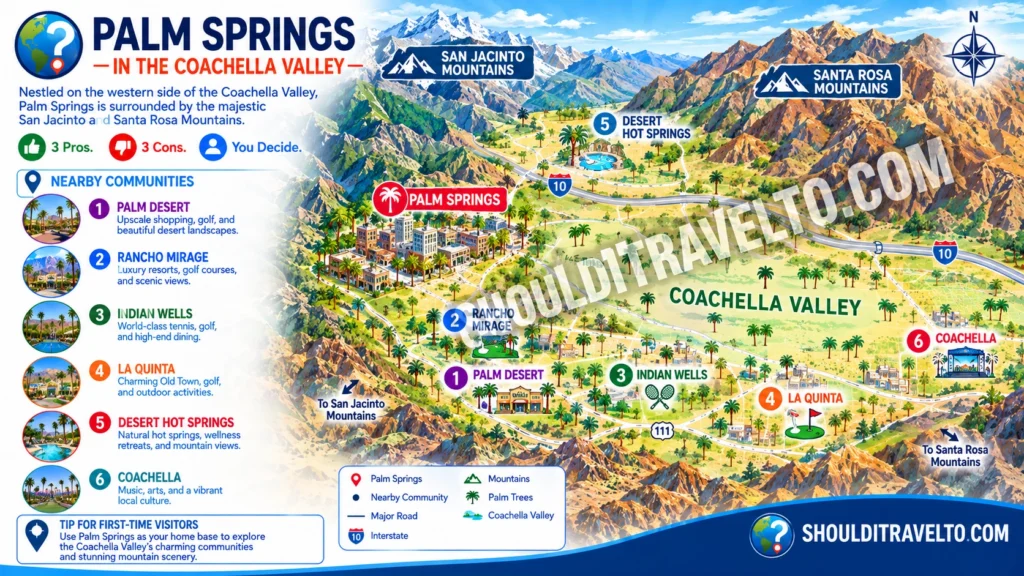
Palm Desert, Rancho Mirage, Indian Wells, La Quinta, and Desert Hot Springs offer additional resorts, golf courses, restaurants, and recreational experiences. Joshua Tree National Park is another nearby attraction, but it is not located within Palm Springs.
Understanding these distinctions helps visitors choose the right accommodation location and organize their trip.
The Biggest Mistake First-Time Visitors Make
The biggest mistake is trying to plan Palm Springs like a traditional sightseeing city.
In New York City, Chicago, or Washington, DC, travelers may build an itinerary around museums, monuments, neighborhoods, and famous attractions.
Palm Springs works differently. Its strongest experiences often involve enjoying the destination rather than moving constantly between attractions.
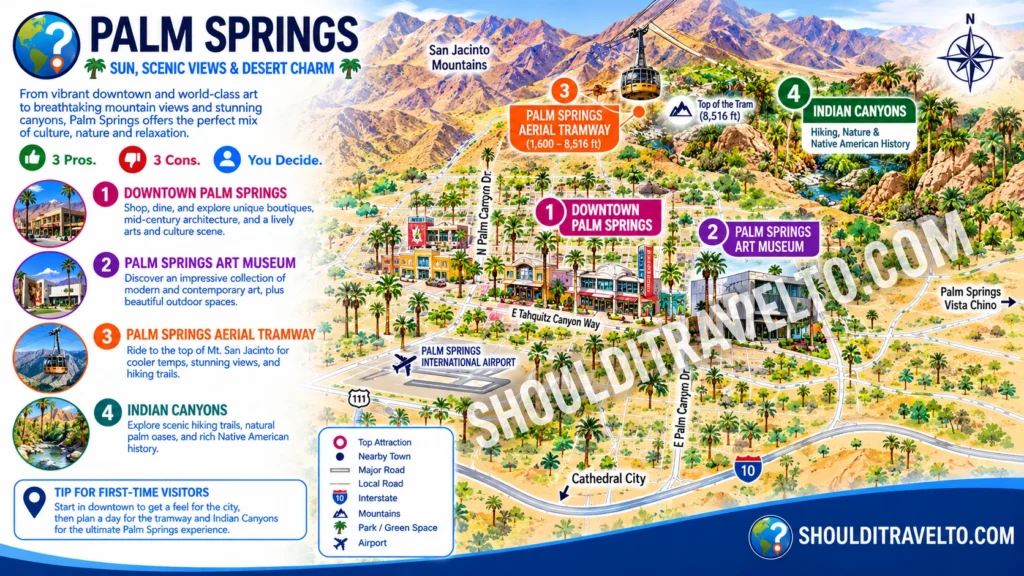
A typical day might include a morning walk through downtown, a visit to the Palm Springs Art Museum, an afternoon at the pool, and dinner overlooking the mountains. Another day might involve the Aerial Tramway, an architecture tour, or a hike through Indian Canyons.
Trying to schedule every hour can undermine the relaxed atmosphere that makes Palm Springs attractive.
The better approach is to choose one or two major activities each day and leave time for the resort, dining, and spontaneous exploration.
What Makes Palm Springs Different?
Palm Springs combines four characteristics that rarely come together in quite the same way: dramatic desert scenery, midcentury modern architecture, resort relaxation, and accessible mountain recreation.
Desert Scenery and Mountain Contrasts
Palm Springs sits within the Colorado Desert, surrounded by striking mountain landscapes. The San Jacinto Mountains create an impressive backdrop for the city.
Visitors can experience desert palms and warm temperatures on the valley floor before traveling into a much cooler mountain environment aboard the Palm Springs Aerial Tramway.
This contrast is one of the city’s defining attractions.
Midcentury Modern Architecture
Palm Springs is internationally recognized for its concentration of midcentury modern architecture. Architects including Albert Frey, Richard Neutra, E. Stewart Williams, and Donald Wexler helped shape the city’s distinctive appearance.
Low-slung buildings, clean lines, glass walls, flat or butterfly roofs, and carefully integrated outdoor spaces reflect desert modernism. The architecture is not confined to museums.
It is visible throughout residential neighborhoods, hotels, commercial buildings, and civic landmarks.
Hollywood and Resort History
Palm Springs developed into a fashionable desert retreat during the twentieth century. Its relative proximity to Los Angeles, warm winter weather, and private resort atmosphere attracted entertainers and other prominent visitors.
Frank Sinatra, Bob Hope, and other Hollywood figures became associated with the region.
That history continues to influence Palm Springs’ image as a stylish destination for relaxation and leisure.
The 3 Biggest Pros of Visiting Palm Springs
1. Palm Springs Is Excellent for Relaxation, Resorts, and Romantic Getaways
Palm Springs delivers a vacation centered on relaxation. The city offers a curated spectrum of lodging, from Moderate / Standard Cost ($1,200-$2,500) design-forward boutique hotels to Premium / Luxury Pricing ($2,500+ typical holiday itinerary) five-star desert spa resorts and private pool villas.
Premier properties feature heated saltwater pools, private poolside cabanas, full-service luxury mineral spas, San Jacinto mountain views, and indoor-outdoor architectural suites. Unlike destinations where accommodations primarily serve as a place to sleep between sightseeing activities, the hotel or resort can be one of the main attractions in Palm Springs.
Visitors may spend an entire afternoon relaxing by the pool without feeling they are missing out on the destination. Couples can book couples’ desert mineral spa packages, romantic candlelit courtyard fine dining, and adults-only boutique resort retreats.
Golf enthusiasts can book stay-and-play golf resort packages and championship tee times across more than 100 Greater Palm Springs courses.
Wellness travelers can choose accommodations and activities focused on rest and rejuvenation.
Palm Springs is particularly rewarding for travelers who want a vacation that feels relaxing rather than demanding.
2. The Desert and Mountains Create Exceptional Natural Scenery
Palm Springs offers access to desert canyons, palm oases, rocky landscapes, mountain trails, and alpine environments. Booking skip-the-line tickets for the Palm Springs Aerial Tramway is one of the top-rated regional excursions.
The rotating tram cars ascend from the desert floor into the San Jacinto Mountains, providing panoramic views and access to Mount San Jacinto State Park. Temperatures at the Mountain Station can be substantially cooler than those in the city.
Depending on the season, visitors may encounter forest trails, mountain scenery, or winter snow. Indian Canyons offers another distinctive outdoor experience.
Palm Canyon, Andreas Canyon, and Murray Canyon feature desert landscapes, native vegetation, rock formations, and palm oases. Tahquitz Canyon is particularly known for its waterfall, seasonal conditions permitting, and its cultural significance.
Travelers can also book guided Jeep eco-tours of the San Andreas Fault, scenic convertible drives, and day trips to Joshua Tree National Park.
Palm Springs offers more outdoor variety than its reputation as a poolside resort destination might suggest.
3. Palm Springs Has a Distinctive Architectural, Cultural, and Culinary Identity
Few American destinations combine desert modernism, Hollywood history, contemporary art, and resort culture in such a recognizable setting. Midcentury modern architecture is visible throughout the city.
Design lovers can book guided midcentury modern architecture tours, Modernism Week home passes, and stays at iconic Rat Pack-era boutique hotels. The Palm Springs Art Museum provides opportunities to experience art, design, and regional culture.
Downtown Palm Springs offers restaurants, cafés, boutiques, galleries, and pedestrian-friendly streets. The city’s culinary scene spans famous bottomless weekend brunches, craft cocktail lounges, chef-driven tasting menus, and five-star resort fine dining.
Outdoor dining is especially appealing during the cooler months.
The 3 Biggest Cons of Visiting Palm Springs
1. Extreme Summer Heat Can Limit the Vacation
Palm Springs has a hot desert climate, and daytime temperatures frequently exceed 100°F in summer. Heat waves can bring even higher temperatures.
This can make hiking, sightseeing, and prolonged outdoor activity uncomfortable or dangerous, particularly during the afternoon. Visitors who imagine spending entire summer days outdoors may find the reality challenging.
Even walking between attractions can become unpleasant during the hottest periods. Luxury resorts offer chilled swimming pools, misted cabanas, and Value / Budget-Friendly ($700-$1,200) off-peak summer room rates, but triple-digit heat still restricts daytime outdoor excursions.
Travelers visiting during summer should prioritize early-morning activities, hydration, shaded environments, and indoor breaks.
Travelers planning an active summer outdoor itinerary will find far better conditions in coastal San Diego beachfront hotels, Santa Barbara wine country resorts, or cool Lake Tahoe mountain lodges.
2. Palm Springs Has Fewer Traditional Sightseeing Attractions Than Major Cities
Palm Springs delivers boutique desert charm, but it lacks the dense concentration of world-class museums, Broadway-caliber theater, historic landmarks, and urban sightseeing passes found in Los Angeles, San Francisco, Chicago, or New York City. Its primary appeal is different.
Visitors can explore architecture, museums, desert canyons, mountain scenery, and restaurants.
However, families and active travelers seeking theme-park thrills and nonstop daily attractions will find stronger value in Anaheim Disneyland vacation packages or San Diego family resorts.
For some visitors, that is a disadvantage. For others, it is exactly why Palm Springs is appealing.
Palm Springs is better suited to relaxation and selective sightseeing than nonstop major-city exploration.
3. Transportation and Premium Resort Costs Require Planning
Palm Springs is relatively easy to explore in its central visitor areas, but many attractions are spread across the city and surrounding Coachella Valley. Downtown Palm Springs is walkable, particularly along Palm Canyon Drive.
However, reaching Indian Canyons, the Aerial Tramway, nearby golf courses, Palm Desert, or Joshua Tree generally requires transportation.
Reserving an airport rental car or luxury convertible at Palm Springs International Airport (PSP) is essential for travelers planning golf outings, outlet shopping in Cabazon, or Joshua Tree excursions. Travelers relying entirely on rideshares may find that transportation costs increase, particularly when visiting attractions farther from downtown.
Accommodation costs are another consideration.
While Value / Budget-Friendly ($700-$1,200) off-season motels exist, five-star golf resorts, private-pool luxury villas, and full-service spa packages easily push peak-season trips into Premium / Luxury Pricing ($2,500+ typical holiday itinerary).
Palm Springs delivers an unforgettable desert resort escape, but travelers strict about Value / Budget-Friendly ($700-$1,200) all-in costs may prefer drive-to coastal campgrounds or off-peak Las Vegas Strip hotel deals.
The Should I Travel To … Palm Springs Scorecard
| Category | Palm Springs |
| Cost / Value | Moderate / Standard Cost (1,200–2,500); Premium ($2,500+) options |
| Weather & Climate | Good — highly seasonal |
| Crowds & Tourist Density | Moderate |
| Walkability & Transportation | Car Helpful |
| Things to Do | Good |
| Food & Dining | Very Good |
| Tourist Comfort & Safety | Generally Comfortable |
| Culture & Character | Highly Distinctive |
| Cleanliness & Infrastructure | Good |
| Uniqueness | Highly Distinctive |
Cost / Value: Moderate / Standard Cost, With Premium Options
Palm Springs offers accommodations and activities across a range of price points. A typical three-to-four-night boutique hotel getaway falls into the Moderate / Standard Cost ($1,200-$2,500 typical trip expenses) tier, depending on shoulder-season dates and mid-tier lodging selections.
Premium / Luxury Pricing ($2,500+ typical holiday itinerary) vacations are standard when booking five-star desert resorts, private-pool luxury villas, fine dining, championship golf packages, and mineral spa treatments.
Value / Budget-Friendly ($700-$1,200 typical trip options) stays are achievable during summer off-peak hotel sales or drive-to weekend motel packages with self-guided canyon hikes.
Weather & Climate: Good
Palm Springs offers abundant sunshine and a dry desert climate. Late fall, winter, and spring generally provide the most comfortable conditions for sightseeing, golf, and outdoor recreation.
However, summer heat is a significant drawback. Visitors should not assume that warm winter weather translates into comfortable outdoor conditions year-round.
Booking during peak winter snowbird months or spring break windows depends on whether your itinerary prioritizes championship golf tee times, luxury pool lounging, or Joshua Tree hiking tours.
Crowds & Tourist Density: Moderate
Palm Springs draws peak hotel occupancy during winter holiday weeks, Modernism Week, the BNP Paribas Open, and Coachella Valley music festival weekends. Downtown restaurants, popular attractions, and premium accommodations can become busy.
However, Palm Springs generally does not have the continuous tourist density associated with major theme park destinations or large cities.
Visitors seeking quieter experiences may prefer weekdays or less popular travel periods.
Walkability & Transportation: Car Helpful
Downtown Palm Springs offers a relatively walkable collection of restaurants, shops, galleries, and attractions. Visitors staying centrally may enjoy a resort-focused weekend without extensive driving.
However, renting a luxury convertible or mid-size SUV at Palm Springs International Airport (PSP) is essential for reaching Indian Canyons, the Aerial Tramway, PGA WEST golf courses, and Joshua Tree National Park.
Public transportation exists, but it is not as convenient for a comprehensive sightseeing itinerary as transportation in a major transit-oriented city.
Things to Do: Good
Palm Springs offers a satisfying combination of resort relaxation, architecture, museums, hiking, golf, shopping, and dining. Reserved Palm Springs Aerial Tramway tickets, guided San Andreas Fault Jeep tours, Indian Canyons hiking passes, and midcentury modern architecture tours provide diverse itinerary options.
The broader Coachella Valley adds additional attractions. However, travelers seeking major theme parks, Broadway theater districts, or bustling waterfront boardwalks will prefer Anaheim Disneyland packages or San Diego beachfront resorts.
It is strongest for travelers who enjoy combining selective activities with leisure.
Food & Dining: Very Good
Palm Springs features an acclaimed culinary landscape spanning bottomless weekend brunch spots, craft cocktail lounges, chef-driven fine dining, and five-star resort tasting menus. Downtown provides convenient opportunities to combine dining with shopping and evening walks.
The surrounding Coachella Valley expands dining choices with luxury steakhouse reservations along El Paseo in Palm Desert and exclusive country club dining in Rancho Mirage.
Palm Springs is particularly appealing for travelers who consider dining an important part of a relaxing vacation.
Tourist Comfort & Safety: Generally Comfortable
Palm Springs is an established tourism destination with hotels, resorts, restaurants, and visitor services. Most visitors will find the central tourist areas straightforward to navigate.
However, travelers should use normal precautions regarding personal belongings, vehicles, and unfamiliar surroundings.
Triple-digit summer desert heat poses serious health risks, making comprehensive travel medical insurance and air-conditioned private transfers essential for off-season visitors. Visitors exploring desert trails should carry sufficient water, understand trail conditions, and avoid strenuous activities during dangerous temperatures.
Mountain conditions near the Aerial Tramway can also differ significantly from the desert floor.
Culture & Character: Highly Distinctive
Palm Springs has a recognizable cultural identity shaped by Hollywood history, desert modernism, art, and resort culture. Its preserved midcentury modern architecture, Rat Pack celebrity estates, and boutique design hotels create a visual aesthetic unmatched by any other American resort town.
Together, these elements create a destination with more cultural depth than its poolside image might suggest.
Cleanliness & Infrastructure: Good
Palm Springs has well-developed tourism infrastructure, including hotels, restaurants, museums, golf courses, and resort facilities. Downtown and major visitor areas generally provide the amenities expected from an established vacation destination.
However, conditions and services vary across neighborhoods and surrounding desert communities.
Travelers planning outdoor activities should recognize that desert and mountain environments require more preparation than developed resort areas.
Uniqueness: Highly Distinctive
Palm Springs combines a dramatic desert mountain setting, midcentury modern architecture, resort culture, swimming pools, and outdoor recreation. Ascending from warm desert pool resorts into alpine pine forests aboard the rotating Palm Springs Aerial Tramway delivers a signature bucket-list experience.
Few Southern California destinations match this effortless combination of iconic architectural design, five-star spa resorts, and dramatic desert scenery.
Planning Your Palm Springs Trip
What Is the Atmosphere Like in Palm Springs?
Palm Springs has a relaxed, sunny, stylish, and resort-oriented atmosphere. The city’s identity is shaped by its desert surroundings.
Palm trees, mountain views, low-rise buildings, colorful architecture, and swimming pools create a distinctive visual environment. During the cooler months, outdoor dining, walking, golf, hiking, and resort relaxation are central to the experience.
Palm Springs can feel lively in its downtown restaurants and shopping areas, but it is generally quieter than major California cities. Its nightlife focuses more on restaurants, bars, lounges, and social venues than on large-scale entertainment districts.
When Is the Best Time to Visit Palm Springs?
The best time to visit Palm Springs is generally November through April, when desert temperatures are more comfortable for outdoor activities.
However, each season offers a different experience.
Winter: December Through February
Winter is one of the most appealing seasons for Palm Springs. Days are often sunny and mild compared with much of the United States. Visitors can enjoy golf, hiking, outdoor dining, shopping, and resort relaxation. Evenings can be cool, especially after sunset.
Higher elevations in the San Jacinto Mountains may experience winter conditions, including snow. Winter is especially appealing for travelers escaping colder climates.
Best for: Winter sunshine, golf, hiking, couples, and resort getaways.
Explore More: Best Winter Destinations
Spring: March Through May
Spring is another excellent season for visiting Palm Springs. March and April often provide comfortable conditions for outdoor activities.
Visitors can enjoy desert hiking, architecture tours, golf, and poolside relaxation. Spring can also bring desert wildflowers, depending on rainfall and seasonal conditions.
However, temperatures generally increase as the season progresses.
May can become quite hot. Spring is also a popular travel period, so accommodation demand may be elevated during holidays and major events.
Best for: Outdoor recreation, architecture, spring getaways, and desert scenery.
Summer: June Through August
Summer is the most challenging season for many visitors. Daytime temperatures frequently exceed 100°F, and extended outdoor activities can become uncomfortable or unsafe. Visitors who choose summer should plan around air-conditioned accommodations, swimming pools, indoor attractions, and early-morning activities. Some travelers enjoy the quieter resort atmosphere and may find attractive accommodation options.
However, summer is not the ideal season for most first-time visitors interested in hiking or extensive sightseeing.
Best for: Heat-tolerant travelers, pool-focused vacations, and indoor resort relaxation.
Fall: September Through November
Fall is a transitional season. September can remain extremely hot, while October and November generally bring more comfortable conditions. As temperatures moderate, hiking, golf, outdoor dining, and scenic exploration become increasingly appealing.
November is particularly attractive for travelers seeking a warm-weather Thanksgiving getaway.
Best for: Autumn sunshine, golf, romantic retreats, and late-fall desert vacations.
Explore More: Fall Foliage Destinations
How Many Days Should You Spend in Palm Springs?
Two Days: A Relaxing Weekend
Two days is enough to experience downtown Palm Springs, enjoy a resort, and visit one or two major attractions. A typical weekend might include a downtown walk, a dinner at a restaurant, a pool afternoon, and an architecture tour.
Best for: Couples, weekend getaways, and relaxation.
Three to Four Days: Ideal for Most First-Time Visitors
Three to four days provides a more balanced Palm Springs experience. Visitors can explore the Aerial Tramway, Indian Canyons, architecture, museums, restaurants, and resort amenities.
This allows time for sightseeing without sacrificing relaxation.
Best for: First-time visitors, couples, architecture enthusiasts, and resort vacations.
Five to Seven Days: A Greater Palm Springs Vacation
A longer vacation provides opportunities to explore the surrounding Coachella Valley. Visitors can include Palm Desert, Rancho Mirage, La Quinta, golf courses, hiking areas, and nearby desert attractions.
Joshua Tree National Park can also be incorporated as a dedicated excursion.
Best for: Extended resort stays, golf vacations, outdoor enthusiasts, and Southern California road trips.
Where Should You Stay in Palm Springs?
Accommodation location can significantly influence the vacation. Some visitors want a walkable downtown hotel.
Other travelers book secluded midcentury modern villa rentals with private heated pools or five-star full-service desert spa resorts where every amenity sits on property.
Downtown Palm Springs: Best for Walkable Boutique Hotels, Fine Dining, and First-Time Visitors
Downtown Palm Springs is the premier base for travelers booking walkable Moderate / Standard Cost ($1,200-$2,500 typical trip expenses) boutique hotels steps from chef-driven restaurants, art galleries, and cocktail lounges.
Palm Canyon Drive serves as one of the city’s main visitor corridors. Reserving a central hotel near Palm Canyon Drive allows guests to enjoy evening fine dining reservations and rooftop bars without paying for nightly rideshares or valet parking.
However, downtown accommodations may feel busier than properties in quieter residential areas.
Best for: First-time visitors, couples, dining, shopping, and walkability.
Uptown Design District: Best for Adults-Only Boutique Resorts and Midcentury Modern Design
The Uptown Design District features adults-only design boutique hotels, upscale vintage furniture galleries, artisanal brunch cafés, and iconic midcentury modern estates.
It is particularly appealing for travelers interested in stylish hotels and the city’s midcentury modern identity.
Best for: Couples, boutique hotels, architecture enthusiasts, and design-focused getaways.
Movie Colony: Best for Historic Celebrity Estates and Premium / Luxury Pricing ($2,500+) Boutique Retreats
The Movie Colony neighborhood is associated with Palm Springs’ Hollywood history and distinctive residential architecture. Discerning travelers can book private gated estate rentals and five-star historic boutique hotels set in a tranquil, palm-lined enclave steps from downtown.
However, visitors should respect residential privacy and local vacation rental regulations.
Best for: Historic character, romantic getaways, and quiet accommodations.
Old Las Palmas and Vista Las Palmas: Best for Private-Pool Luxury Villas and Architectural Tours
These neighborhoods are known for distinctive residential architecture, palm-lined streets, and associations with Palm Springs’ resort history, and are top choices for travelers booking Premium / Luxury Pricing ($2,500+ typical holiday itinerary) private-pool villas and guided midcentury modern home tours.
However, many properties are private residences rather than public attractions.
Best for: Architecture enthusiasts, premium vacation rentals, and quiet retreats.
South Palm Springs: Best for Mountain-View Spa Resorts, Golf Courses, and Romantic Getaways
South Palm Springs delivers iconic desert resort stays set directly against the San Jacinto Mountains alongside championship golf courses and heated saltwater pool clubs.
Some properties provide a quieter atmosphere than the downtown core.
Visitors should expect to use a car or rideshare for many dining and sightseeing activities.
Best for: Resort relaxation, mountain views, couples, and peaceful getaways.
Greater Palm Springs: Best for Five-Star Golf Resorts, Mineral Spas, and Extended Family Vacations
Travelers booking weeklong family resort packages, multi-round championship golf itineraries, and full-service destination spas often prefer neighboring Coachella Valley resort cities. Palm Desert offers restaurants, shopping, resorts, and access to outdoor attractions.
Rancho Mirage anchors the valley’s Premium / Luxury Pricing ($2,500+ typical holiday itinerary) tier with five-star golf resorts, private country clubs, and celebrity spa retreats. Indian Wells and La Quinta offer world-famous tennis stadium packages, PGA WEST stay-and-play golf villas, and sprawling family pool resorts.
Desert Hot Springs specializes in Moderate / Standard Cost ($1,200-$2,500) boutique mineral water spa hotels and holistic desert wellness retreats.
These communities are part of the broader Greater Palm Springs destination, rather than neighborhoods within the city of Palm Springs.
Best for: Golf vacations, premium resorts, wellness retreats, and longer stays.
Getting to Palm Springs
By Air
Palm Springs International Airport (PSP) offers direct seasonal flights from major US hubs straight into the heart of the Coachella Valley. Located less than ten minutes from downtown resorts, PSP lets travelers pick up rental cars or private black-car transfers and reach their hotel pool within minutes of landing.
Flight availability and schedules vary by origin and season.
Flying into Ontario International Airport (ONT) or Los Angeles International Airport (LAX) often unlocks Value / Budget-Friendly ($700-$1,200) airfares, though both require a one-to-three-hour drive east on Interstate 10 to reach the resort.
From Los Angeles
Palm Springs is approximately 110 miles east of Los Angeles. Driving commonly takes around two to three hours under favorable conditions, although traffic can increase travel time considerably.
This easy two-hour Interstate 10 drive makes Palm Springs a premier weekend getaway alternative to coastal Santa Barbara hotels or San Diego beachfront resorts.
From San Diego
Palm Springs is also accessible by road from San Diego. Driving time generally depends on the route, traffic, and starting location, but travelers should allow approximately two to three hours or longer.
By Car
Renting a luxury convertible or mid-size SUV is the most flexible way to explore Greater Palm Springs golf clubs, Cabazon luxury outlets, and Joshua Tree National Park.
Travelers should account for desert temperatures, traffic, parking, and distances between attractions.
Getting Around Palm Springs
Palm Springs offers several transportation options, but their usefulness depends on the itinerary.
Walking: Downtown Palm Springs is relatively walkable, particularly around Palm Canyon Drive and nearby commercial streets.
Rental Car: Renting a car is essential for reaching the Palm Springs Aerial Tramway, Indian Canyons, PGA golf courses, El Paseo luxury shopping in Palm Desert, and Joshua Tree day trips.
Rideshares and Taxis: Uber, Lyft, and private airport car services work well for short downtown dinner trips and PSP airport transfers, though surge pricing applies during major festival weekends.
Public Transportation: SunLine Transit provides bus service in the Coachella Valley, but routes and travel times may be less convenient for sightseeing.
Bicycling: Palm Springs has opportunities for recreational cycling, particularly during cooler weather. Extreme heat and traffic conditions should be considered.
For a short resort-focused weekend, visitors staying downtown may be able to minimize driving.
For a weeklong Greater Palm Springs golf, spa, and national park itinerary, booking a rental car in advance is strongly recommended.
Don’t Miss: Best Things to Do in Palm Springs
Ride the Palm Springs Aerial Tramway
The Palm Springs Aerial Tramway is one of the city’s most recognizable attractions. The rotating tram cars travel from the desert environment into the San Jacinto Mountains, reaching the Mountain Station at approximately 8,500 feet.
Visitors can enjoy panoramic views, mountain scenery, and access to trails in Mount San Jacinto State Park.
Temperatures can be substantially cooler than in Palm Springs, so appropriate clothing is important.
Best for: First-time visitors, mountain scenery, photography, and outdoor recreation.
Explore Indian Canyons
Indian Canyons provides opportunities to experience desert palm oases, rocky landscapes, and hiking trails. The area is culturally significant to the Agua Caliente Band of Cahuilla Indians.
Palm Canyon and Andreas Canyon are particularly recognizable for their palm groves and desert scenery. Visitors should check trail conditions, operating schedules, and weather before exploring.
Best for: Hiking, desert scenery, and photography.
Visit Tahquitz Canyon
Tahquitz Canyon offers a distinctive combination of desert scenery, cultural history, and hiking. Its waterfall is a major attraction when seasonal water conditions are favorable.
The trail includes rocky terrain and exposed areas, so visitors should prepare appropriately.
Best for: Hiking, waterfalls, natural scenery, and cultural experiences.
Discover Midcentury Modern Architecture
Palm Springs is one of America’s most recognizable destinations for midcentury modern architecture. Visitors can explore architectural landmarks and neighborhoods associated with desert modernism.
Guided tours provide historical context and help visitors understand the architects, buildings, and design principles that shaped the city. Residential neighborhoods should be explored respectfully.
Best for: Architecture enthusiasts, design lovers, photography, and cultural sightseeing.
Visit the Palm Springs Art Museum
The Palm Springs Art Museum provides opportunities to explore art, design, and regional cultural history. Its collections and exhibitions complement the city’s architectural identity.
The museum is particularly appealing for visitors seeking indoor activities or a break from the desert heat.
Best for: Art enthusiasts, culture, architecture, and indoor sightseeing.
Explore the Agua Caliente Cultural Museum
The Agua Caliente Cultural Museum introduces visitors to the history, culture, and traditions of the Agua Caliente Band of Cahuilla Indians. It provides important context for understanding the region beyond its resort and Hollywood associations.
The museum is part of the Agua Caliente Cultural Plaza, which also includes additional cultural and wellness experiences.
Best for: Cultural education and first-time visitors.
Walk Along Palm Canyon Drive
Palm Canyon Drive is one of Palm Springs’ main commercial and visitor corridors. The surrounding downtown area offers restaurants, cafés, shops, galleries, and opportunities to enjoy the city’s architectural atmosphere.
Walking is especially pleasant during the cooler months and evenings.
Best for: Dining, shopping, casual sightseeing, and downtown exploration.
Enjoy a Resort Pool or Spa
Relaxation is one of Palm Springs’ defining experiences. Visitors can choose from boutique hotels, traditional resorts, wellness properties, and premium accommodations.
Swimming pools, spa treatments, outdoor lounges, and mountain views are central to many stays. For travelers planning a romantic getaway, the accommodation itself may be the most important part of the vacation.
Best for: Couples, wellness travelers, premium getaways, and relaxation.
Play Golf in Greater Palm Springs
Greater Palm Springs is recognized for its extensive golf offerings. Courses are distributed throughout the Coachella Valley, including Palm Springs, Palm Desert, Indian Wells, Rancho Mirage, and La Quinta. The surrounding desert mountains provide dramatic scenery.
Golf is particularly appealing during the cooler months.
Best for: Golf enthusiasts, resort vacations, and outdoor recreation.
Explore Downtown Restaurants and Outdoor Dining
Palm Springs has a varied restaurant scene, including brunch, casual cafés, international cuisine, and upscale dining. Outdoor patios and evening dining are particularly appealing during cooler weather.
Visitors can combine a restaurant experience with a downtown walk or shopping.
Best for: Couples, food lovers, and relaxing evenings.
Visit Moorten Botanical Garden
Moorten Botanical Garden showcases desert plants, including cacti and other species adapted to arid environments. It provides an opportunity to learn about desert vegetation in a relatively compact setting.
The garden is especially appealing for travelers interested in botany, photography, and distinctive landscapes.
Best for: Nature lovers, desert plants, and shorter sightseeing stops.
Explore Joshua Tree National Park
Joshua Tree National Park is one of Southern California’s most distinctive desert landscapes. Its Joshua trees, rock formations, hiking trails, and expansive desert scenery create a different experience from Palm Springs.
Although it can be visited as a day trip, travelers should allow enough time to drive and explore the park.
Joshua Tree is a separate destination and deserves dedicated planning.
Best for: Scenic road trips, hiking, photography, and national park enthusiasts.
Explore More: Joshua Tree, California
Palm Springs for Holidays, Seasonal Travel, and California Experiences
The appeal of Palm Springs changes throughout the year, especially because the desert climate makes some seasons much more comfortable than others.
Palm Springs for Valentine’s Day
Best for: Romantic desert retreats, couples’ spa experiences, boutique hotels, and premium dining.
Palm Springs is an excellent choice for couples seeking a romantic getaway during February. Mild winter temperatures, stylish accommodations, private pool settings, and memorable restaurants create an attractive alternative to traditional beach vacations.
Couples can enjoy spa treatments, scenic mountain views, architecture tours, and relaxed afternoons together.
Why Visit: Romantic Resorts • Spa Retreats • Desert Sunsets • Boutique Hotels • Fine Dining
Explore More: Best Valentine’s Day Destinations
Palm Springs for Spring Break
Best for: Couples, adults, college students, resort relaxation, golf, and outdoor recreation.
Palm Springs offers a different type of Spring Break vacation from beach resorts and theme parks. Visitors can enjoy pools, restaurants, hiking, shopping, and desert scenery.
Spring weather is often attractive, particularly in March and early April.
However, Palm Springs is not a traditional beach destination, and major event periods can affect accommodation demand.
Why Visit: Desert Sunshine • Resort Pools • Hiking • Golf • Outdoor Dining
Explore More: Best Spring Break Destinations
Palm Springs for Summer Vacation
Best for: Pool-focused resort stays, indoor relaxation, and travelers comfortable with extreme desert heat.
Summer in Palm Springs is significantly hotter than in many other California vacation destinations. Visitors can enjoy resort pools, air-conditioned accommodations, spas, restaurants, and selected indoor attractions.
However, outdoor sightseeing and hiking can be difficult or unsafe during extreme heat.
Travelers seeking extensive outdoor activities may prefer visiting during cooler months.
Why Visit: Resort Pools • Spa Retreats • Indoor Attractions • Relaxation
Explore More: Best Summer Vacation Destinations
Palm Springs for Thanksgiving
Best for: Warm-weather holiday getaways, family resort vacations, golf, and relaxed Thanksgiving celebrations.
Thanksgiving is one of the most appealing times to visit Palm Springs. Late November generally brings comfortable desert conditions for sightseeing, outdoor dining, and recreation. Visitors can combine resort relaxation with golf, hiking, architecture tours, and holiday meals.
Palm Springs is particularly attractive for travelers who want a Thanksgiving vacation without traditional cold-weather conditions. However, holiday demand can increase accommodation prices and visitor activity.
Why Visit: Thanksgiving Sunshine • Resort Relaxation • Golf • Desert Hiking • Holiday Dining
Explore More: Palm Springs for Thanksgiving | Best Thanksgiving Destinations
Palm Springs for Christmas
Best for: Warm-weather holiday retreats, resort relaxation, golf, and romantic desert getaways.
Palm Springs offers an alternative to traditional snowy Christmas destinations. Visitors can enjoy mild daytime weather, decorated hotels, holiday dining, and desert scenery.
The atmosphere is more relaxed than the large-scale Christmas celebrations associated with New York City or other major destinations.
Travelers seeking winter sunshine may find Palm Springs particularly appealing.
Why Visit: Winter Sunshine • Resort Stays • Holiday Dining • Desert Scenery • Golf
Explore More: Best Christmas Destinations
Palm Springs for Christmas + New Year’s Eve
Best for: Extended resort vacations, warm-weather holiday escapes, couples, and golf enthusiasts.
An extended holiday vacation provides time to enjoy Palm Springs at a slower pace. Visitors can combine Christmas relaxation with restaurants, spas, architecture, mountain sightseeing, and New Year’s Eve dining.
Travelers with additional time can also explore the surrounding Coachella Valley and nearby desert destinations.
However, holiday accommodation demand can be substantial.
Why Visit: Extended Resort Stays • Winter Sunshine • Romantic Dining • Golf • Desert Road Trips
Explore More: Best Christmas + New Year’s Eve Destinations
Palm Springs for New Year’s Eve
Best for: Romantic dinners, resort celebrations, boutique hotels, and relaxed holiday getaways.
Palm Springs offers a more intimate New Year’s Eve experience than major entertainment destinations such as Las Vegas. Visitors may find special restaurant menus, resort celebrations, and nightlife experiences.
However, event schedules vary, so travelers should confirm specific celebrations before booking.
Palm Springs is particularly appealing for visitors who want to begin the new year with relaxation and sunshine.
Why Visit: Resort Celebrations • Romantic Dining • Winter Sunshine • Boutique Hotels
Explore More: Best New Year’s Eve Destinations
Palm Springs for Premium Travel
Best for: Luxury resorts, private pool accommodations, spa retreats, golf, and romantic escapes.
Palm Springs offers a distinctive premium vacation experience centered on desert scenery, architecture, and relaxation. Travelers can choose upscale resorts, private villas, wellness experiences, and fine dining.
Unlike premium destinations organized primarily around major attractions, Palm Springs emphasizes the quality of the stay itself. For travelers who appreciate stylish accommodations and a slower pace, that can be a major advantage.
Why Visit: Luxury Resorts • Private Pools • Spa Experiences • Golf • Desert Modernism
Explore More: Best Premium Destinations
Palm Springs for California Travel
Best for: Desert scenery, Southern California road trips, architecture, resorts, and outdoor recreation.
Palm Springs offers a different side of California from the state’s beaches, wine regions, and major cities. Its combination of desert mountains, midcentury architecture, resort culture, and nearby national park experiences makes it an appealing addition to a Southern California itinerary.
Travelers can combine Palm Springs with Los Angeles, San Diego, Joshua Tree, or other regional destinations.
Why Visit: Desert Landscapes • Midcentury Architecture • Resort Relaxation • Mountain Scenery • California Road Trips
Explore More: Palm Springs for California Travel
Palm Springs vs. Honolulu: Desert Escape or Tropical Island?
Travelers considering Palm Springs for sunshine, relaxation, and premium accommodations may also be interested in Honolulu, Hawaii. Both destinations offer warm-weather vacation experiences, resort accommodations, restaurants, outdoor recreation, and memorable scenery.
However, they provide very different vacations.
Palm Springs is best known for desert landscapes, mountain scenery, midcentury modern architecture, golf, spa experiences, and resort relaxation. Honolulu combines tropical beaches, ocean recreation, Hawaiian culture, American history, shopping, dining, and Oʻahu’s attractions.
Palm Springs is particularly appealing for travelers seeking a shorter Southern California getaway. Honolulu offers a broader tropical vacation experience, especially for visitors who prioritize beaches, ocean activities, and Hawaiian culture.
Choose Palm Springs if: You prefer desert sunshine, mountain scenery, architecture, golf, spa retreats, and a relaxing resort vacation.
Choose Honolulu if: You want tropical beaches, ocean recreation, Hawaiian culture, historic attractions, and a broader range of activities.
Explore More: Honolulu vs. Palm Springs | Should I Travel To … Maui? | Should I Travel To … O’ahu? | Maui vs. O’ahu
Who Should Visit Palm Springs?
Palm Springs is particularly appealing for:
- Couples seeking romantic resorts, spa treatments, memorable dining, and desert scenery.
- Weekend travelers looking for a relaxing Southern California getaway.
- Architecture enthusiasts interested in midcentury modern design and desert modernism.
- Golf enthusiasts seeking access to courses throughout Greater Palm Springs.
- Wellness travelers who enjoy spas, pools, sunshine, and restorative vacations.
- Outdoor enthusiasts interested in desert hiking, mountain scenery, and nearby national parks.
- Art and culture enthusiasts interested in museums, Indigenous history, and architectural heritage.
- Premium travelers seeking upscale resorts, private pool accommodations, and luxury relaxation.
- Winter travelers looking for sunshine and mild daytime temperatures.
Palm Springs may not be the ideal destination for:
- Travelers seeking a traditional beach or oceanfront vacation.
- Visitors who prefer large collections of famous landmarks and major museums.
- Travelers who dislike extreme heat or cannot adjust their activities around desert weather.
- Visitors who want a destination with extensive public transportation.
- Travelers seeking nonstop nightlife and large-scale entertainment.
- Families who prioritize theme parks and major children’s attractions.
- Visitors who prefer dense, highly walkable urban neighborhoods.
- Travelers who find resort relaxation less appealing than active sightseeing.
Final Assessment
Palm Springs is one of California’s most distinctive resort destinations. Its combination of desert sunshine, dramatic mountains, midcentury modern architecture, swimming pools, golf, restaurants, and premium hospitality creates a vacation experience that differs significantly from California’s coastal cities.
It is particularly appealing for couples, romantic getaways, wellness retreats, architecture enthusiasts, golfers, and travelers seeking a relaxing escape.
However, Palm Springs isn’t the right destination for everyone.
Choose Palm Springs if you want sunshine, desert scenery, stylish accommodations, memorable dining, outdoor recreation, and a vacation that encourages relaxation.
Consider another destination if you want beaches, extensive public transportation, nonstop entertainment, or a large collection of traditional tourist attractions.
3 Pros. 3 Cons. You Decide.
Palm Springs, California, Frequently Asked Questions
Is Palm Springs worth visiting?
Yes. Palm Springs, California, is worth visiting for desert scenery, resorts, swimming pools, midcentury modern architecture, golf, restaurants, and outdoor recreation. It is particularly appealing for couples, weekend getaways, and travelers who enjoy relaxation.
What is the best month to visit Palm Springs?
March and April are particularly attractive for many visitors because they generally offer comfortable weather for outdoor activities. November through February is also appealing for winter sunshine, hiking, and golf. Summer can be extremely hot.
How many days do you need in Palm Springs?
Three to four days is ideal for most first-time visitors. A two-day trip works well for a relaxing weekend, while five to seven days provides additional time to explore the Coachella Valley and nearby desert attractions.
Is Palm Springs, California, expensive?
Palm Springs offers Moderate / Standard Cost (1,200–2,500) vacations as well as Premium ($2,500+) experiences. Costs depend on accommodation choices, travel dates, dining, golf, spa treatments, and trip length. Shorter and more carefully planned trips can cost less.
Do you need a car in Palm Springs?
A car is helpful but not always essential for a short stay in downtown Palm Springs. Visitors who want to explore Indian Canyons, the Aerial Tramway, Palm Desert, golf courses, or nearby desert destinations will generally benefit from having a vehicle.
Is Palm Springs, California, better than Palm Desert?
Neither is universally better. Palm Springs, California, is particularly appealing for midcentury architecture, downtown restaurants, boutique hotels, and cultural attractions. Palm Desert offers additional shopping, resorts, golf, and access to other Coachella Valley communities. The better choice depends on your vacation priorities.
Is Palm Springs, California, a good destination for couples?
Yes. Palm Springs, California, is particularly well suited to couples because of its boutique hotels, romantic restaurants, spa experiences, private pool accommodations, mountain scenery, and relaxed atmosphere. It is especially appealing for anniversaries, Valentine’s Day, and weekend getaways.